Relativity Networks Raises $22 Million for Hollow-Core Fiber Aimed at AI Data Centers

Relativity Networks announced $22 million in SAFE note funding on August 18, 2026, bringing total known fundraising to roughly $38.7 million as the company scales its hollow-core fiber (HCF) technology for data center deployments. The round drew participation from Rhapsody Venture Partners, Bell Ventures Inc., and Faster Than Glass LLC, among others. TechCrunch
The funding arrives alongside a $40 million follow-on order from a leading hyperscaler — a major cloud provider like AWS, Google Cloud, or Microsoft Azure — that declined to be named. That order signals demand beyond research evaluations into production-scale purchasing, a meaningful threshold for a technology that has spent years in academic and lab settings.
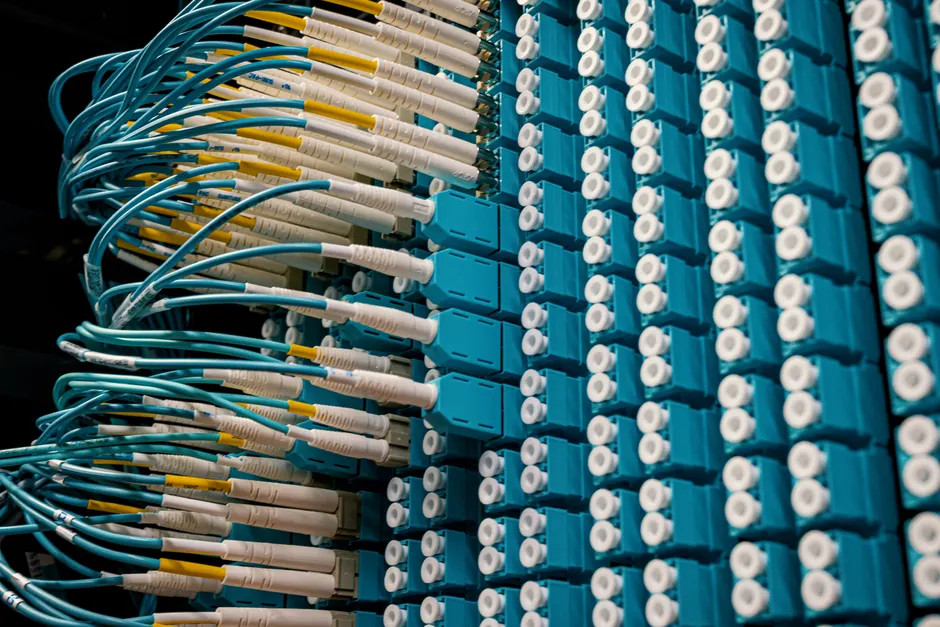
Relativity Networks develops hollow-core fiber, which transmits light through a vacuum chamber in the center of the cable rather than through solid glass, as conventional fiber does. The practical effect is a roughly 30% reduction in signal latency — the delay before a signal begins to arrive after being sent. CEO Jason Eisenholz estimates that a signal takes approximately five microseconds to travel one kilometer in conventional fiber, compared with three and a half microseconds in hollow-core fiber. TechCrunch
That 1.5-microsecond-per-kilometer difference may sound marginal in isolation. In the context of AI training clusters and distributed inference — the process of running trained AI models across multiple machines — where GPU-to-GPU round-trip latency directly constrains how efficiently hardware is used, shaving microseconds off connections between racks and buildings compounds across thousands of parallel links. The technology extends its transmission range to 90 kilometers (56 miles), per the company's July 2025 announcements, positioning it for campus-scale and metro-scale data center interconnects rather than long-haul terrestrial routes. PR Newswire
Relativity Networks has been building toward production scale for over a year. The company signed a partnership with Prysmian in March 2025 for mass production of hollow-core optical fiber and cabling, addressing the manufacturing bottleneck that has historically constrained HCF deployment. Prysmian's involvement, announced March 21, 2025, was structured around producing HCF cables to meet growing data center demand. Reuters; Data Center Dynamics
Prior to the current $22 million round, Relativity Networks had raised $6.1 million in earlier funding, which the company said was directed at meeting data center demand for faster fiber. Its patent-pending HCF cable was already being used to expand data center capacity for cloud-computing needs as of February 2025. Relativity Networks; PR Newswire
The financial backdrop is substantial. Data center developers are expected to spend as much as $4 trillion by the end of the decade, with AI infrastructure absorbing a significant share of that capital. Within that buildout, fiber connectivity between increasingly dense GPU clusters has become a pinch point. Conventional fiber's speed is fundamentally bounded by the refractive index of silica glass — a measure of how much a material slows light — which slows light to roughly two-thirds of its speed in vacuum. HCF sidesteps that ceiling by routing light through air, or near-vacuum, in the fiber's core.
Hollow-core fiber is not a new concept. The photonic bandgap structures — microscopic patterns that trap and guide light within an air core — have been studied in research settings for over two decades, and early implementations struggled with attenuation (signal loss), manufacturing yield, and mechanical robustness compared with standard telecom fiber. The question for Relativity Networks and its manufacturing partner Prysmian is whether those engineering challenges have been sufficiently addressed to deliver HCF at hyperscaler volume and reliability.
The unnamed hyperscaler's $40 million order is the strongest available signal that at least one major cloud operator has moved past evaluation. SAFE note structures, which defer valuation-setting to a subsequent priced funding round, suggest Relativity Networks may be positioning for a larger equity raise as production scales and order backlog grows.
What remains unaddressed in the available information is cost per meter at production volume, comparative attenuation figures against conventional single-mode fiber, and whether the 90-kilometer range holds under real-world deployment conditions rather than controlled specifications. These are the metrics that will determine whether HCF moves from targeted hyperscaler deployments into broader data center infrastructure.
For now, the combination of a named manufacturing partner, a nine-figure potential order pipeline counting the hyperscaler commitment, and fresh capital positions Relativity Networks as the most visible commercial entrant in a category that has long promised faster optical transmission. The broader question is whether the physics translates into sustained operational advantage at scale, and the next twelve to eighteen months of deployments will provide the answer.