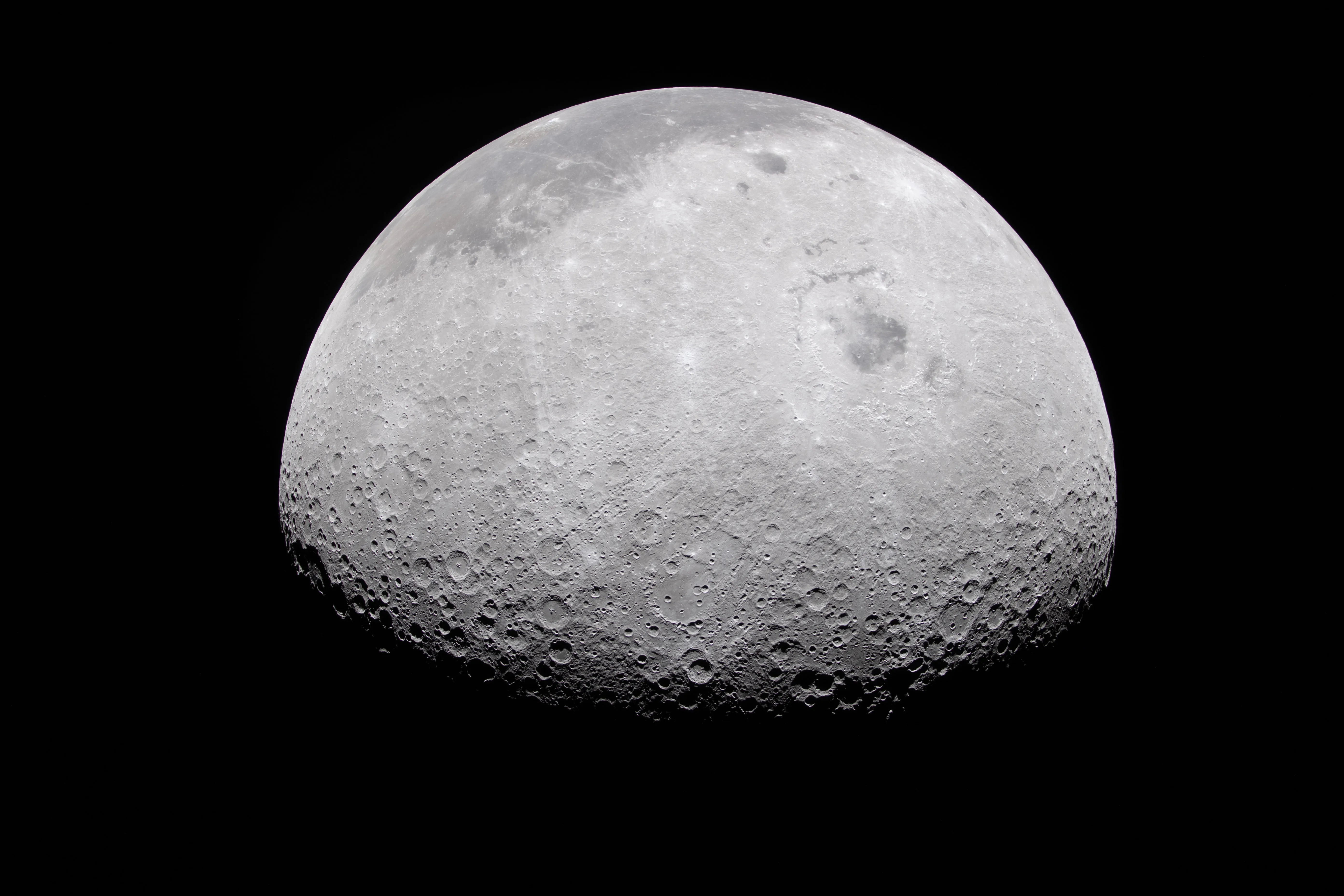
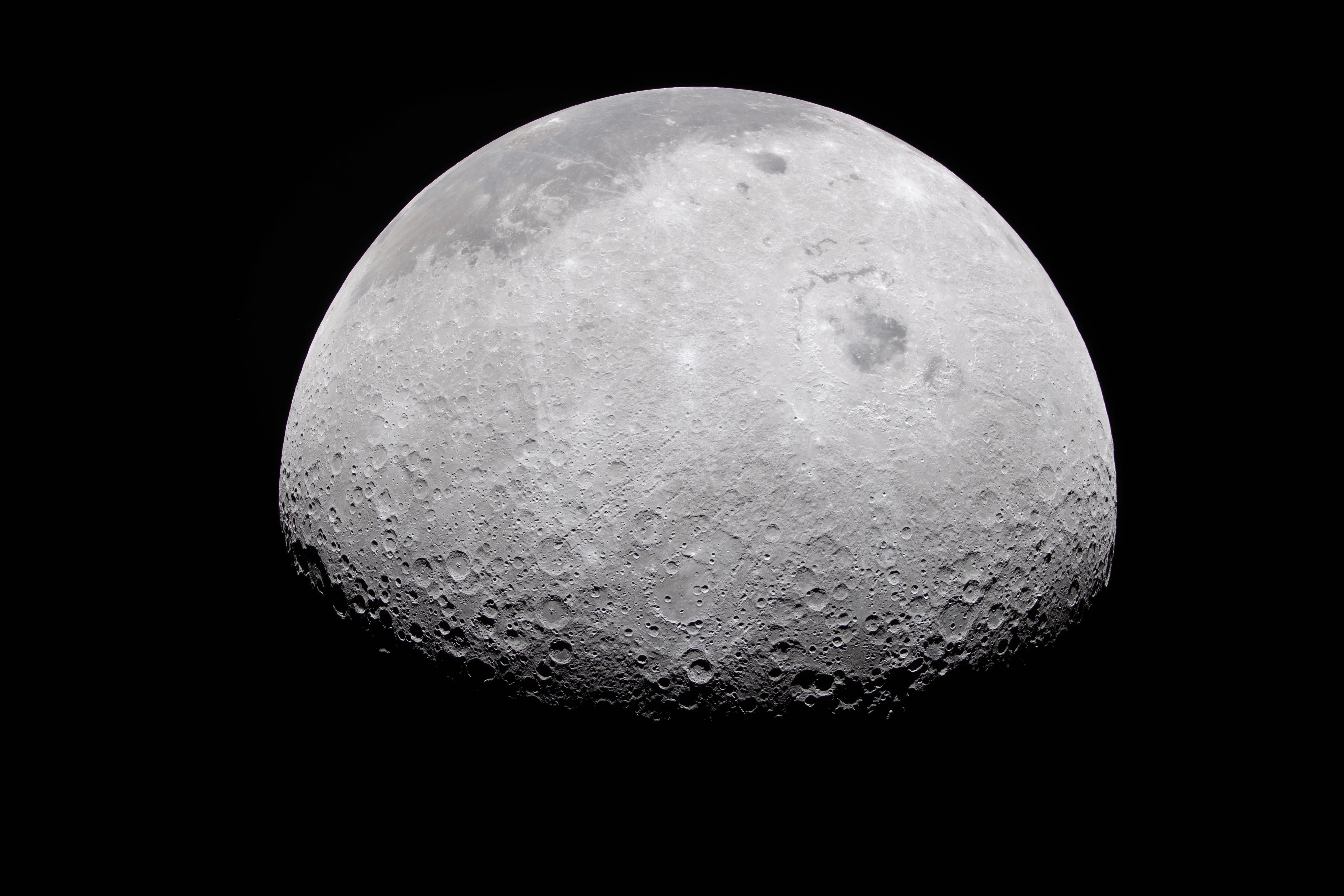
NASA Images SpaceX Falcon 9 Crater on the Moon — and Extracts New Science From the Wreckage

NASA has released before-and-after images of a crater on the lunar surface created when the upper stage of a SpaceX Falcon 9 rocket crashed into the Moon on August 5, 2026. The images, captured by the Lunar Reconnaissance Orbiter (LRO) between August 11 and 12, show a double-impact feature roughly 60 feet wide and 12 feet deep, formed when the 4,000-kilogram stage struck the surface at 5,400 mph. NASA Science Engadget
The Falcon 9 upper stage came from the January 15, 2025 Blue Ghost mission, which carried two lunar landers to orbit. The stage used up most of its fuel delivering the landers to their intended path, leaving too little for a return-to-Earth burn. With no ability to steer itself home, lunar gravity and subtle gravitational tugs from the Sun governed its trajectory over the next 19 months until impact. Engadget
Independent astronomer Bill Gray first flagged the stage as on a collision course with the Moon in April 2026, using orbit-computing software to predict the impact location and timing. NASA and SpaceX subsequently tracked the object in the lead-up to the August 5 event. NASA Engadget
Getting the images required an unusual maneuver. The LRO orbits pole-to-pole at roughly one mile per second, completing each pass every two hours. To point its Narrow-Angle Camera — capable of resolving surface features as small as three feet across — directly downward at the impact site, NASA engineers tilted the entire spacecraft sideways as it passed 60 miles above the crater. Even so, the LRO's ground track did not line up with the crash site until six days after impact, on August 11. NASA Science Engadget
The Korea Pathfinder Lunar Orbiter (Danuri) also captured imagery of the crater, providing an independent observation of the impact site from a different orbital geometry. Space.com
NASA said it learned new details from the LRO images. The crater's ejecta — the material thrown outward by the impact — is compositionally informative. Darker streaks radiating from the crater consist of older surface regolith (the loose, broken-up material that covers the Moon's bedrock) whose mineral makeup and optical properties have been altered by long exposure to solar wind and cosmic-ray bombardment. Lighter material near the rim came from deeper underground, excavated by the kinetic energy of the crash. That contrast gives planetary scientists a direct, if accidental, look at the layered structure of the lunar surface at the impact location. NASA Science Engadget
The Falcon 9 upper stage was 39 feet long and 13 feet wide. Engadget
This is not the first time a rocket body has created an unintended lunar crater. In March 2022, an unidentified rocket stage impacted near Hertzsprung crater, producing a double crater roughly 28 meters across — an anomaly at the time, since spent upper stages typically form single craters. The 2022 event remains unattributed to a specific launch. NASA
The broader context here is one of rising frequency. As cislunar traffic — the region between Earth and the Moon — increases through NASA's Commercial Lunar Payload Services deliveries, commercial landers, and lunar orbiters from multiple space agencies, the population of spent stages and defunct hardware in high Earth and cislunar orbits will grow in parallel. The Falcon 9 upper stage that created this crater was not a navigation error or a failure; it was the expected outcome of a mission design in which the upper stage lacks the fuel margin for a controlled disposal. The Blue Ghost mission delivered its landers successfully, and the stage did what physics dictated it would do.
In this author's view, the useful signal here is not that a rocket hit the Moon. It is that NASA's orbital infrastructure — LRO, now in its 17th year of operation — could be reoriented on short notice to characterize the result at three-foot resolution, and that a second spacecraft, Danuri, provided corroborating imagery from a different vantage point. The LRO's Narrow-Angle Camera is a precision instrument designed for systematic lunar mapping, yet it functioned effectively as a rapid-response forensic imager. That dual capability, operating on a spacecraft well past its prime mission phase, is a quiet but meaningful data point for anyone thinking about the orbital-asset layer that will underpin sustained operations around the Moon.
The compositional data from the ejecta — older, space-weathered surface material contrasted with fresher subsurface material — is the kind of observation that normally requires a dedicated impact experiment or a drilling payload. Getting it from an accidental impact, imaged by an aging orbiter, is a small but genuine efficiency gain for lunar science.
The broader question is what happens when there are ten or fifty spent upper stages in cislunar space rather than the handful we have today. None of them are hazards to life or property in the conventional sense; the Moon is large and unpopulated. But each uncontrolled impact adds a data point to an accumulating set, and the value of imaging each one diminishes as the catalog grows. At some point the LRO will stop operating, and there is no confirmed successor with comparable narrow-angle imaging capability in the pipeline. The forensic window that made this characterization possible is, for now, still open. How long it stays that way is a planning question, not a technology question.