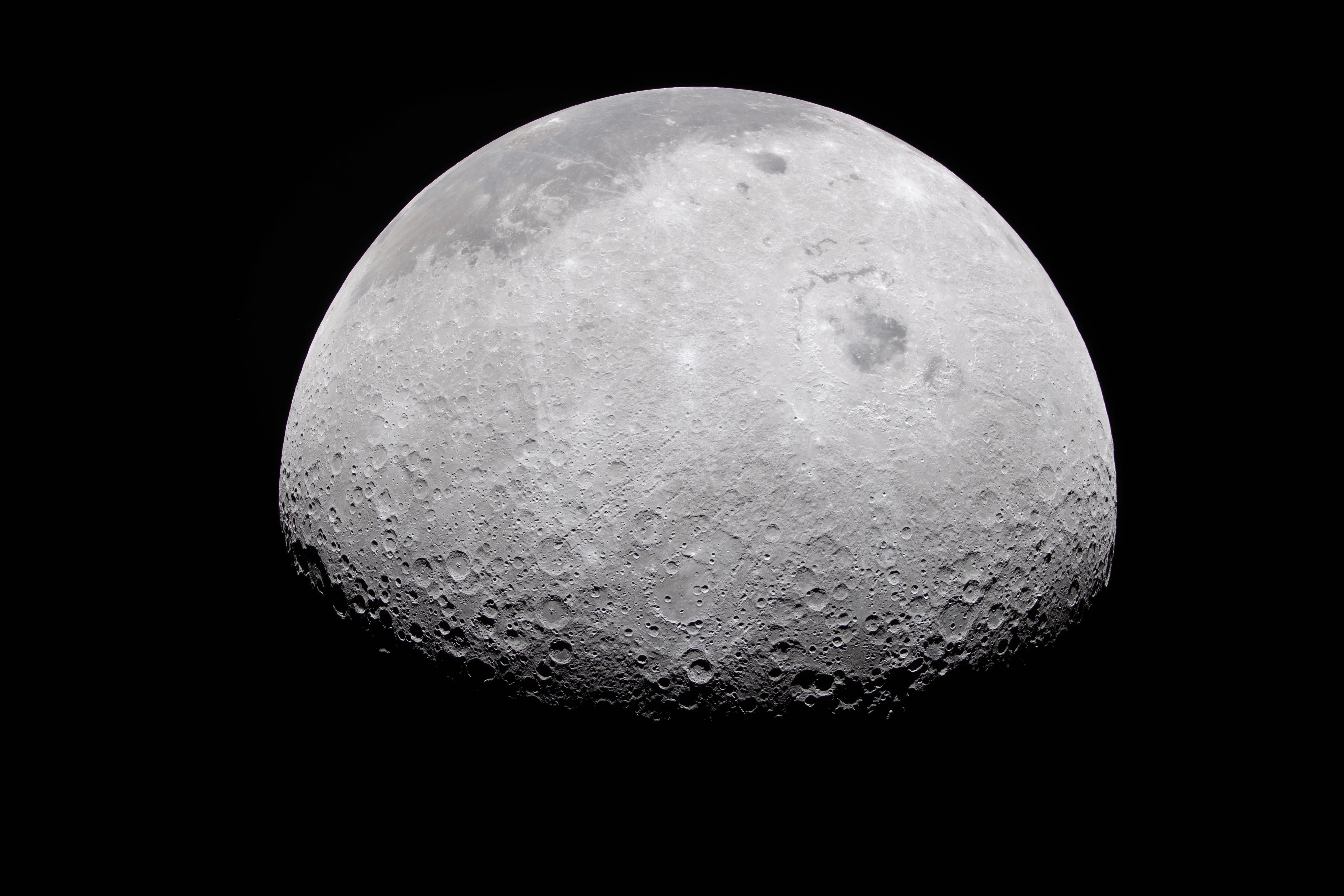
A SpaceX Falcon 9 Upper Stage Crashed Into the Moon — Here's What Happened
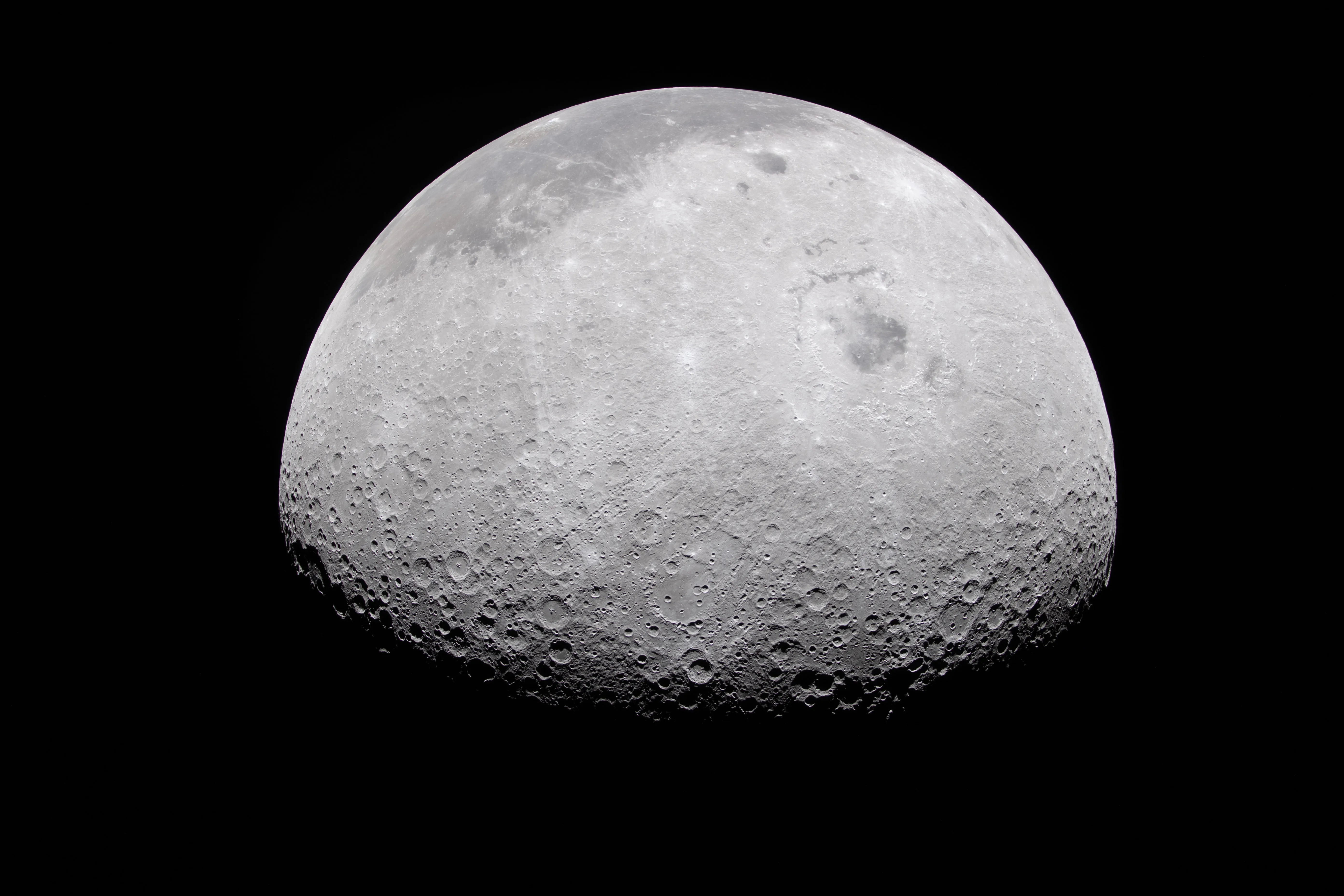
A SpaceX Falcon 9 upper stage from the January 15, 2025 Blue Ghost mission struck the lunar surface in the early hours of August 5, 2026, carving out a crater NASA estimates at roughly 60 feet wide and 12 feet deep. Engadget
The four-ton rocket body hit the Moon at roughly 5,400 mph on the sunlit side. Independent astronomer Bill Gray, whose Project Pluto tracking site had predicted the impact within a few minutes of 06:35 UTC on August 5, flagged the upper stage's trajectory weeks in advance. Project Pluto
Direct visual confirmation was not possible because the impact occurred on the illuminated side of the Moon, where the bright surface overwhelmed telescopes. However, Carl Schmidt, a planetary scientist at Boston University's Center for Space Physics, told CBS News that the Very Large Telescope in Chile detected a plume of sodium and lithium gas — a chemical signature indicating the impact had already taken place. Schmidt described the plume as "tens of kilometers in size," lasting between five and ten minutes. Engadget
NASA's Lunar Reconnaissance Orbiter (LRO) and South Korea's Korea Pathfinder Lunar Orbiter (KPLO) will attempt to photograph the crash site, though success depends on lighting and timing conditions. NASA
The Falcon 9 launched Firefly Aerospace's Blue Ghost Mission 1 on January 15, 2025, carrying two lunar landers to orbit. The Blue Ghost lander completed its roughly 45-day journey to the Moon and finished its mission. The expendable second stage, however, stayed on a high-energy trajectory with no way to return to Earth. SpaceX
SpaceX stated that for most missions it plans a controlled deorbit of the Falcon 9 second stage, bringing it down safely over the ocean. For higher-energy missions such as those sending payloads toward the Moon, nearly all of the rocket's fuel is used to place the payload in the correct orbit, so a controlled disposal maneuver is not always possible. The company attributed the upper stage's eventual lunar path to solar activity and gravitational perturbations — essentially, the push and pull of gravity from the Earth, Moon, and Sun over time. Engadget
NASA said disposing of upper stages on the lunar surface is a technically accepted and safe method, and in some cases can be the only practical option for missions in low lunar orbit. Engadget
This event fits into a broader pattern that deserves attention. As traffic between Earth and the Moon increases — driven by commercial lunar delivery contracts, NASA's Artemis program, and international orbiter missions — the question of what happens to spent upper stages becomes more than a footnote. The Falcon 9 second stage is not designed for reuse on these mission profiles; it has no propulsive recovery capability once it has delivered its payload to a trajectory toward the Moon. The hardware is spent, and orbital mechanics takes over.
What makes this case notable is not the outcome. A four-ton aluminum and carbon composite cylinder punching a 60-foot crater into the Moon is, by itself, scientifically modest. The Apollo S-IVB stages left far larger impact features. What is different now is the frequency and the commercial origin. SpaceX launches frequently, Firefly and other companies under NASA's Commercial Lunar Payload Services program are sending hardware toward the Moon on a regular schedule, and each high-energy mission produces a spent stage with a trajectory that must be tracked, predicted, or in some cases simply accepted as lunar debris.
The broader context here is that the tracking was done by an independent astronomer using publicly available data, not by any government space-surveillance system. Bill Gray's Project Pluto is a well-known resource in the minor-planet community, and his predictions have proven reliable for this class of object. That an amateur-run tracking site remains a primary source for predicting debris beyond Earth orbit speaks to a gap in formal space-domain awareness infrastructure beyond low Earth orbit.
NASA's characterization of lunar surface disposal as a "technically accepted and safe method" is accurate in the narrow sense that a sterile metal object striking an airless, lifeless body poses no environmental hazard. The concern, rather, is operational: untracked or poorly tracked upper stages complicate the lunar orbital environment for current and future missions. The Korea Pathfinder Lunar Orbiter and LRO share that space, and imaging campaigns like the one planned here serve double duty as both scientific observation and orbital-debris accounting.
The immediate practical question is whether LRO or KPLO can resolve the crater under favorable lighting. A fresh 60-foot feature on the lunar surface is well within LRO's camera resolution, but only if the imaging pass coincides with the right sun angle. If successful, before-and-after imaging would provide one of the few controlled impact data points from a known mass, velocity, and approach angle — genuinely useful for cratering models.
In the longer arc, this event is a reminder that the space between Earth and the Moon is becoming busier and messier. More launches, more spent stages, more debris. The system worked this time: an independent tracker predicted the impact, NASA acknowledged it, a ground-based telescope detected the plume, and orbiters are positioned to image the aftermath. Whether that informal architecture scales as launch frequency increases is an open question that neither SpaceX nor NASA has yet been pressed to answer.