Inside the Forest Service's Firefighting Staffing Shortfall
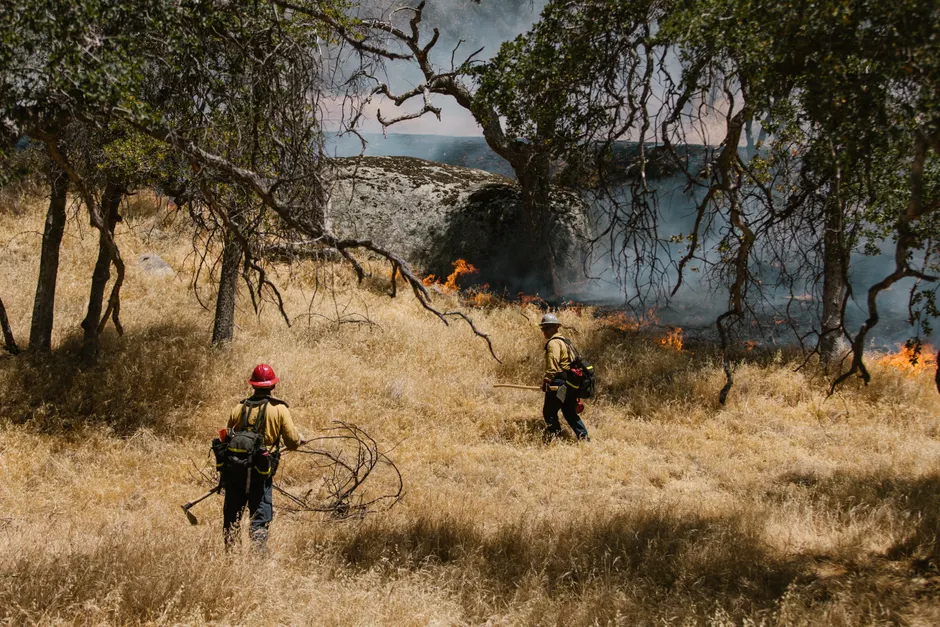
Nine US Forest Service firefighters, speaking anonymously because agency rules bar them from going public, told the Guardian that the service faced a critical shortage of firefighters during the summer of 2026. Their accounts directly contradict assurances from Forest Service chief Tom Schultz, who told a congressional subcommittee in July 2026 that the workforce is "stronger than at any point in recent years and fully staffed and equipped to respond aggressively to every unplanned ignition."
The shortage is not a new problem. The Forest Service, housed under the Department of Agriculture, employs the bulk of the federal government's fire workforce and manages more than 193 million acres nationwide. It has struggled with recruitment and retention for years — a challenge intensified as the climate crisis drives up dangerous fire conditions. The agency's benchmark for adequate staffing is 11,300 wildland firefighter positions (GS-9 and below, meaning entry- through mid-level roles). That number has remained flat for years. In June 2026, Federal News Network reported that more than 11,550 seasonal staff were hired for the 2026 fire year, hitting the staffing target earlier than any year on record. But aggregate hiring numbers mask a more complicated reality on the ground.
Several people familiar with internal hiring data said there were large gaps in key leadership roles, creating bottlenecks and operational strain during the 2026 fire season. The Forest Service has avoided disclosing breakdowns in its staffing totals even after repeated requests from journalists and members of Congress. Agency spokesperson John Winn declined to answer questions about the staffing challenges, saying only that the agency was "fully staffed at the level we are funded for" (Guardian).
The gap between stated capacity and operational reality has deep roots. Staffing reports from 17 July 2025 showed that more than 5,100 positions — over 26% of the agency's positions — were unfilled. ProPublica data reported by the Guardian in January 2025 indicated the Forest Service lost nearly half of its permanent employees over the three years preceding that month. Reuters reported in July 2025 that the agency was downsizing, losing 15% of its workforce, with 1,400 support staff having departed. According to the New York Times, the Trump administration pushed out thousands of veteran staff, and an "extraordinary" 2026 fire season is testing those who remain (NYT). "Efficiency" cuts across Forest Service offices have left teams understaffed, firefighters underpaid and uninsured, and without adequate equipment.
The human cost is measurable. Many Forest Service firefighters had to work more than 1,000 hours of overtime in 2025, the equivalent of packing an extra five months of work into the season. Burnout and low morale among federal wildland firefighters increased in 2026, according to Federal News Network. The agency itself acknowledged in 2024 that it had exceeded its hiring goals, yet thousands of key roles went unfilled as large wildfires began to rage.
The consequences are now visible in neighborhoods, not just in staffing spreadsheets. Wildfires in August 2026 devastated neighborhoods in Spokane, Washington state's second largest city. The United States has experienced an above-average fire year in 2026, with 3.7 million acres burned year-to-date compared with the 10-year average, according to Reuters. Congress has considered legislation to increase firefighter pay and convert at least 1,000 seasonal wildland firefighters to year-round workers, though the status of that push is uncertain.
The broader context here is a widening gap between the scale of the wildfire threat and the institutional capacity to meet it. The Forest Service's hiring benchmark of 11,300 positions has not been updated to reflect intensifying fire seasons driven by climate change, longer burn windows, and the loss of institutional knowledge from veteran departures. Think of it like a hospital that keeps reporting it has enough doctors because it counts every staff member on the roster — but many of those are trainees, and several department heads are missing. The total looks adequate on paper while the operation struggles in practice. When an agency reports hitting its hiring target while leadership vacancies persist and frontline firefighters describe a critical shortage, the most salient question is whether the benchmark itself is adequate to the mission. The Forest Service's refusal to disclose position-level breakdowns makes that question difficult for Congress or the public to answer independently.
What comes next likely depends on whether the 2026 fire season forces a legislative response, or whether the current cycle of attrition, overtime reliance, and opaque reporting continues into another year. The firefighters who spoke to the Guardian did so at professional risk. Their decision to come forward suggests that internal pressure is building alongside the external one.


