OAS Declares Democracy in Nicaragua 'No Longer Exists' and Calls Emergency Foreign Ministers' Meeting
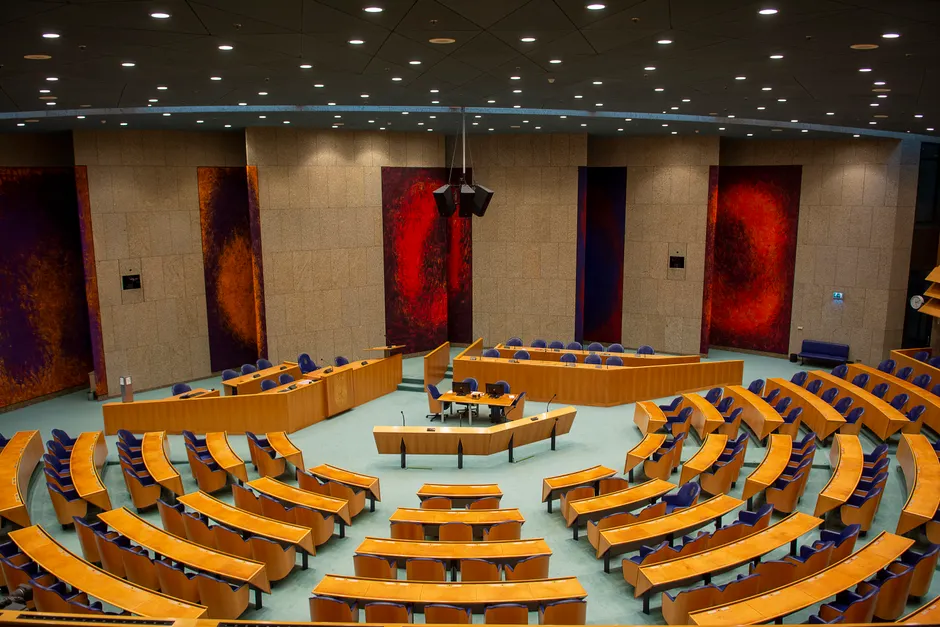
On August 19, 2026, the Organization of American States (OAS) voted to convene an urgent meeting of foreign ministers over Nicaragua, declaring that representative democracy "no longer exists" in the country. The OAS Permanent Council — the body that handles day-to-day diplomatic business between member states — approved the resolution 29 to 1, with one abstention and two countries absent Al Jazeera.
The resolution invokes OAS Charter Articles 61, 62, and 63, which lay out the rules for calling emergency meetings of consultation among member states. It describes the situation in Nicaragua as "a problem of an urgent nature and of common interest to the American States." The council's president has been instructed to draft a meeting agenda "as soon as possible" Al Jazeera.
The vote was held in response to developments under the co-presidency of Daniel Ortega and Rosario Murillo, a husband-and-wife leadership team. Ortega led Nicaragua from 1979 to 1990 and returned to power in 2007. Murillo was elevated from vice president to co-president in 2025 Al Jazeera.
In July 2026, the Ortega government unveiled constitutional reforms that would extend the presidential term from six to seven years. The proposed changes would ban opposition figures from public elections if they are considered "traitors to the homeland" and would allow Nicaragua's electoral council to dissolve any political party that receives funding from abroad. Nicaragua's legislature is due to vote on the proposed constitutional changes in September 2026 Al Jazeera.
Also in July 2026, UN human rights chief Volker Türk warned that blocking elections would further erode Nicaragua's rule of law — the principle that everyone, including the government, is subject to legal limits. The OAS Secretary-General called for a collective response to Nicaragua's democratic crisis and said elections are essential to democracy Al Jazeera; Anadolu Agency. OAS member states condemned remarks made by President Ortega Anadolu Agency.
The August 19 resolution followed a special meeting of the OAS Permanent Council on August 5, 2026, convened to consider the situation in Nicaragua together with a draft resolution. The United States participated in that session, and Washington and its allies called for an extraordinary regional meeting U.S. State Department; Barron's; OAS.
The escalation is complicated by Nicaragua's formal exit from the OAS. Managua announced its intention to break from the organization in 2021 and completed the withdrawal process in 2023. Nicaragua is no longer a party to the OAS, which means the body possesses no direct mechanism to impose binding decisions on the Ortega-Murillo government Al Jazeera.
The broader context here matters for assessing what the OAS can actually achieve. The Inter-American Democratic Charter, adopted in 2001, authorizes the OAS to respond to "an unconstitutional interruption of the democratic order" in any member state. But the charter's enforcement tools are diplomatic and political, not coercive: suspension from OAS bodies, diplomatic pressure, and the moral weight of a multilateral condemnation. Nicaragua's withdrawal removes even the formal leverage of suspension. The 29-to-1 vote signals near-unanimous regional alarm, yet the practical instruments available to the OAS are largely limited to condemnation, fact-finding, and coordination with other international bodies. Think of it as a neighborhood watch that can sound the alarm and document what it sees but cannot enter the house.
The constitutional reform package pending before Nicaragua's legislature in September is the proximate trigger for the OAS response. The provisions allowing the electoral council to dissolve parties receiving foreign funding and banning candidates labeled "traitors to the homeland" would, if enacted, give the Ortega-Murillo government legal instruments to eliminate remaining opposition structures before the next electoral cycle. Combined with the one-year extension of the presidential term, these measures would entrench the co-presidency further beyond the reach of electoral competition.
Nicaragua's trajectory under Ortega and Murillo has included the mass expulsion of political prisoners. In 2023, the government loaded more than 200 political prisoners onto a plane and flew them out of the country, subsequently stripping them of their Nicaraguan citizenship Al Jazeera.
For the OAS, the foreign ministers' meeting will be the next concrete test of whether regional consensus can translate into sustained diplomatic action. The agenda has not yet been set, and the organization's leverage over a non-member state is structurally limited. What the 29-to-1 vote does establish is that the overwhelming majority of Western Hemisphere governments are no longer willing to treat Nicaragua's democratic backsliding as an internal matter.


