Nicaragua Moves to Bar Opposition Parties from Future Elections

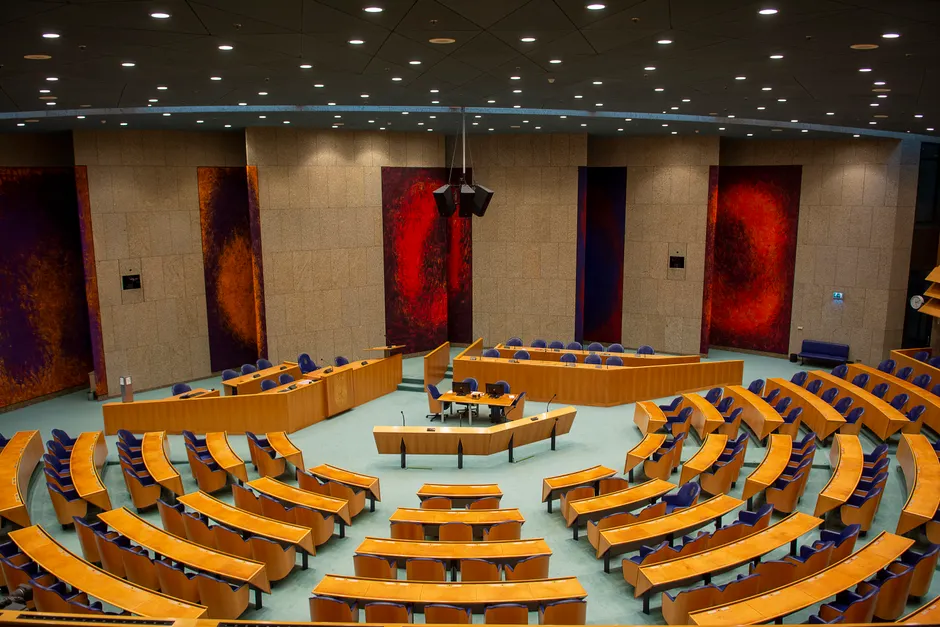
Nicaragua's National Assembly, which is controlled by the ruling party, is debating whether to block opposition parties from running in future elections. A vote is scheduled for the first week of August 2026. The move follows direct statements by President Daniel Ortega that the opposition will no longer be allowed to use elections as a path to power.
Ortega made the remarks during a Sunday speech marking the anniversary of the 1979 Sandinista revolution, the movement that first brought him to power decades ago. "There will be no more elections for them to try to seize the government, to seize power," he said, according to BBC News.
Gustavo Porras, the head of the National Assembly, confirmed that the legislature and Nicaragua's top electoral authority were discussing how "to not leave even a crack" for the opposition to gain a foothold. The coordination between the assembly and the electoral council shows the institutional machinery at work: this is not a single decree from the president but a process moving through formal legislative channels.
The international response came quickly. UN High Commissioner for Human Rights Volker Türk condemned Ortega's remarks, saying that people of all political views must be allowed to vote and run for office. US Secretary of State Marco Rubio said the comments revealed the "true authoritarian nature" of Ortega's rule. Neither statement, however, carries direct leverage over Nicaragua's internal legislative process.
The push to exclude opposition parties is the latest step in a long consolidation of power by Ortega, who has held the presidency since 2007. In February 2025, he named his wife, Rosario Murillo, as "co-president," a title formalized through a constitutional reform passed unanimously by the National Assembly in November 2025. That reform also extended the presidential term from five to six years. The last presidential elections were held in November 2021 and won by Ortega in a vote widely criticized internationally for lacking competitive conditions.
The 2018 anti-government protests are a key turning point for understanding the current trajectory. More than 300 people were killed when security forces crushed the demonstrations, the most violent state response to dissent during Ortega's current tenure. In the years since, the political space has steadily narrowed, with the proposed bar on opposition parties closing off the electoral avenue almost entirely.
Nicaraguan opposition figures, many operating from exile, have described the move in stark terms. Juan Sebastián Chamorro, an opposition politician living abroad, said Ortega's plans showed his desire to "turn Nicaragua into a one-party country like China, North Korea, and Cuba." Felix Maradiaga, a former presidential candidate who was jailed under Ortega's rule, told AFP that Ortega was afraid of dissent and "hasn't neutralised the opposition."
The broader context here is one of institutional capture rather than overt military rule. Ortega and Murillo have methodically filled the National Assembly, the Supreme Electoral Council, and the judiciary with loyalists, effectively disabling the checks and balances that normally limit a government's power. The unanimous November 2025 constitutional vote illustrates this: a legislative body with no genuine opposition presence produces unanimous results. The August vote on barring opposition parties, if it proceeds as expected, would formalize what observers have already described as a de facto one-party state, removing even the procedural possibility of an electoral challenge.
What sets this moment apart from earlier phases of Ortega's consolidation is the openness of the declaration. Previous restrictions on opposition participation, including the 2021 arrests of presidential candidates ahead of that year's election, were carried out under legal pretexts involving sedition and money-laundering charges. Ortega's statement on the Sandinista revolution anniversary drops that framework entirely, framing the exclusion as a political decision rather than a legal one. The question for international actors is whether this rhetorical shift, combined with the institutional embedding of the co-presidency and extended terms, will lead to a re-evaluation of diplomatic and sanctions strategies, or whether the current pattern of condemnation without material leverage will continue.