Gold Mine Collapse in Central African Republic Kills Over 100

More than 100 people have died after an artisanal gold mine in the village of Zamboye, in western Central African Republic (CAR), caved in following a landslide on Tuesday afternoon. Gervais Ganagoroh, a Red Cross volunteer involved in the relief effort, told the Associated Press that more than 100 bodies had been recovered from the collapse, a figure confirmed independently to Reuters by a senior official at a local mining association (The Guardian). The Nigerian newspaper Vanguard reported a toll of at least 107 miners (Vanguard).
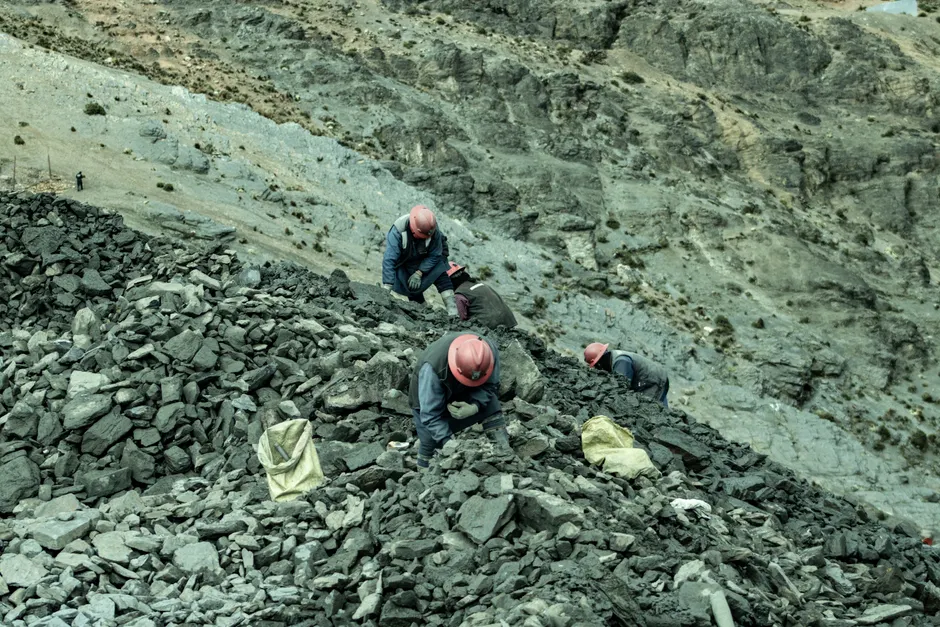
The landslide struck the Zamboye gold mining site, located approximately 50km from the town of Baboua and close to the Cameroon border, around midday on Tuesday, August 18 (Mimi Mefo Info). A second prosecutor from Baboua told the press that the incident is believed to have been caused by the collapse of several underground tunnels in which miners were operating. Social media footage appeared to show an avalanche of sand descending on a group of people, likely the miners, and covering them.
A statement by a local public prosecutor said many others remained trapped under the landslide but did not specify the number of fatalities. Al Jazeera reported that miners remained missing and trapped under rubble at the site (Al Jazeera). The exact number of people who were in the mine at the time of the cave-in remains unknown. Bertrand Be Yangué, a member of the Zamboye youth council, said that finding the trapped miners alive would be a miracle, and that the toll is expected to rise as rescue efforts continue.
Cedric Mbango, a miner at the site, told the AFP news agency that the ground completely collapsed and buried people, describing the incident as catastrophic. The miners are believed to be nationals of CAR and Cameroon. Authorities in Cameroon's Eastern region said at least three of its citizens have been identified among the victims. Grégoire Mvongo, governor of Cameroon's Eastern region, told state-owned radio that he was working in close collaboration with Central African colleagues to deal with the aftermath of the tragedy.
The rescue operation faces its own hazards. The Central African news website Corbeau News reported that heavy machinery, including tractors, was being used in the retrieval mission and could jeopardise the rescue of those still alive under the landmass. Local media in CAR reported that authorities had launched an investigation into the incident.
At least 40 people had died in several mining incidents in CAR this year alone, prior to the Zamboye collapse (The Guardian). The scale of the Zamboye disaster multiplies that figure severalfold in a single event.
The broader context here is one of structural vulnerability in the artisanal mining sector across the Sahel and Central African corridors. Artisanal mining refers to small-scale, often informal mining done with basic tools rather than industrial equipment. In CAR, this sector operates largely outside formal regulatory frameworks, in a country that has endured more than a decade of armed conflict, weak state presence in rural areas, and chronic underinvestment in mining oversight. Mines like the one at Zamboye typically involve hand-dug tunnels with no structural reinforcement, no geological safety assessment, and no emergency response capacity. When tunnels collapse, the results tend to be catastrophic precisely because the conditions that make artisanal mining lucrative — low barriers to entry, informal labour pools, and proximity to cross-border trade routes — are the same conditions that make it lethal.
The cross-border dimension of the Zamboye disaster, with Cameroonian nationals among the victims, reflects the porous nature of labour mobility in the region. Miners frequently move across the CAR-Cameroon border in search of artisanal gold deposits, often outside any documented migration or employment framework. Governor Mvongo's coordination with Central African counterparts is a tacit acknowledgment that the aftermath of this disaster will require bilateral engagement, not solely a domestic response.
The use of heavy machinery in a rescue operation at an unstable artisanal site raises a tension that recurs in mine-collapse responses worldwide: the imperative of speed in body retrieval versus the risk that heavy equipment further destabilises the ground, potentially killing survivors who remain trapped. Corbeau News's reporting flags this as an active concern at Zamboye. In artisanal settings, where the layout of underground tunnels is unmapped and unsupported, the calculus is particularly dire.
CAR's mining sector has attracted growing attention in recent years as gold prices have remained elevated, drawing both artisanal diggers and, in some areas, armed groups that control access to mining sites and tax extraction. Whether the Zamboye mine operated under any formal concession or was entirely informal has not been stated in the available reporting. The investigation launched by local authorities may address that question, though CAR's capacity to enforce mining regulations in remote western areas near the Cameroon border is constrained by the same governance gaps that shape the sector as a whole.