Australia Faces Largest Bird Flu Die-Off Yet as H5 Spreads Across Southern Coasts

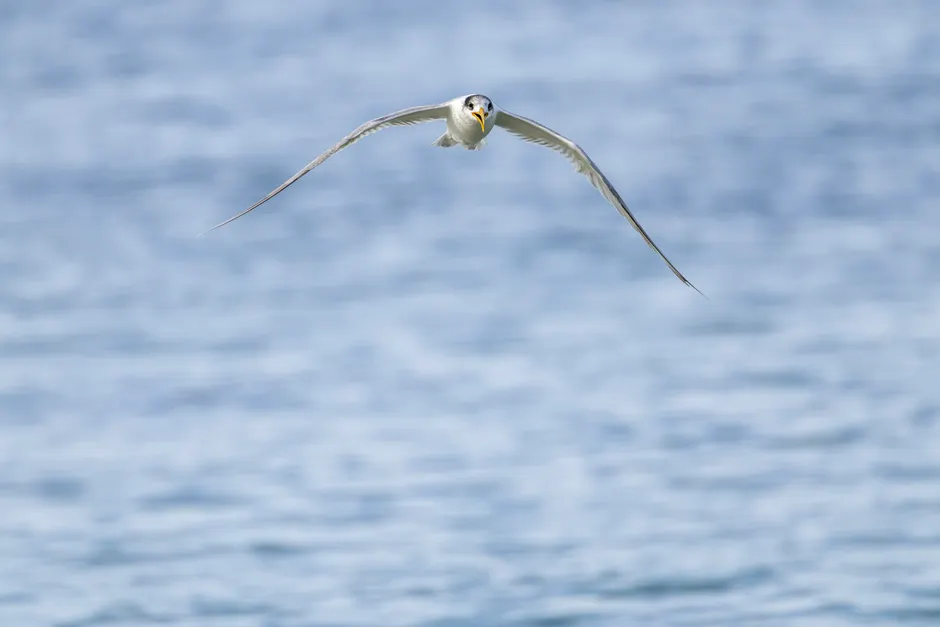
More than 1,000 greater crested terns have been found dead across three offshore islands in South Australia, in what Premier Peter Malinauskas has called a "significant escalation" of the H5 bird flu outbreak. Aerial surveillance detected the mass die-offs on Wednesday at sites where the virus had already been confirmed in recent weeks. If confirmed as H5, these would be the largest mass casualty events from the strain since it reached the Australian mainland in June. The Guardian
The deaths occurred on Troubridge Island, off the Yorke Peninsula, and on the Pages Islands — North Page and South Page — off Kangaroo Island. All three locations had previously recorded H5 detections. Greater crested terns, a common Australian seabird, have been the species hit hardest by H5 since the virus arrived locally. The pattern follows one established in early July, when a greater crested tern found at Robe on South Australia's Limestone Coast became the first local Australian seabird confirmed positive for the H5 strain. BirdLife Australia
The locations of these die-offs add conservation concerns to the public health ones. Troubridge Island conservation park hosts breeding colonies of little penguins, black cormorants, and crested terns. The Pages Islands are a known breeding site for endangered Australian sea lions, and long-nosed fur seals are known to visit them. South Australian authorities are also investigating a suspected H5 case in a little penguin found on Kangaroo Island, which Malinauskas described as being "of particular concern."
The regional picture is intensifying at the same time. In Tasmania, aerial surveillance on the same Wednesday spotted 28 dead little penguins and three dead crested terns at the Port of Grassy on King Island. Tasmania's Department of Natural Resources and Environment confirmed that samples from the dead birds had been collected and sent for laboratory testing, with results expected during the week. The Tasmanian government is investigating all 28 penguin deaths for possible H5 involvement. New South Wales confirmed two additional H5 cases in native birds earlier in August, bringing that state's total to four. Anadolu Agency
South Australia has expanded its surveillance operation in response. Malinauskas said aerial patrols using helicopters, planes, and drones, supported by field crews, are also searching for mammals such as Australian sea lions and long-nosed fur seals that might be affected. No mass mortality event involving mammals from H5 has been detected or reported in South Australia. There have also been no H5 detections in poultry or livestock in the state. According to the SA Department of Primary Industries and Regions (PIRSA), H5 bird flu has caused severe disease and high death rates in poultry, wild birds, and some mammals. PIRSA
On vaccination, Malinauskas drew a firm line. Broad-scale vaccination of wild birds, he said, was "neither practical nor appropriate." However, the state is considering targeted vaccination of selected captive and managed populations of its most threatened native birds where the approach is deemed safe, feasible, and likely to provide a conservation benefit. This positions South Australia among jurisdictions globally weighing selective intervention for high-value endangered species rather than population-level wildlife vaccination, a debate that has surfaced in multiple countries dealing with the current H5N1 panzootic — the animal-world equivalent of a pandemic.
The timeline of this outbreak is compressed but accelerating. Australia detected its first suspected mainland case of H5N1 in June 2026, in a remote part of the country's southwest, making it the last continent to record the strain. Reuters Within roughly eight weeks, the virus has moved from initial detection to mass mortality events exceeding a thousand birds, crossed state boundaries into New South Wales and Tasmania, and now threatens endangered mammal populations that share breeding habitat with affected seabird colonies. CSIRO confirmed two native birds found dead on separate South Australian metropolitan beaches tested positive for H5 in late July, signaling that the virus was already circulating beyond remote wildlife corridors. ABC News
The broader context here is one of overlapping risks. The convergence of tern die-offs on protected breeding islands, a suspected penguin case on Kangaroo Island, parallel penguin mortality under investigation in Tasmania, and the proximity of endangered sea lion colonies creates a multi-species risk environment that authorities have not yet had to manage on this scale. The absence of detections in poultry and livestock remains the critical firewall for Australia's agricultural sector. How long that holds, and whether the suspected penguin and tern cases in Tasmania confirm as H5, will shape the trajectory of the coming weeks.