Sudan's Kordofan Crisis: 200,000 Displaced as War and Floods Collide
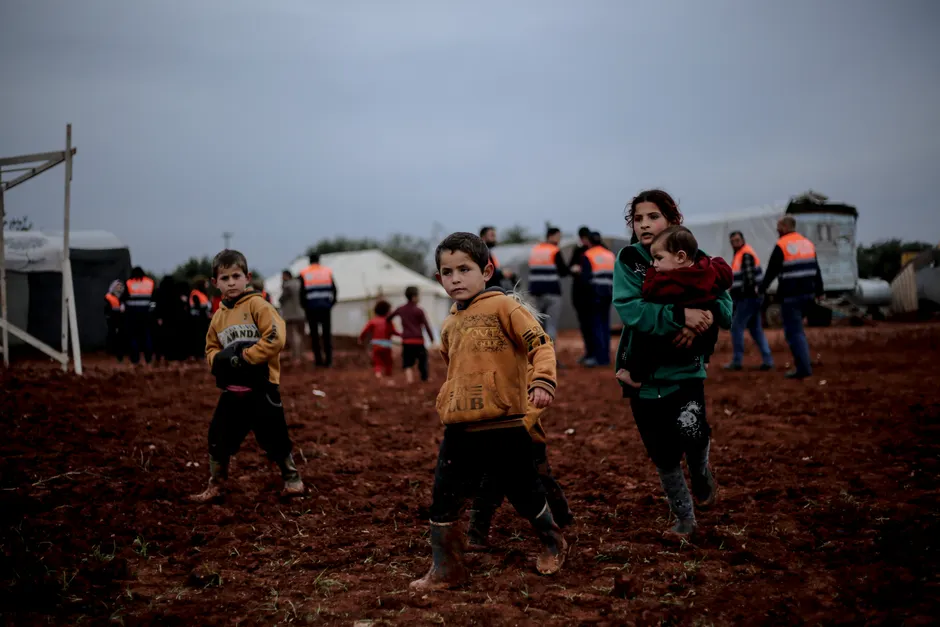
More than 200,000 people have been newly displaced across Sudan's Kordofan region since late 2025, as fighting between the Sudanese Armed Forces (SAF) and the Rapid Support Forces (RSF) intensifies at the same time seasonal flooding strikes. The International Organization for Migration (IOM) issued the displacement warning, with Director General Amy Pope stating that the warning signs about Sudan's displacement crisis are "impossible to ignore" (Al Jazeera).
The crisis is layered. Combat operations, infrastructure destruction, and natural disasters are reinforcing each other across multiple states at once.
In North Kordofan, displacement is concentrated around El Obeid, the state capital. The Sheikan district, which includes El Obeid, saw displacement surge 25 percent over the past eight months, according to IOM. The city's pre-war population of 750,000 has swelled to an estimated 3.4 million, per Sudan Tribune, as displaced people converge on what remains one of the few functioning urban centres in the region. Save the Children reported that nearly 39,000 children arrived in El Obeid in the first six months of 2026 alone. The World Food Programme warned in July that El Obeid is becoming the new epicentre of Sudan's displacement and hunger crisis (ReliefWeb).
The city's capacity to absorb this influx is collapsing. Repeated fighting and drone attacks on El Obeid's main power transformer have knocked out electricity needed to pump water, run hospitals, and maintain phone lines, according to IOM. Al Jazeera's Almigdad Alruhaid reported that RSF drones have targeted army vehicles, oil tankers, and cargo trucks on a main road leading to El Obeid, effectively choking the supply route into a city now hosting over four times its original population. The RSF maintains positions south and west of the city and continues attacking nearby villages. UNHCR had flagged the risk of a siege of El Obeid as early as October 2025, when it expressed concern about tens of thousands of internally displaced people concentrated there (UNHCR).
The displacement extends well beyond Kordofan. In Blue Nile state, approximately 78,000 people have fled their homes. In West Darfur, about 18,000 people were displaced in the first half of August. In North Darfur's Tawila area, heavy rains damaged nearly 1,350 homes and displaced more than 1,000 families, according to the UN (Al Jazeera).
UN OCHA reported on August 19 that the more than 200,000 newly displaced were driven by a combination of intensified fighting and floods, and warned that the closure of the Red Sea and Strait of Hormuz threatens critical aid deliveries to Sudan (ReliefWeb). This creates what military analysts call a pincer — a two-sided squeeze on humanitarian supply chains. Port Sudan, the primary entry point for international aid, depends on Red Sea shipping lanes, while overland routes through Kordofan are under active drone interdiction (meaning drones are being used to attack vehicles on those roads).
The cumulative scale of the war is staggering. Since fighting erupted in April 2023 between the SAF and the RSF, an estimated 59,000 people have been killed. Some 8.6 million are internally displaced (forced to flee within their own country), and more than 4.2 million have fled to neighbouring countries. Approximately 33.7 million people in Sudan require humanitarian assistance, according to the UN.
The trajectory of displacement in Kordofan has been visible for months. UNHCR data show that close to 65,000 people were displaced across Kordofan by mid-January 2026, with the IOM Displacement Tracking Matrix recording an estimated 88,300 displaced from South and North Kordofan between October 25, 2025 and January 15, 2026. By March, continued clashes along the Kadugli-Dilling axis in South Kordofan and the El Obeid corridor were driving displacement into White Nile State. Violence in El Obeid significantly increased during June, according to UNHCR. OCHA confirmed in early August that continued fighting in North Kordofan was driving displacement toward El Obeid and toward Khartoum, and reported women and children waiting to collect safe drinking water in the city as conflict strained water access.
The broader context here is that the convergence of military pressure on El Obeid, infrastructure degradation, and flood damage across Darfur suggests the humanitarian response system is approaching a saturation point. The city's population expansion from 750,000 to 3.4 million has occurred without commensurate increases in water, power, or medical capacity. The WFP's designation of El Obeid as a new epicentre, combined with IOM's displacement figures, indicates the geographic centre of the crisis is shifting southward from Khartoum and Darfur into Kordofan. If the RSF consolidates its positions around the city and supply routes remain cut off, the conditions for a mass casualty event from disease, dehydration, or starvation are accumulating.
OCHA has also issued an Eastern Africa El Niño Preparedness Alert in August 2026, adding the prospect of further climate-driven displacement to an already cascading emergency. El Niño is a recurring climate pattern involving warming of Pacific Ocean waters that can trigger extreme weather events worldwide, including the heavy rains and flooding that are compounding Sudan's crisis.


