Claire Lomas Inquest: Accidental Death in a Microlight Crash While Filming for Apple
A coroner has ruled that disability campaigner Claire Lomas died accidentally in a microlight crash in Jordan nearly two years ago, closing the UK legal process into the injuries that ended her life.
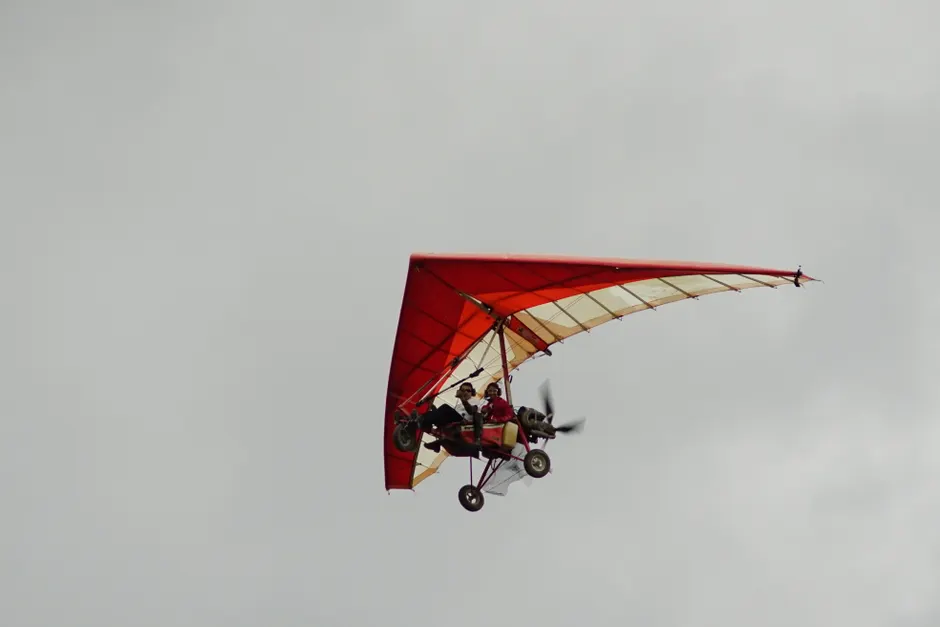
Louise Pinder, senior coroner for Rutland and North Leicestershire, delivered the verdict on Thursday. Lomas, 44, died on 22 August 2024, five weeks after the microlight she was piloting veered off a runway and struck rocks in Amman on 15 July 2024. A microlight is a lightweight, open-frame aircraft — small, relatively slow, and often used for sport flying.
At the time of the crash, Lomas was filming a promotional video for Apple's Vision Pro headset. The episode was part of a series called "Adventure," created for the virtual reality device. A 180-degree camera was mounted to the aircraft during the flight. The inquest heard no evidence that the camera affected how the aircraft handled or flew.
According to the coroner's account, on final approach the microlight was not perfectly aligned with the landing strip. Lomas aborted the landing, but the aircraft touched down hard, veered left, left the paved road surface onto gravel, and hit rocks roughly 10 metres from the road. The impact caused multiple traumatic injuries from which she would not recover.
The Royal Aero Sports Club of Jordan, which investigated the incident, found no breach of ground or air safety procedures. Coroner Pinder also stated she heard no evidence tying any shortcomings in the risk assessment process to Lomas's death.
The microlight Lomas flew had been adapted so she could operate it without using her feet. Ben Ashman, a microlight designer whose company built the adapted version, told the inquest he believed Lomas may have felt stressed before the flight. He drew this from a Facebook post in which she wrote about putting her "brave pants" on. The coroner did not cite this observation as a contributing factor in her ruling.
Lomas's family raised concerns during the inquest about the quality of hospital care she received in Jordan after the crash. Pinder acknowledged those concerns but found insufficient evidence to determine whether there were missed opportunities in her treatment. The inquest could not, therefore, assess the standard of medical care Lomas received in the weeks between the crash and her death.
Claire Lomas was paralysed from the waist down following a horse-riding accident in 2007. In 2012, she became the first person to complete the London Marathon using a "bionic" suit — a robotic exoskeleton that supports the legs and allows someone with paralysis to walk. The feat drew international attention and established her as a prominent campaigner for spinal injury research and disability inclusion. She raised more than £900,000 for the Nicholls Spinal Injury Foundation before her death.
Katherine Allen, a lawyer representing the Lomas family, said the inquest's conclusion marked "the end of a very difficult, emotional process" for the family.
The broader context here matters. The case touches on several intersecting issues: the use of adapted aircraft by pilots with disabilities, the safety protocols around commercial filming in aviation settings, and the medical care available to critically injured foreign nationals in Jordan. The coroner's findings close the legal process in the United Kingdom, but the family's questions about hospital treatment remain unresolved by the evidence on record.
For the disability and aviation communities, the inquest highlights a specific tension. The adapted microlight design, as the inquest heard, had successfully enabled Lomas to fly without foot controls, and the crash was attributed to the landing sequence rather than the adaptations. But the wider framework governing commercial filming operations that place disabled pilots in novel flight scenarios — particularly in countries with different regulatory and medical infrastructures — is an area where risk assessment practices may continue to face scrutiny, even though the coroner found no causal link in this instance.


