How NASA Keeps Curiosity Rover Running After 13 Years on Mars

NASA's Curiosity rover marked 13 years of operation on Mars in August 2025 — far longer than anyone expected when it landed in 2012. The rover was designed to work for two years. Today, it still drills, still photographs, and still sends data home. But keeping it alive is not simple. The machine's power supply is slowly fading, and engineers at NASA's Jet Propulsion Laboratory are constantly adapting how Curiosity operates to squeeze more science from what it has left.
A Robot That Beat the Odds
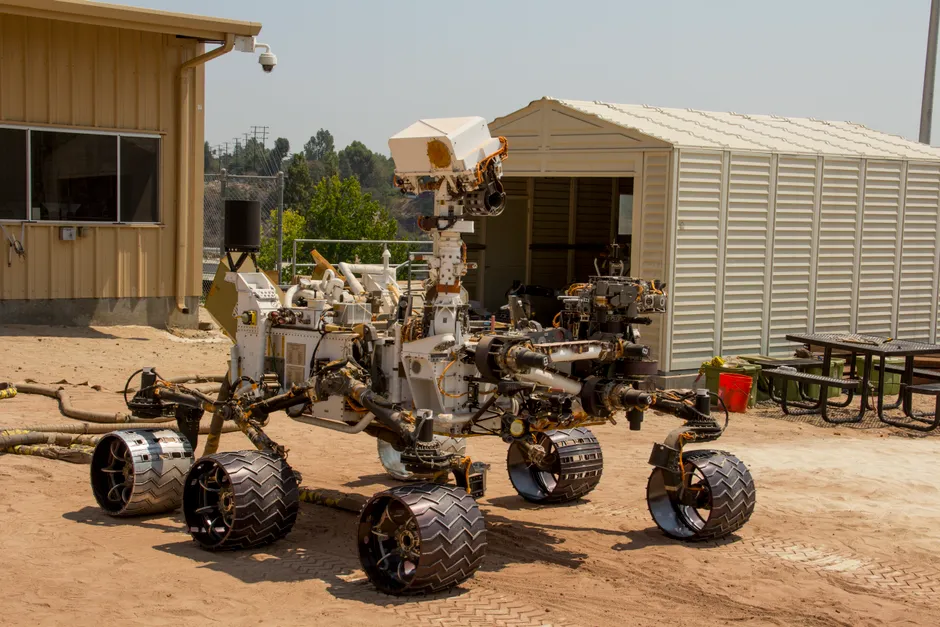
When Curiosity touched down in Gale Crater on August 6, 2012, it was the most ambitious Mars rover ever built. Roughly the size of a small car and weighing about a tonne, it carried ten scientific instruments, a robotic arm with a drill, and a laser that could fire at distant rocks to study their composition. The mission plan called for two years of work. Thirteen years later, Curiosity is still functioning and still producing new discoveries.
This longevity is not luck. It is the result of constant problem-solving by teams at JPL who regularly update the rover's software, adjust how it schedules its daily activities, and rewrite the rules for how it responds when something goes wrong. They treat Curiosity less like a fixed machine and more like a system that can be improved from millions of kilometers away.
The Power Problem That Changes Everything
Curiosity does not run on solar panels. Instead, it uses a Multi-Mission Radioisotope Thermoelectric Generator — a device that converts heat from decaying plutonium-238 into electricity. This design has a big advantage: the rover does not depend on sunlight or have to survive massive dust storms that would block the sun. The catch is that plutonium decays. With a half-life of roughly 88 years, the MMRTG produces less power every year.
When Curiosity landed, the generator produced about 110 watts of power — comparable to a bright desk lamp. According to JPL, that figure has now dropped noticeably. The rover has to spend longer each day simply recharging its batteries, which leaves less time for actual science work. Every task — drilling, driving, transmitting data back to Earth — now has to fit into a shrinking daily energy budget.
How NASA Is Adapting
JPL's answer is to make Curiosity do more work with less power. The new software capabilities announced for the 13-year milestone focus on efficiency: they allow the rover to schedule its tasks more intelligently, process data on board rather than sending raw information home, and plan drives that use less energy moving the wheels.
These updates sound technical, but the idea is simple. The rover now spends less energy on "overhead" — the charging cycles, thermal management, and system checks that do not directly produce science — so more of its daily power budget can go toward actual work. JPL has also enhanced Curiosity's ability to navigate on its own without constant instruction from Earth, a capability that has been refined several times over the rover's lifetime.
Why Keeping Curiosity Alive Still Matters
Scientists have a specific reason to keep Curiosity working. If life ever existed on Mars, the best window for it was roughly 3 to 4 billion years ago, when liquid water flowed across the surface and into the subsurface. Gale Crater, where Curiosity has been stationed, contains a central mountain called Aeolis Mons (Mount Sharp) whose rock layers act like a geological history book spanning exactly that time period. Each new hole Curiosity drills, each spectrum it records, each laser shot it fires adds another page to that record.
Over its first seven years alone, Curiosity travelled more than 21 kilometres across the Martian surface, sampling ancient mudstones, sulfate deposits, and sandstones. It is still climbing Mount Sharp, exposing younger and younger rock layers as it climbs. There are geological features still ahead that have never been studied.
The Bigger Picture
There is a pattern in the history of space exploration. The Voyager probes, launched in 1977, are still sending data from interstellar space because engineers have repeatedly turned off non-essential systems and kept the remaining ones running on dwindling power. Mars rovers Spirit and Opportunity, launched before Curiosity, both received software updates during their missions that let them work longer and accomplish more than their original two-year designs allowed. In each case, the engineers refused to treat the initial specifications as a hard limit.
Curiosity follows that same tradition. The MMRTG will keep producing power for years to come — less each year, but enough to operate a reduced set of science tasks. The real question is not if the rover will suddenly stop working, but how well JPL can keep adapting the rover's schedule and capabilities to match the power available.
The broader context here matters beyond Curiosity itself. NASA's newer rover, Perseverance, is now in its fourth year of operations in a different crater and carries its own radioisotope power source facing the same gradual decay. The engineering lessons being built into Curiosity's updated software — how to schedule science under tight power constraints, how to navigate autonomously to save energy, how to manage graceful decline — are not unique to this mission. They inform how Perseverance will be operated as it ages, and they will shape how any future Mars rovers are designed and run.
What Happens Now
NASA has not announced a formal end date for Curiosity. JPL's teams continue to plan the rover's work one Martian day at a time, prioritizing the sulfate-bearing rocks in the upper sections of Mount Sharp that scientists identified as high-value exploration targets. The rover's cameras, spectrometers, and drill are all still working.
The honest way to think about this: Curiosity is living on borrowed time, and every day it operates is a product of thousands of engineering decisions made before launch, refined constantly since, and being refined again right now. That kind of sustained, methodical work — unglamorous and easy to overlook — is what makes a 13-year mission from a two-year design actually possible.