Russia Imports Petrol as Ukrainian Drone Strikes Cut Refining Capacity
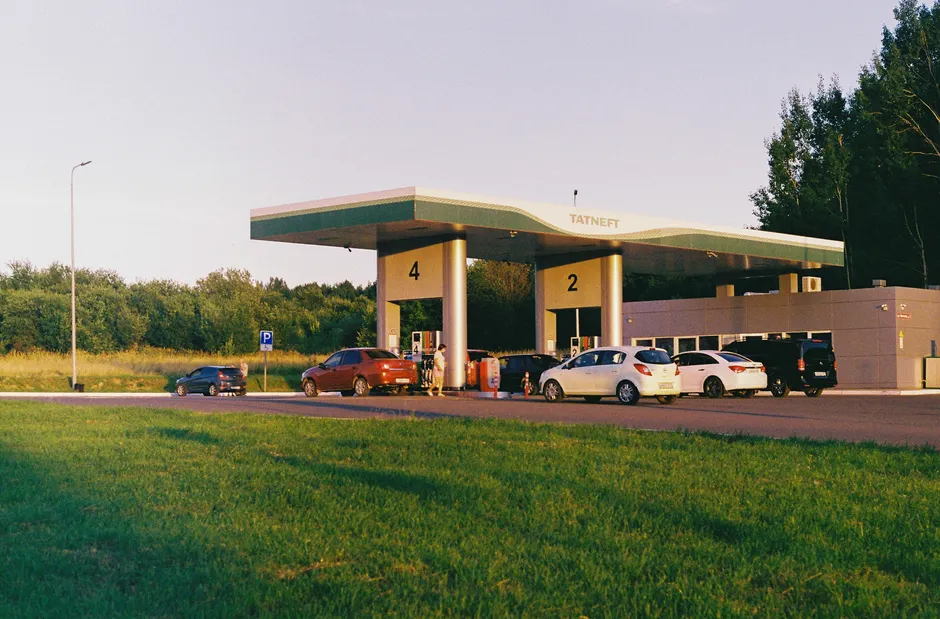
Russia has begun importing petrol to ease a domestic fuel crisis, reversing its long-standing role as a major energy exporter. Ukrainian drone strikes on oil refineries have cut national refining capacity by up to 20% on some days. A second wave of fuel shortages swept across at least 10 Russian regions in August 2026, prompting local authorities to tighten restrictions. Hours-long queues formed at petrol stations, including in Moscow, where fights broke out between drivers on August 14. (Reuters; NV)
The measures Moscow has taken in response read as a catalogue of emergency steps: curbing fuel sales, allowing prices to rise, importing gasoline, and authorising the production and sale of lower-grade petrol. The government temporarily approved the production and sale of Euro 2 standard fuel, a grade banned in Russia in 2013 that contains up to 50 times more sulphur than the modern Euro 5 standard. Sulphur is a pollutant that damages both engines and air quality, which is why Russia moved to cleaner grades over a decade ago. (BBC)
The Russian government newspaper Rossiyskaya Gazeta has itself warned of the trade-offs. Regular use of lower-grade petrol, it cautioned, can increase pressure on the fuel injector, spark plugs, oxygen sensors, catalytic converter, and soot filter of modern cars. The decision to reintroduce Euro 2 fuel is an explicit acknowledgement that the shortage has outstripped the supply of compliant fuel. (BBC)
The crisis traces directly to Ukrainian strikes on Russian oil infrastructure. Before the full-scale invasion of Ukraine in February 2022, there were no drone attacks on Russian oil refineries or other facilities inside Russian territory. That calculus has shifted entirely. Mid-June 2026 strikes knocked out the Moscow Oil Refinery, cutting off 40% of the capital's petrol market. Drivers in Moscow have since queued to refuel at Gazprom Neft stations amid ongoing shortages following a series of Ukrainian air attacks. (Kyiv Independent; Reuters Connect)
The disruption extends beyond fuel. Ukrainian strikes on distribution centres of Wildberries, Russia's closest analogue to Amazon, are causing disruption to shoppers and economic pain for sellers. Together, the fuel shortages and the attacks on logistics infrastructure are creating cumulative friction in everyday Russian consumer life. (BBC)
President Vladimir Putin has addressed the situation with a two-part formulation. He conceded that attacks on industrial facilities and infrastructure "do inflict damage," but maintained that there are no critical consequences from the attacks. The framing is consistent with the Kremlin's broader posture: acknowledging setbacks where denial would strain credibility while insisting they do not alter the trajectory of what it calls the "special military operation." The drone strikes on Russian oil facilities have not forced the Kremlin to reverse its military campaign against Ukraine. (BBC)
The human toll of the shortages is visible and growing. In a Black Sea resort town, Cossack volunteers were deployed to keep order at petrol stations as anger mounted over fuel shortages caused by Ukrainian attacks. In Moscow, the scenes on August 14 were more disorderly: fights between drivers waiting in hours-long queues. Russia has faced particular shortages of A-92 petrol, one of the most commonly used grades. (Reuters; NV; Reuters)
Analysts note the political stakes. Prolonged fuel shortages could erode public support for the war in Russia, now in its fifth summer. The first wave of shortages earlier in 2026 prompted local authorities to respond; the return of shortages in August, affecting at least 10 regions, suggests the measures taken in the first wave were insufficient. The pattern of recurring crises, each time requiring new emergency measures, points to a structural problem rather than a temporary disruption. (Reuters; Reuters)
The broader context here is one of asymmetric pressure, where a weaker side uses targeted tactics to generate outsized effects. Ukraine cannot match Russia's conventional military capacity, but its drone campaign has shown that deep strikes on energy infrastructure can produce cascading effects on the Russian domestic economy. The decision to reintroduce Euro 2 petrol, banned over a decade ago for environmental and public health reasons, is a concrete indicator of how far the supply situation has deteriorated. When a major oil producer begins importing petrol and reviving banned fuel grades, the gap between official reassurances and material reality widens. The question is not whether the strikes are inflicting damage; Putin has acknowledged that they are. The question is whether the cumulative effect of repeated disruptions, each more difficult to absorb than the last, eventually alters the political calculation in Moscow. Nothing in the current record suggests it has yet. But the fifth summer of the war has produced conditions that were inconceivable before 2022: Russians contending not only with the risk of drone attacks but with petrol queues, lower-quality fuel, and the erosion of a consumer infrastructure that once seemed insulated from the conflict. (Reuters)


