Flock Safety CEO Calls for National "Compromise" as Surveillance Backlash Intensifies
Flock Safety CEO Garrett Langley used a Fox News interview to call for a national "compromise" between privacy and safety, as his company faces escalating backlash from lawmakers, civil liberties groups, and activists who have begun physically disabling its cameras.
"When people talk about just one of these, privacy or safety, they're prioritizing the wrong thing, and what we have to prioritize as a country is compromise," Langley said on Fox News (TechCrunch, 2026-08-23).
The appeal comes amid a convergence of pressures. The Washington Post identified 46 cases in which police officers were accused of using Flock's technology for unauthorized purposes, including stalking wives, girlfriends, and ex-partners (TechCrunch, 2026-08-23). In a CBS News interview on August 14, Langley addressed the abuse directly: "I apologize. It kills me that she went through that." He added, "I don't think that Flock created police abuse. I think we're the first company to ever shine a light on it and build the tools to find it" (CBS News, 2026-08-14).
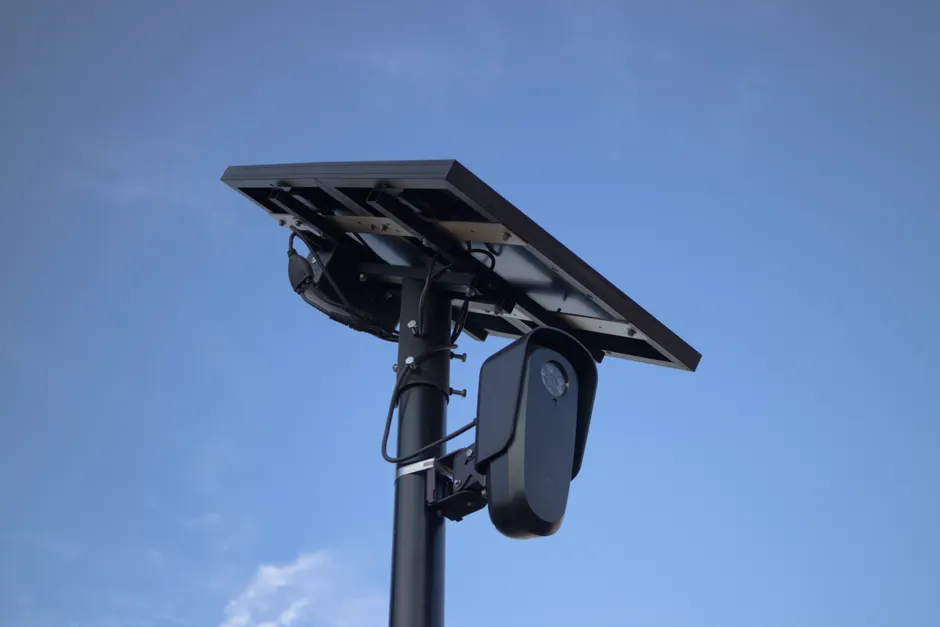
Flock's core product is a network of license plate reader (ALPR) cameras mounted on poles and street furniture across the United States. These cameras capture images of every passing vehicle, record the plate number, and store that data so police can search it later. The scale of the network, and the fact that it tracks ordinary drivers who are not suspected of any crime, is what has drawn the scrutiny of privacy advocates.
The political response has been bipartisan and sharp. Vermont Senator Bernie Sanders posted "STOP AI MASS SURVEILLANCE. STOP FLOCK." on social media (X/SenSanders). In Michigan, Democratic Senate nominee Abdul El-Sayed accused his opponent Mike Rogers of supporting "this mass proliferation of Flock cameras, any and everywhere, watching your every move to collect information without you even noticing" (X/AbdulElSayed). On the Republican side, three House Republicans introduced H.R. 9800, which would prohibit the federal government from purchasing automated surveillance systems using facial recognition, biometric IDs, or license plate recognition, including Flock Safety cameras (Congress.gov).
Flock has also faced physical resistance. NBC News reported that a wave of activist vandalism against the company's nationwide camera network pushed Flock into damage control (NBC News, 2026-08-21).
The company has responded with product changes. Flock reduced its default data retention period, the length of time camera footage is stored before automatic deletion, from 30 days to seven days. It now requires a case code to be entered before users can access data (TechCrunch, 2026-08-23). In an interview with the Associated Press, Langley said many of the announced changes will make previously optional guardrails mandatory for users (AP News, 2026-08-13). He also urged state regulators to "pass bills that make [the illegal use of Flock data] a criminal offense" (TechCrunch, 2026-08-23).
The ACLU has pushed back, noting that Flock has not shortened its default retention to the ACLU's recommended 48 hours and that the practical impact of the changes will hinge on how Evidence Mode operates. Evidence Mode allows police to override the default retention and save data for longer periods, which the ACLU says could render the new defaults more cosmetic than substantive (ACLU).
The tension here deserves a closer look. A seven-day default with a case-code gate is a meaningful tightening of the baseline, but if officers can toggle into Evidence Mode at will and preserve data indefinitely, the effective retention policy is whatever the officer on duty decides it is. The 46 abuse cases identified by the Post involved exactly the kind of personnel who would have had access to that toggle. Langley's framing, that Flock is "the first company to ever shine a light on" police misuse, is a defensible claim about auditability, the ability to track and review who accessed what data and when. But it also shifts responsibility onto the same departments whose misuse prompted the changes in the first place.
Langley's call for legislative criminalization of data misuse is an unusual move for a tech CEO, effectively asking regulators to constrain how his own customers use his product. Whether state legislatures take up that invitation, and whether Evidence Mode survives whatever statutory framework might emerge, will determine whether the announced changes amount to a structural shift or a configurable setting. The company is caught between police departments that want broad retention and search capabilities, and a growing coalition of legislators and civil liberties advocates who want hard limits. The Fox News "compromise" framing is Langley's attempt to position Flock as a reasonable middle. Whether anyone is still looking for a middle remains an open question.


