EU and Russian Aircraft Join Forces to Fight Serbia's Wildfires

EU and Russian aircraft are flying simultaneous missions over Serbia to contain major wildfires fueled by extreme heat and drought across the Balkans. The joint deployment, reported on August 24, 2026, includes EU helicopters and firefighter teams from several member states alongside a Russian Ilyushin Il-76 water-bombing plane sent by Moscow's EMERCOM agency, Russia's emergency-response service (Al Jazeera).
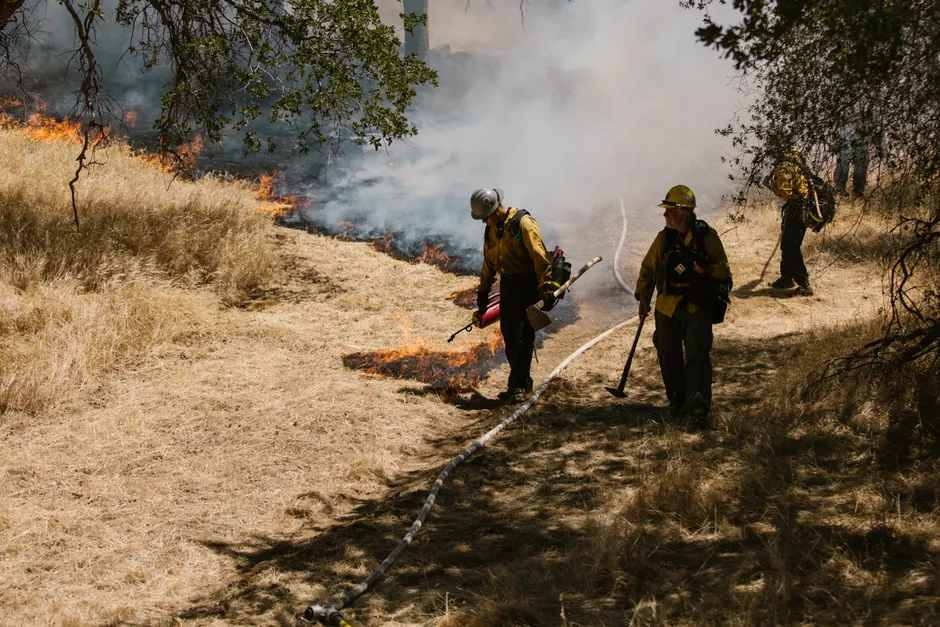
The main firefighting front is in Deliblatska Pescara, a protected nature reserve near Belgrade, where a large blaze has been burning for weeks. Helicopters and crews from the Czech Republic and Romania have been working alongside Serbian teams to contain the fire. A separate blaze in the Stolovi mountain range in the southwest was brought under control with help from the Russian Il-76. Serbia's state broadcaster RTS reported that 168 tonnes of water were dropped across both sites: 126 tonnes in Deliblatska Pescara and 42 in Stolovi (Al Jazeera).
Serbia's Interior Minister Ivica Dacic called the wildfire situation "extremely difficult," with more than 400 personnel deployed to the area each day. President Aleksandar Vucic said Belgrade requested urgent help from both Russia and the European mechanism once Serbia's own resources fell short. Serbia is not an EU member, but it can request aid under the EU's Civil Protection Mechanism, a system that lets participating countries pool emergency resources for disasters, much like a neighborhood where each household contributes equipment to a shared toolbox. Serbia formally asked the EU for help on Friday, August 21 (Al Jazeera).
The EU response included four Black Hawk helicopters from Romania, Slovakia, and the Czech Republic, plus firefighter teams and vehicles from Germany and Romania. Some EU aircraft were already operating over the weekend of August 22–23, and the rest of the deployment, including a German ground team, was due to arrive by Monday, August 24 (Al Jazeera; Reuters).
The order in which Serbia made its requests has attracted attention. Serbia's interior ministry said the country turned to Russia because no EU planes were available at the time of the initial request (Reuters). European Western Balkans reported that Serbia did not activate the EU Civil Protection Mechanism at first and instead went to Russia for the Il-76. However, Balkan Insight reported on August 22 that Serbia activated the EU mechanism after the bloc criticized it for seeking Russian help first. The most recent reporting, from Al Jazeera on August 24, confirms both channels were operational, with EU and Russian assets deployed at the same time.
Russia's EMERCOM confirmed that its Il-76 arrived in Serbia to support firefighting operations, with the Russian-Serbian Humanitarian Center in the southern city of Nis providing organizational help and coordination. EMERCOM reported continued operations using the Il-76 on August 21. An EMERCOM official said Russia was ready to send an additional Be-200 amphibious aircraft and an Mi-26 heavy-lift helicopter if needed (Al Jazeera; EMERCOM).
Earlier in the 2026 wildfire season, Serbia sent a firefighting helicopter and response team to Spain when blazes stretched the bloc's resources, a reciprocal gesture under the mutual-aid logic of the Civil Protection Mechanism (Al Jazeera).
The fires extend well beyond Serbia's borders. In North Macedonia, a blaze near the town of Strumica damaged at least one home. Farmer Ljubce Ivanski described a nearby fire as "devouring everything" and said strong winds overwhelmed firefighting planes and helicopters. A large fire between Bosnia and Croatia forced the closure of the main road linking Trebinje to Dubrovnik, stranding thousands of travelers and prompting the evacuation of nearby villages. Croatian firefighters crossed the border to help contain the blaze, which had spread across 16 kilometers of difficult terrain (Al Jazeera).
The 2026 European wildfire season has been exceptionally severe by official measures. The European Commission reported on August 17 that the area burned by the end of July was already 2.5 times the usual level in Europe, with cumulative burnt area in the EU exceeding 1 million hectares. The pattern builds on several consecutive difficult years: 2023 was described by the Commission as a record-breaking year for EU wildfires, and by August 14, 2025, the number of EU Civil Protection Mechanism wildfire activations had already matched the total for all of 2024 (European Commission; European Commission; European Commission).
The broader context here involves the tension between EU institutional frameworks and bilateral channels in a region where both are politically charged. Serbia's status as an EU candidate country gives it access to the Civil Protection Mechanism, but Belgrade's parallel security relationship with Moscow, anchored in part by the EMERCOM-run Russian-Serbian Humanitarian Center in Nis, provides an alternative rapid-response channel. The fact that Serbia exhausted its own capacity and then faced a gap in available EU aerial assets before activating the mechanism points to a real vulnerability: the EU's pooled fleet may not have enough planes to go around during peak-season demand across multiple member states at once. That Russia filled the gap, and that the EU subsequently mounted a substantial multi-state deployment, means both actors can point to operational results. But the optics of EU criticism followed by Serbian activation, and of Russian and EU aircraft flying concurrent sorties over the same country, place this episode within the ongoing strategic competition for influence in the Western Balkans.
The regional dimension compounds the picture. Fires in North Macedonia, Bosnia, and Croatia are straining capacities across the board, and cross-border cooperation, as seen with Croatian units operating inside Bosnia, is functioning largely on ad hoc bilateral arrangements rather than through unified regional protocols. The EU Civil Protection Mechanism has been tested repeatedly in recent years, with activations in 2022 during Slovenian wildfires and the record 2023 season, but 2026 is pushing the system's surge capacity to new limits. Whether the mechanism can scale fast enough to meet the escalating frequency and intensity of European wildfire seasons, or whether participating states will increasingly seek bilateral solutions when pooled resources fall short, is the structural question this Serbian episode raises with some urgency.