Japan's Imperial Succession: How Lawmakers Are Quietly Reshaping the Line of Throne

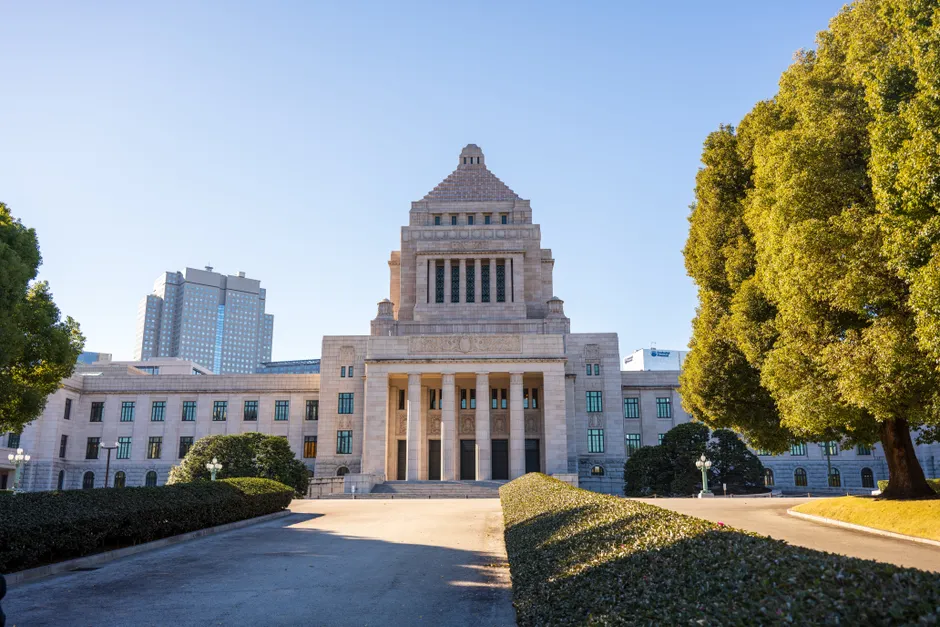
Japan's Diet endorsed a draft plan on June 10, 2026, allowing men from former imperial branches to be adopted into the Imperial Family. It is a targeted mechanism designed to address an increasingly narrow succession pipeline under rules that restrict the throne to male descendants in the male line.
The proposal targets descendants of branches stripped of imperial status after World War II. A crucial detail: the adopted men themselves would not enter the line of succession. Only their sons would be eligible to succeed. That one-generation buffer is deliberate—a structural constraint that preserves the Imperial House Law as it stands while broadening the pool of possible future heirs.
The Legal Framework
The Imperial House Law limits succession to male offspring in the male line. The Japanese Constitution reinforces this principle. Both leave no opening for female-line or female succession, which is why the Diet has consistently circled back to agnatic adoption—adoption of male relatives from collateral branches. The practice has historical precedent in the imperial institution itself.
The Imperial Family previously absorbed male descendants from collateral branches through adoption to sustain the line, a practice the Imperial Household Agency's own records confirm. The current proposal is, structurally speaking, a codified return to that mechanism rather than a constitutional rewrite.
Prince Hisahito, nephew of Emperor Naruhito, is currently second in the line of succession behind Crown Prince Akishino and the only male heir in the next generation of the main imperial line. The demographic picture is stark: if he were to have no male children, the succession question would become urgent under existing law with no legal remedy available.
Political Momentum and What Comes Next
The succession question has been formally on the government's agenda for over two decades. An Advisory Council on the Imperial House Law released a report on the topic in November 2005. Prime Minister Kishida flagged it as a priority in his January 2024 policy address. His successor, Prime Minister Ishiba, restated the same urgency in his inaugural policy speech in October 2024, framing a sufficient number of imperial family members as necessary for institutional stability.
What shifted in June 2026 is that legislative consensus moved from discussion to a concrete draft bill. Lawmakers backing the plan signal a meaningful shift in the Diet's posture—from study and deliberation toward a workable, if structurally conservative, legislative proposal.
The adoption mechanism is conservative by design. It sidesteps the more contentious question of female-line succession—periodically debated in Japan and supported in some public polling—by remaining strictly within the male-agnatic framework the Imperial House Law already recognizes. Critics argue it defers rather than resolves the underlying vulnerability; supporters contend it is the only path likely to achieve the cross-party consensus needed to pass legislation.
Whether the Diet moves to formal enactment, and on what timeline, is an open legislative question. The draft's advancement to floor consideration is itself a significant procedural step. For decades, the issue cycled through advisory bodies without producing a bill.
The broader stakes are institutional. The Imperial Household's ceremonial and constitutional functions depend on continuity that the current succession pool cannot guarantee beyond the next generation under existing rules. Japan's political leadership has consistently treated disruption to that continuity as a distinct category of institutional risk. This is why even a structurally modest proposal like the one now before the Diet attracts the kind of bipartisan attention that few legislative questions in contemporary Japanese politics command.