Data Centers' Real Water Cost Is in the Power Grid, Not the Cooling Towers
Data centers across seven U.S. states depend on roughly 3.4 trillion gallons of freshwater annually — not for their own cooling systems, but for the electricity generation that powers them. That finding comes from a report published August 25, 2026 by Ceres, a sustainability nonprofit, titled "Water Behind the Watts: The Hidden Risk of Powering Data Centers." The report examines water consumption tied to data center power demand in Virginia, Texas, California, Illinois, Georgia, Ohio, and Arizona, which together host about half of all U.S. data centers Ceres.
The central finding reframes the water-risk conversation around data centers. Power generation, not on-site cooling, accounts for the bulk of data center water use. The 3.4 trillion gallons consumed annually for electricity across the seven analyzed states is roughly 12 times the combined annual water use of Los Angeles, Phoenix, and Washington, D.C. Ceres.
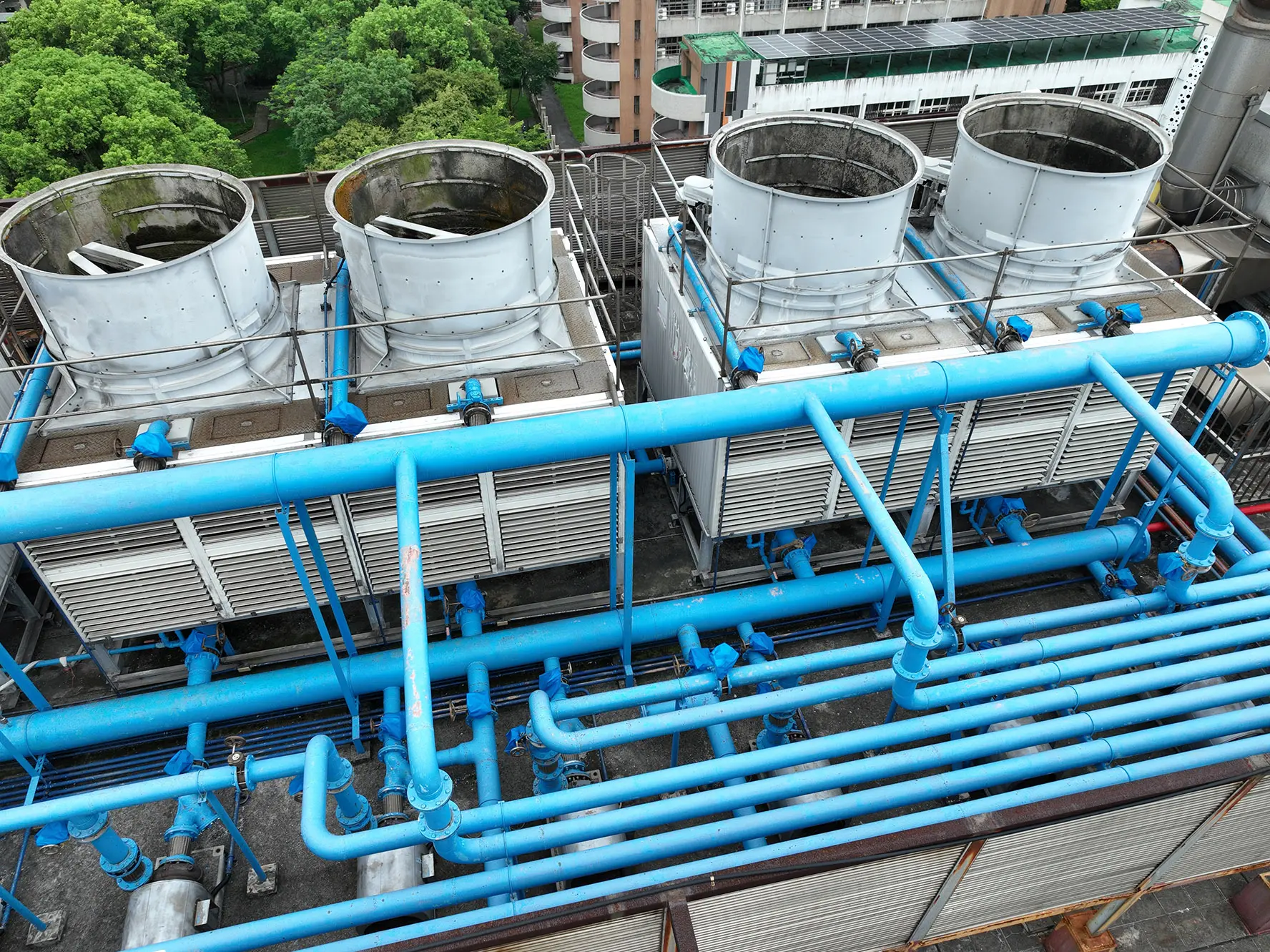
State-level figures from the report illustrate the scale. In 2024, power plants generating electricity for data centers withdrew 1.4 trillion gallons of water in California and 753 billion gallons in Virginia Bloomberg Government. Data centers currently consume about 4% to 5% of total U.S. electricity Ceres. For context, a typical data center uses roughly 300,000 gallons of water per day for its own cooling operations alone Brookings.
The geographic overlap between water-intensive power generation and water stress is a core concern. Sixty-six percent of power plants using water for generation in these states faced medium-high to extremely high water stress. Many of the plants supplying water-intensive generation sit in regions already dealing with drought or chronic water shortages Ceres.
The trajectory compounds the problem. Annual water use associated with data center electricity consumption is projected to grow by about 400% in the coming years. Water used directly for data center cooling is projected to grow by about 870% over the same period Ceres Brookings. These projections are driven by the accelerating buildout of AI training and inference infrastructure — systems that require higher power density and, as a result, greater cooling capacity per server rack.
The report outlines steps that power producers, data center operators, policymakers, and investors can take to assess and address water-related risks. Recommendations cover where to site facilities, adoption of water-efficient generation technologies, cooling system design, and disclosure practices for investors evaluating exposure to water-constrained regions Ceres.
The broader context here is that the industry has spent the last two years focused on whether the grid can supply enough megawatts, and on securing power purchase agreements for nuclear and renewable capacity. The Ceres report widens that aperture: the constraint is not only electrons but the water required to generate them. In water-stressed basins like the Colorado River watershed or stressed aquifers in Virginia's Loudoun County corridor, the competition between power plant cooling, agricultural use, and municipal supply is already real. Operators selecting sites on the basis of available power may be underweighting water risk in the generation supply chain, not just in their own facilities.
For infrastructure planners, the report's framing has practical implications. A facility sited near a thermoelectric plant in a high-stress basin carries embedded water risk that may not appear in the operator's own water footprint accounting but will surface in power contracts, regulatory scrutiny, or community opposition as demand scales. Investors and operators evaluating the 400% projected growth in generation-related water use will need to model water constraints alongside carbon intensity and grid interconnection queues when assessing long-term site viability.