Gang Attacks on a Church and a Strategic Hillside Town Deepen Haiti's Protection Crisis

Armed gang members killed around 40 displaced people sheltering in a church near Haiti's capital on August 25, 2026, some of them execution-style, according to Le Monde. The victims were civilians who had fled to the church to escape the violence spreading across the Port-au-Prince metropolitan area.
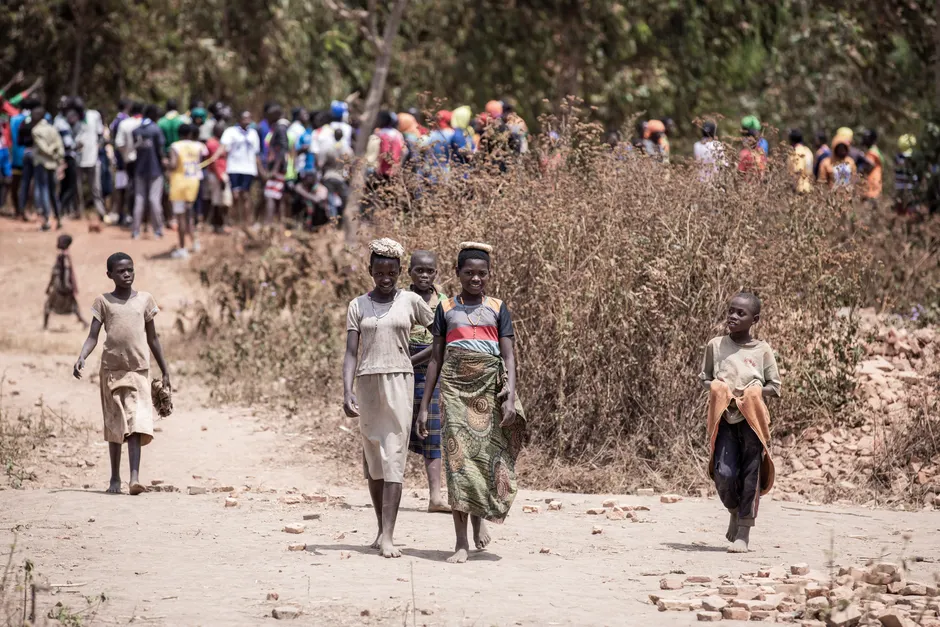
On the same day, at least 30 people died in a separate gang assault on Kenscoff, a hillside community overlooking the main routes into Port-au-Prince, as reported by Al Jazeera. Reuters published a "Pictures of the Day" feature on August 25 documenting the aftermath of the Kenscoff attack.
Kenscoff's geography gives it outsized strategic value. The town sits on high ground above the roads linking the capital to Haiti's southern peninsula, making it a natural chokepoint — a narrow corridor where the movement of people, goods, and security forces can be controlled or blocked. If gangs hold Kenscoff, they tighten the stranglehold that armed groups already exercise over access to and from the capital.
The church massacre and the Kenscoff assault are the latest flashpoints in what ReliefWeb's Atrocity Alert No. 491, published on July 22, called Haiti's "deepening protection crisis." That alert specifically referenced the "deadly Kenscoff attacks," indicating that the current violence is part of an escalating pattern rather than an isolated event.
The broader pattern of violence extends well beyond gang-on-civilian attacks. In March 2026, Human Rights Watch reported that Haitian security forces carried out explosive drone strikes targeting gangs that killed over 1,200 people, including 43 adult civilians and 17 children, according to Reuters. The use of drone strikes by state security forces against gang targets adds a new layer to the tactics employed by Haiti's beleaguered security apparatus.
The simultaneous targeting of a religious shelter and a strategic hillside town reveals an operational logic that bears scrutiny. The church attack signals that gangs are striking at the last remaining physical refuges for internally displaced persons — people forced to flee their homes but who remain within their country's borders. The Kenscoff attack extends the zone of gang operations outward from the capital into the surrounding highlands.
For the displaced population sheltering near Port-au-Prince, the church attack narrows the already vanishing options for safe haven. Humanitarian access to communities in and around the capital has been progressively constrained as gangs consolidate control over key routes. The killing of civilians in a church compounds the deterrent effect on any displaced person considering movement toward a presumed safe site.
The use of execution-style killings adds a particular dimension. Mass shootings driven by gang turf competition produce casualties as collateral violence — unintended deaths that happen during fighting. Execution-style killings require intent, time, and a deliberate decision to eliminate specific individuals. This distinction matters for any future accountability process and for the work of bodies like the UN Human Rights Council, which ReliefWeb's alert also referenced.
The Human Rights Watch findings on drone strikes add a further layer of complexity. If state security forces are themselves responsible for civilian casualties through aerial bombardment, the protection picture for Haitian civilians becomes one of exposure to violence from both sides. Civilians face execution-style gang killings in places of worship and the risk of being caught in state drone strikes targeting gang positions.
The broader context here is what these events mean for international engagement. The August 25 attacks will sharpen the policy debate over the multinational security support mission — a coalition of foreign security personnel authorized to help Haiti restore stability — and its effectiveness. The mission's mandate is to restore security conditions that allow humanitarian access and civilian protection, yet the attacks on a church and a strategic hillside town occurred on a single day without apparent disruption of gang operations.
In my view, the "deepening protection crisis" framing from ReliefWeb now encompasses three distinct dimensions: violence from gangs against displaced civilians, violence from gangs against strategic communities, and violence from state security forces against civilians in gang-controlled areas. Each raises its own legal and policy questions that the international community, the Haitian state, and humanitarian actors will need to address with the specificity they require rather than as a single monolithic conflict.