SpaceX Picks Louisiana for a Second Starship Spaceport, Pledging $100 Billion

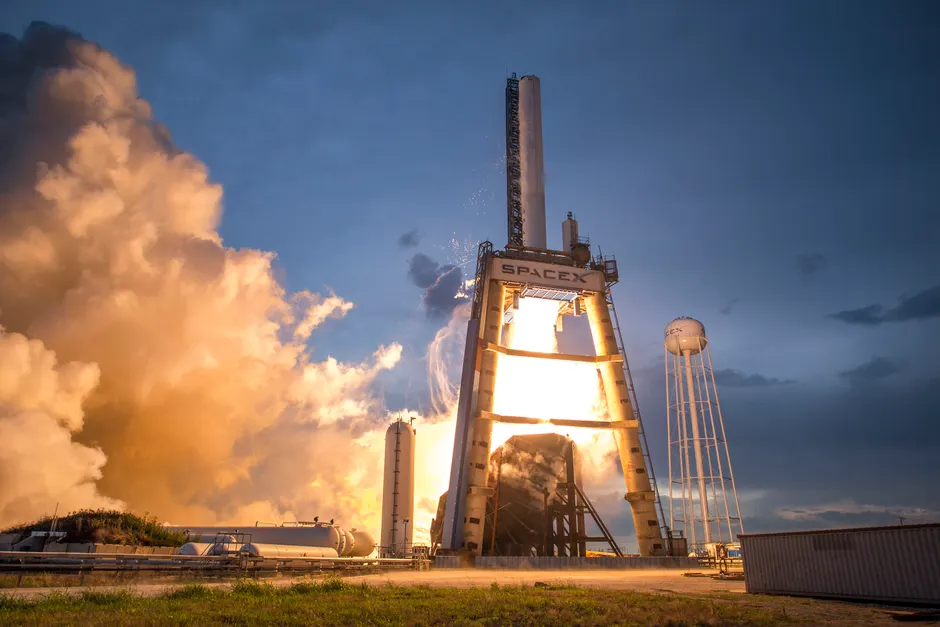
SpaceX will build a second spaceport for its Starship mega-rocket on a former Exxon property in Vermilion Parish, Louisiana, along the Gulf Coast west of New Orleans. The company says it is investing $100 billion in the site, capping what it describes as a seven-year search for a suitable location. The new facility will sit roughly 10 hours from SpaceX's existing Starbase complex in South Texas.
SpaceX's timeline calls for construction to begin in 2027, with the first Starship launch from the Louisiana site targeted for 2029. Louisiana Economic Development, the state agency, offers a more conservative estimate: construction starting by the end of 2027 and initial operations coming online in 2030. The gap between the two projections is narrow in absolute terms but meaningful for a program of this scale, where months of slippage can compound across supply chains and workforce ramp-up plans.
The Louisiana site is ambitious in scope. SpaceX says it wants the facility to be a "self-sustaining spaceport" with propellant production, power generation, deep-water shipping capabilities, vehicle processing facilities, and an airport (TechCrunch). Think of it less as a launch pad and more as a vertically integrated campus — a place that builds, fuels, launches, and services rockets, all in one location.
Louisiana Economic Development projects 3,000 direct new jobs over 10 years at an average annual salary of $92,600, with more than 30,000 construction jobs expected at peak buildout (Louisiana Economic Development). The job figures come from the state agency rather than SpaceX itself, which is worth noting when evaluating the announcement.
Starship, the rocket this facility is built for, has not yet reached operational maturity. SpaceX has performed 13 test flights of Starship since 2023, and the company has yet to return both the booster (the first-stage rocket) and the upper stage to the launch pad on a single flight. An upcoming 14th test flight could see the upper stage reach orbit for the first time. SpaceX has spent more than $8 billion developing Starship, according to filings submitted to the US Securities and Exchange Commission. Elon Musk has said he will retire the Falcon rockets — SpaceX's current workhorse vehicles — once Starship is flying multiple times per week (TechCrunch).
The Texas Starbase site that serves as the current development hub has recorded extremely high injury rates over the last decade, making it the most dangerous site SpaceX operates. The Louisiana buildout gives the company an opportunity to design a facility from a blank slate rather than incrementally expanding a test site that was, by its nature, experimental.
The broader context here is one of capacity planning at a scale the commercial launch industry has not previously attempted. A single spaceport, even one as active as Boca Chica, constrains how frequently a vehicle can fly — and Musk's stated cadence target for Starship is multiple flights per week. A second site does not simply double throughput; it introduces parallel processing, separate ground systems, and the workforce and supply chain to sustain them. The $100 billion figure, if realized, would make this one of the largest private infrastructure investments in the United States. Whether the timeline holds is a separate question from whether the strategic logic of a second site is sound, and on the latter point the case is straightforward: you do not fly a reusable super-heavy lift vehicle at high cadence from a single coastal pad.
Worth flagging is the tension between announcing a second spaceport while the first has not yet demonstrated full reusability on a single flight. SpaceX has consistently built infrastructure ahead of vehicle maturity, and that approach has worked at smaller scales. At $100 billion and a decade of construction jobs, the stakes are different. The Louisiana site is a bet that Starship will clear its remaining technical hurdles on roughly the schedule SpaceX has laid out, not the more cautious one the state agency published.
If that bet pays off, the Louisiana campus gives SpaceX the industrial footprint to operate Starship as a high-cadence transport system, not just a development program. The infrastructure list — propellant production, deep-water port, airport, power generation — reads like the manifest for a spaceport designed to service orbital and potentially beyond-orbital demand at volume. For the Gulf Coast economy, 3,000 direct jobs at an average salary approaching six figures would be transformative. For SpaceX, it is the physical groundwork for the next phase of the Starship program, assuming the vehicle itself is ready to populate it.