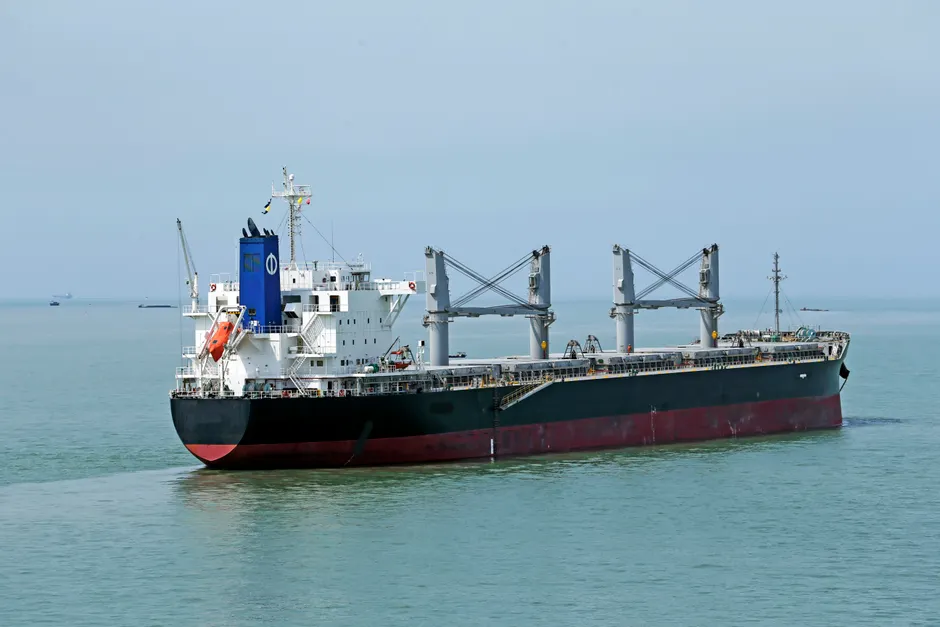
Iran and Oman Negotiate a Temporary Shipping Corridor Through the Strait of Hormuz

Iran and Oman's top diplomats met in Tehran on August 25, 2026, to discuss a proposed framework for a temporary joint navigation corridor through the Strait of Hormuz and a joint mine-clearing project in the waterway, according to Al Jazeera. Oman's Foreign Minister Badr Albusaidi arrived in the Iranian capital for talks with his counterpart Abbas Araghchi. Both sides' foreign ministries released a joint statement outlining the framework's components.
The proposed framework, published by Oman's Foreign Ministry, includes the establishment of a temporary joint navigational corridor through the Strait and an agreement to carry out a joint mine-clearance project. It also envisions continued technical negotiations aimed at a permanent navigation corridor, future management arrangements, an information-exchange mechanism, and navigational and security services. Albusaidi posted on X that he hoped Iran and Oman would soon announce the temporary corridor (Al Jazeera).
The announcement follows US President Donald Trump's claim on Truth Social that all mines have been removed or detonated from international waters of the Strait of Hormuz, citing the US Navy. The Iran-Oman discussions take place against the backdrop of a war that began on February 28, 2026, when the US and Israel attacked Iran. Tehran responded by blockading the Strait of Hormuz, and Washington imposed a naval counter-blockade on Iranian ports (Al Jazeera).
Iranian officials have insisted the Strait will not fully reopen until Washington meets Tehran's demands: lifting the naval blockade on Iranian ports, dropping oil sanctions (government-imposed restrictions that prevent a country from selling or buying certain goods), and unfreezing Iranian assets abroad. Foreign Minister Araghchi has framed the Oman-mediated talks on a new maritime route as separate from the broader decision on whether to reopen the Strait (Al Jazeera; Middle East Eye).
That distinction matters. The corridor framework addresses the mechanics of transit through a chokepoint that handles roughly one-fifth of global oil trade, but it does not resolve the underlying standoff over sanctions and port access that triggered the blockade.
The August 25 framework builds on weeks of bilateral technical work. Iran and Oman had been discussing navigation through the Strait for weeks, with Tehran stating that geographical coordinates of a route envisaged by the two countries had been agreed upon (Al Jazeera). On August 8, Iran said a deal with Oman on control of the Strait was close but would not by itself free up the waterway (Reuters. Earlier, in early August, Iran had demanded control over inbound shipping through the Strait and visibility and oversight over outbound traffic, with the ability to intervene (Reuters.
Tehran and Muscat had been holding talks for roughly two months to establish a safe commercial shipping route. Iran notified the International Maritime Organization (IMO), the UN body that regulates international shipping, of a temporary safe corridor on July 13, with Iran's Embassy in London announcing the measure (IRNA. The corridor under discussion was structured as a single two-way route (IRNA. Under Article 5 of the emerging agreement, Iran agreed to allow commercial vessels to pass through the Strait without charge for 60 days (Al Jazeera. Oman had separately coordinated with the IMO to provide a transit corridor for vessels in the Strait (Oman Foreign Ministry.
The sequence reveals layered, overlapping tracks rather than a single negotiation. Iran unilaterally notified the IMO of a corridor in mid-July. Bilateral Iran-Oman talks advanced through August. Trump asserted mine clearance unilaterally. The August 25 framework seeks to consolidate these threads into a joint structure, with both the temporary corridor and mine-clearance project operating on a bilateral basis before any permanent arrangement.
The broader context here is that Iran has carefully separated the technical question of safe transit from the political question of full reopening. Araghchi's insistence that the maritime-route talks are distinct from the reopening decision gives Tehran leverage: it can offer limited commercial access without abandoning the blockade as a bargaining chip. The framework's provision for future management arrangements and an information-exchange mechanism suggests both sides are building institutional architecture that could outlast the current conflict, regardless of whether the broader US-Iran standoff is resolved.
Whether Washington accepts the bilateral framework is the critical variable. Trump's claim of mine clearance, if accurate, removes one obstacle. But Iran's core demands, lifting the naval blockade, ending oil sanctions, and unfreezing assets, are unchanged. The 60-day toll-free transit window and the joint mine-clearance project may lower the temperature at the chokepoint, but they do not address the demands Tehran has tied to full reopening. For commercial operators and maritime insurers, the distinction between a temporary corridor and a permanently open Strait will continue to govern risk calculus.