Commodore and CD Projekt Red Build a Cyberpunk-Themed C64 That Actually Works
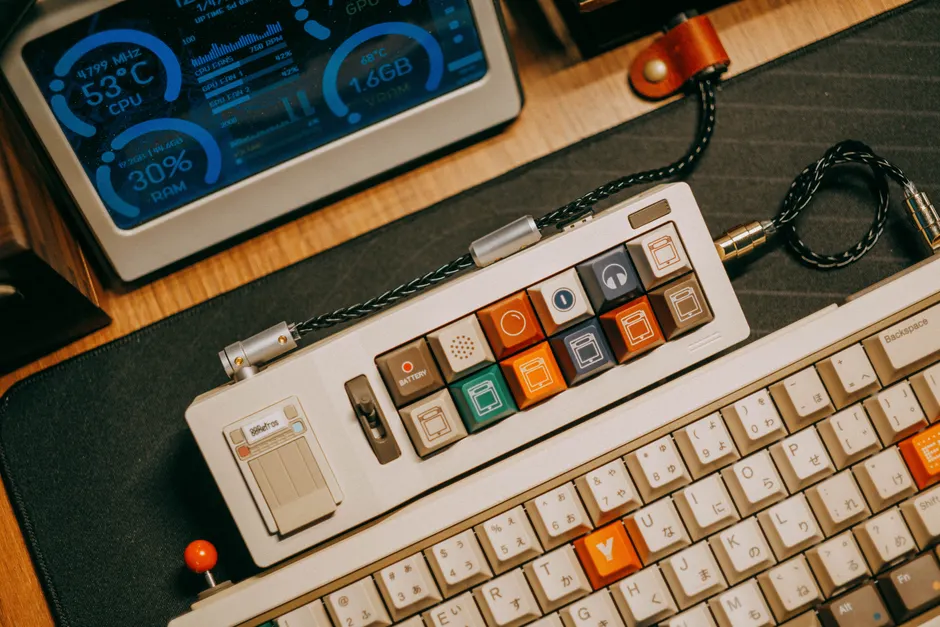
Commodore and CD Projekt Red have teamed up on the Commodore 77, a themed version of the Commodore 64 Ultimate designed to look like an artifact pulled from the streets of Cyberpunk 2077's Night City. The unit is available to pre-order for $377 at Commodore.net, with no release date announced. Engadget
The Commodore brand was revived by YouTuber Christian "Perifractic" Simpson, whose first product under the restored marque was the Commodore 64 Ultimate. That machine is an FPGA recreation of the original C64. FPGA, or field-programmable gate array, is a chip that can be configured to replicate the behavior of original hardware at the circuit level, rather than approximating it through software emulation. The C64 Ultimate comes with a real keyboard, HDMI output, USB and WiFi connectivity, and backwards compatibility with original C64 accessories. New Commodore 64 models are built using the original injection mold tooling, meaning the plastic cases are formed from the same manufacturing molds that shaped the original units decades ago. Buyers can choose the classic beige "breadbin" form factor or the later, more angular C64C design.
The Commodore 77 takes the breadbin chassis and gives it a thorough cosmetic overhaul. The case is a dinged-up yellow with graffiti, a metal plate across the function row, half-removed stickers, and a redesigned boot screen. It is, in effect, a prop from a fictional future grafted onto working 1980s hardware architecture.
Inside the fiction, the unit ships on an Arasaka-design cartridge. Arasaka is a megacorporation in the Cyberpunk universe. The cartridge contains a demo built by Polish demoscene group Arise, with a chiptune soundtrack composed by LukHash. The demoscene is a subculture of programmers and artists who create audiovisual demonstrations that push hardware to its limits, often within strict memory constraints. The demo is an interactive experience that expands the lore of the Cyberpunk universe and is tied to the 2K77 game. Buyers also receive a custom neon power light, stickers, pins, collectible packaging, and a themed spiral-bound user guide.
The collaboration sits at an unusual intersection of retro computing, game-world storytelling, and physical merchandising. The C64 Ultimate's FPGA core means the Commodore 77 is not a decorative shell with a screen inside; it is a functional C64 capable of running original software, reading original cartridges through accessory compatibility, and connecting to modern displays via HDMI. The Arasaka cartridge demo, built by Arise, runs natively on that hardware rather than being emulated on a modern system-on-a-chip.
The broader context here is worth pausing on. CD Projekt Red has extended the Cyberpunk universe onto a platform that was already approaching obsolescence when the original game's tabletop inspiration, Mike Pondsmith's Cyberpunk, first appeared. The decision to commission a genuine C64 demo from a Polish demoscene group, rather than simply branding a case, is a craft choice. It ties the product to the demoscene tradition that was itself a significant cultural force in Poland and across Eastern Europe during the C64's original lifespan. LukHash's chiptune involvement reinforces that lineage.
For the broader retro-computing market, the Commodore 77 shows how the FPGA recreation model pioneered by products like the MISTer and various Analogue devices can support limited-edition, cross-brand collaborations with production values that go well beyond a cosmetic skin. The use of original injection mold tooling means these are not 3D-printed replicas but cases produced from the same manufacturing infrastructure that shaped the original units decades ago.
The $377 price point places the Commodore 77 firmly in collector territory, above the base Commodore 64 Ultimate pricing that Simpson's revived brand has established for its standard models. The absence of a release date means the product currently exists as a pre-order commitment rather than a shipping device.
What this enables is straightforward but genuine: a piece of functional retro hardware that doubles as a narrative object within a major game franchise. The demo cartridge gives the buyer something to run on the machine that exists nowhere else, which is the core proposition for collectors who want display pieces they can also power on and use. Whether that proposition justifies the price will depend on the overlap between C64 enthusiasts, Cyberpunk lore completists, and people who find a graffiti-covered yellow breadbin aesthetically irresistible.