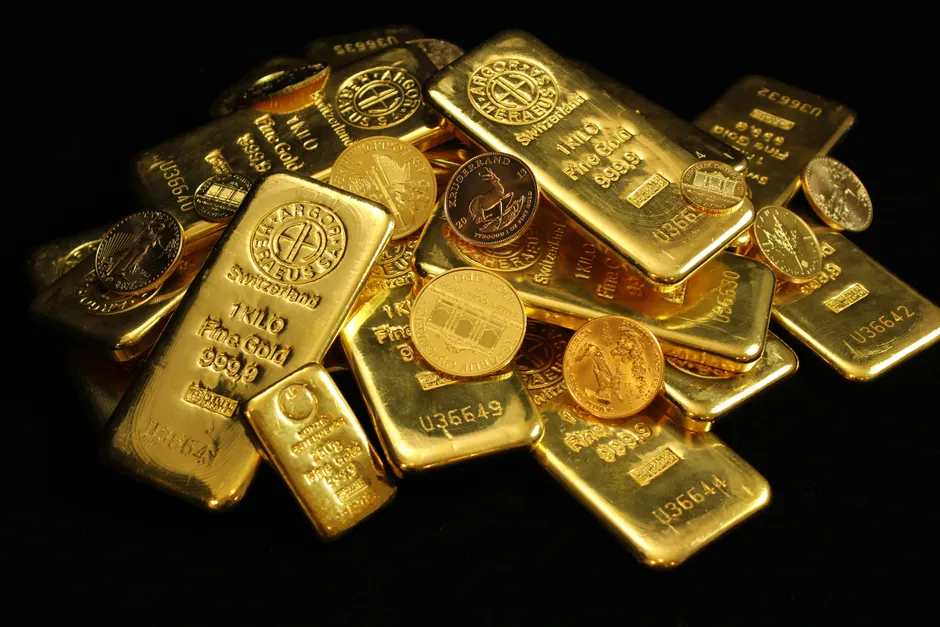
Gold Pulls Back as Oil Rises and Yields Climb Ahead of Jackson Hole

Gold prices slipped on August 25, 2026, pressured by higher oil prices and rising U.S. Treasury yields, as markets position ahead of Federal Reserve Chairman Kevin Warsh's scheduled speech at the Jackson Hole symposium on Friday. (WSJ)
The pullback caps a volatile stretch for the metal. Spot gold — the price for immediate delivery rather than a futures contract — had climbed 2% on August 20 amid a weaker dollar and falling bond yields, driven by easing expectations for further Fed rate hikes and robust physical demand. By August 24, spot gold was trading at $4,639.49 per ounce, up 0.8% on the day, after touching $4,680.70 — its highest level since May 14. (Reuters) (CNBC) U.S. gold futures for December delivery rose 0.4% to settle higher the same session. (CNBC)
That rally has already faded. The August 25 slip reverses a week of gains, and the metal has lost ground since hitting all-time highs earlier in the cycle. (Reuters) The reversal follows a familiar pattern: gold tends to move opposite to both real yields (the return on government bonds after adjusting for inflation) and the dollar. When yields and the dollar rise, gold usually falls, and that relationship reasserted itself as both moved against the metal.
The immediate catalyst for positioning is Jackson Hole. The Kansas City Fed's 2026 Economic Policy Symposium runs August 27–29, with Warsh scheduled to speak Friday. The symposium's theme is "Financial Innovation: Implications for Payments and Policy." (Kansas City Fed) (Kansas City Fed) The topic focus on payments innovation is unusual relative to recent years, which have centered on monetary policy framework reviews or labor market dynamics. Markets will parse Warsh's remarks for signals on the rate path, particularly given the tension between stubbornly elevated oil prices and signs of cooling in other inflation components.
The price trajectory through the summer shows how sensitive gold remains to Fed expectations. On July 30, spot gold rose 1% to $4,104.59 per ounce as markets digested Warsh's inflation message following the Fed's latest policy decision, with U.S. gold futures for August delivery gaining 1.6% to settle at $4,160. (Reuters) From that late-July level to the August 24 peak near $4,680, spot gold added roughly $576 — a move of about 13% in under a month, driven primarily by falling yields and a softer dollar as rate-hike expectations eased.
The pullback to $4,639 on August 24, followed by the August 25 slip, is modest by comparison. But the direction matters. Higher oil prices feed into headline inflation expectations, which in turn pressure the Fed toward a more hawkish (that is, tighter-money) stance. Rising Treasury yields raise the opportunity cost of holding non-yielding bullion — meaning investors give up more potential interest income by parking money in gold instead of bonds. Both forces work against gold in the near term.
For traders and allocators, the setup is familiar: a Fed chair speech at Jackson Hole that could either validate the dovish pivot priced into the rates curve or push back against it. The stakes for gold are asymmetric. A hawkish surprise from Warsh would likely extend the yield-driven selloff. A dovish confirmation could send the metal back toward the $4,680 highs and potentially toward fresh all-time records. The fact that gold has already retreated from its August 24 peak suggests some participants are de-risking into the event rather than chasing momentum.
What remains uncertain is whether the symposium's payments-and-innovation theme will draw substantive policy commentary from Warsh on the rate outlook, or whether he stays on topic and leaves markets to read between the lines. The Kansas City Fed sets the agenda, but the chair's prepared remarks and Q&A are where the market-moving language tends to surface.
The broader context here is that gold's summer rally has been driven less by safe-haven demand and more by the rates-and-dollar complex. Physical demand has provided a floor, as the August 20 rally noted. But the marginal price-setter is the Treasury market, and right now that market is pushing yields in the wrong direction for bullion bulls. Warsh's Friday speech is the next inflection point.