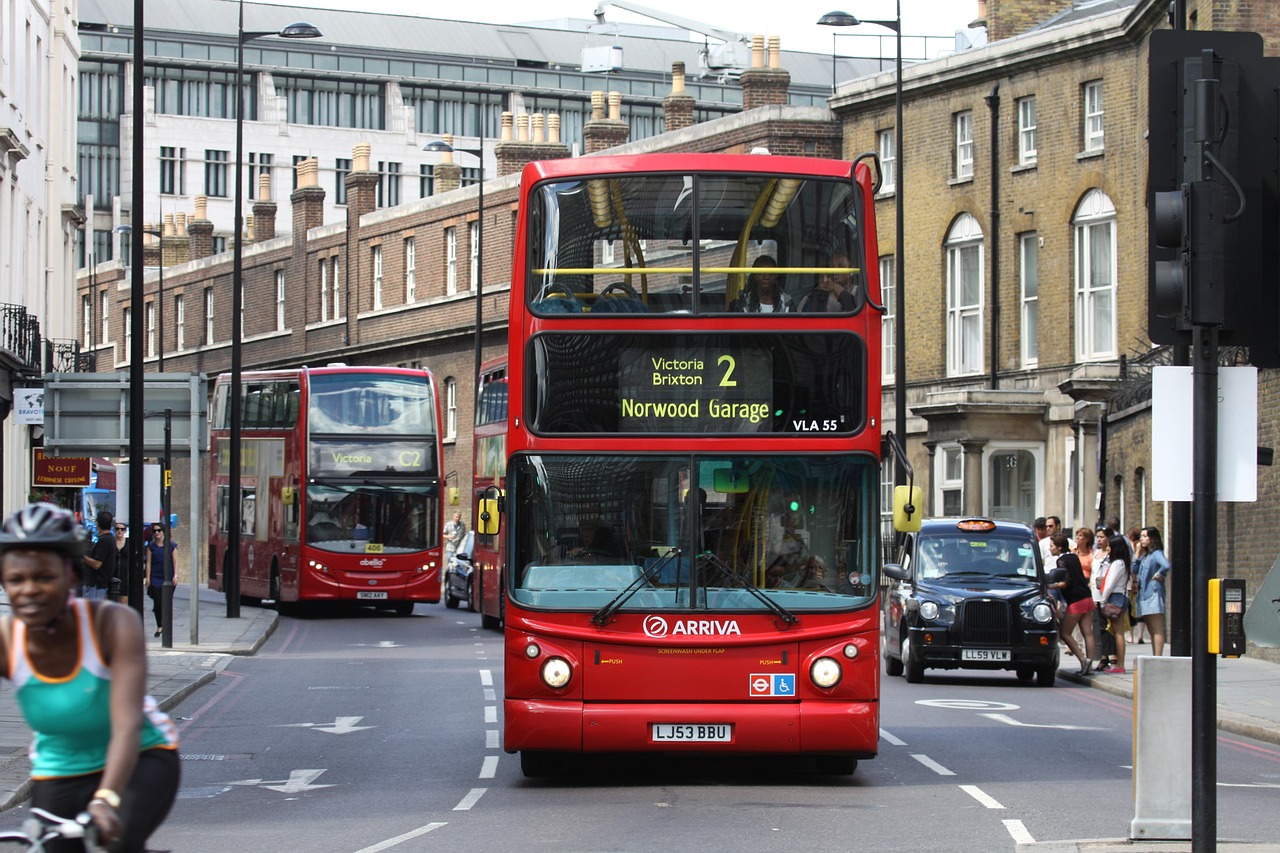
Self-Driving Taxis Hit London Streets — With a Human Still in the Driver's Seat

Uber and London-based Wayve have been granted the first minicab licences in London to offer self-driving taxi rides to paying customers, with a human safety driver initially in place. Transport for London (TfL) licensed 15 private hire vehicle licences to Ford Mustang Mach-E vehicles equipped with Wayve's AI driving software, surround cameras and radar. A TfL-licensed private hire driver will sit in the driver's seat during Wayve trips to intervene if necessary, though the software is expected to control the car. Uber and Wayve plan to launch small-scale commercial pilots with a driver behind the wheel soon, having said they would start trips in London "later this summer" before a full public launch. More than 100,000 Londoners are on their waiting list for the service. The Guardian
The licences are a milestone, but the path to fully driverless operations in London remains blocked by unfinished regulation. TfL has not yet published the guidance that companies wanting to offer self-driving taxi services must follow to win its approval. Christina Calderato, TfL's director of strategy, told the London assembly's transport committee that TfL would not be in a position to start accepting applications for self-driving taxi approval "for some time." That gap between licensing human-supervised trials and establishing a framework for fully autonomous commercial service defines the current bottleneck.
The political timeline has compounded the pressure. In 2025, UK transport secretary Heidi Alexander accelerated the proposed timeline for commercial trials of fully driverless taxi services by a year, announcing they would start in spring 2026. The UK government had previously stated that self-driving vehicles could be on British roads by 2026 after the Automated Vehicles (AV) Act became law, and that from 2026, self-driving cars without a safety driver could be available for people to book via an app for the first time. Applications for operators to run taxi and bus-style self-driving vehicles opened on 22 May 2026, with passengers potentially able to book them later that year. Several trials of autonomous passenger vehicles were already underway in London in 2026, according to the Greater London Authority. UK Government
Wayve CEO Alex Kendall said the company never claimed it would have a fully driverless operation in 2026. He described London as "a significant step up in complexity" for self-driving compared to Phoenix or San Francisco, cities where robotaxis already operate commercially. Think of it this way: Phoenix's wide, grid-layout boulevards are one challenge; London's narrow lanes, roundabouts, and dense pedestrian traffic are quite another. For its fully driverless launch, Wayve plans to switch to a new Nissan Leaf vehicle that is still in production and due to launch later this year. The Guardian
The competitive landscape in London is unusually dense. Uber and Wayve are racing against Google-owned Waymo and China's Baidu Apollo Go to launch self-driving taxi services in the city. According to Reuters, London is the only market in the world where Waymo, Wayve and Baidu's Apollo Go are all active. Baidu only began testing vehicles in London at the end of the period covered by the most recent reporting. Waymo, meanwhile, is working towards launching a fully autonomous service in London by the end of 2026. Ben Loewenstein, Waymo's head of policy and government affairs for the UK and Europe, said Waymo was "working through the safety approval process" with the transport department and waiting on TfL's guidance to gain consent. Waymo has also announced plans to launch commercial operations in Munich, Germany, late in 2027. Reuters
The broader context here is a global scramble among autonomous vehicle operators to establish footholds in major metropolitan markets, with Uber positioning itself as a platform aggregating multiple technology partners rather than building its own self-driving stack. In other words, Uber wants to be the app you open, not the company that builds the car's brain. Robotaxis are already available to hire in more than 20 cities across the US, China and the Middle East. In August 2026, Zagreb became the first European city to offer autonomous rides to the general public through Uber, with a human driver for "onboard monitoring." Uber's partnership portfolio spans multiple automakers and technology firms: Volkswagen and Uber launched a strategic partnership to deploy autonomous ID. Buzz vehicles on the Uber platform, with the Buzz AD service beginning in late 2025 and plans to offer rides in 2026. WeRide, Uber and AVOMO announced plans to bring robotaxis to Madrid, with service expected to begin later in 2026 in collaboration with Madrid's Regional Government. Cars made by Momenta and deployed by Uber are slated to start driving in Germany in 2026. Uber, Wayve and Nissan announced a collaboration on robotaxis planning a pilot in Tokyo in late 2026, and on 13 August 2026 Uber announced a partnership with Hinomaru Kotsu for a robotaxi pilot deployment in Tokyo. Uber Investor Relations
London's regulatory friction, then, sits at the intersection of two dynamics: a national government eager to demonstrate legislative momentum on autonomous vehicles, and a municipal transport authority moving cautiously through untested approval processes. TfL's caution is understandable given the capital's operational complexity — narrow streets, dense pedestrian traffic, and the political sensitivity of any safety incident involving an autonomous vehicle in a major world city. The companies holding licences today are operating under a hybrid model that keeps a licensed human in the loop, a configuration that sidesteps the hardest regulatory questions about liability and oversight for fully driverless operations.
What remains unresolved is how quickly TfL can translate its safety framework from concept to published guidance, and whether that timeline will align with the commercial ambitions of three well-capitalised competitors operating simultaneously in the same market. The gap between ministerial announcements and municipal readiness is where the practical timeline for autonomous taxis in London will be decided.