Legato Emerges from Stealth with $12M and AI-Powered Hearing Glasses

Hearing technology startup Legato emerged from stealth on August 26, 2026 with $12 million in funding and a first product: AI-powered hearing glasses called Legato Frames, expected to launch in fall 2026 (TechCrunch).
The company was founded in late 2024 by Mehul Trivedi and Steve Romine, both veterans of the audio and hearing-care industries. Trivedi previously led the creation of Bose Frames at Bose and later headed smart eyewear efforts at EssilorLuxottica, where he worked on the Meta Ray-Bans. Romine ran the hearing aids division at Bose and subsequently served as COO of hearing care company Audicus (TechCrunch).
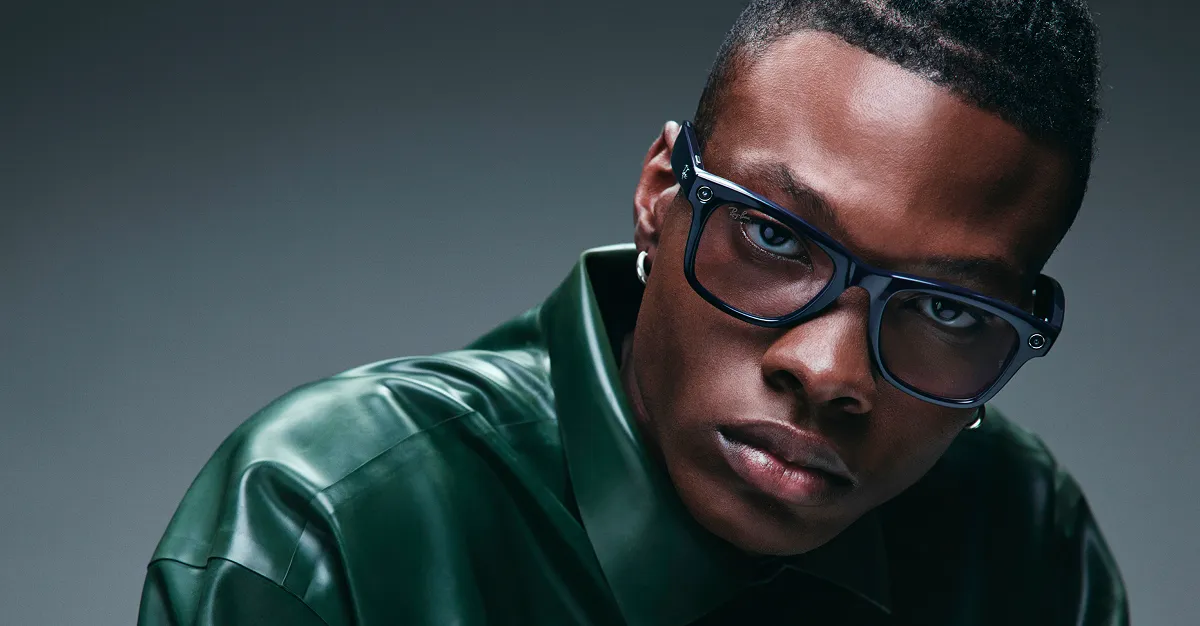
Legato Frames integrate the company's patented hearing-assistance technology into the arms of eyewear frames. Rather than relying on directional microphones, the system uses an AI-powered approach that differentiates between background noise and voices, amplifying only the voices. The glasses feature an open-ear design with a dual-speaker system that directs sound to the wearer without broadcasting it to people nearby (TechCrunch).
Legato is targeting people with mild to moderate hearing loss, which the company identifies as the largest segment of the hearing-loss population. An estimated 50 million adults in the United States have some degree of hearing loss, and only around 20% of those with diagnosed hearing loss seek treatment (TechCrunch).
The low treatment rate has persisted across decades of incremental improvement in hearing aids, from analog to digital to the current generation of AI-enhanced devices. The barriers are well-documented: cost, stigma, comfort, and the gap in user experience between what a hearing aid provides and what consumers expect from modern personal electronics. The OTC (over-the-counter) hearing aid category, regulated by the FDA since 2022, was supposed to address some of these barriers by allowing consumer-grade devices into the market without a prescription. Adoption has been slower than proponents projected.
Legato's bet is that the form factor matters as much as the signal processing. By embedding hearing assistance into eyewear, the company sidesteps the stigma associated with traditional hearing aids while also addressing the comfort and aesthetics concerns that have historically suppressed adoption. The open-ear dual-speaker design is a meaningful engineering choice: it avoids occlusion — the plugged-ear sensation that drives many first-time hearing aid users to abandon the devices — and it keeps the wearer's ear canal unobstructed for natural sound awareness when amplification is not needed.
The AI differentiation strategy is worth examining. Traditional hearing aids use directional microphone arrays with beamforming, a technique that focuses on sound coming from a specific direction while suppressing noise from other directions. That approach works reasonably well in controlled environments but degrades in complex acoustic scenes, such as restaurants or social gatherings, where the target voice may not be directly in front of the listener and where reverberation and competing talkers confound spatial filtering. Legato's claim that its system distinguishes between background noise and voices using AI rather than directional microphones suggests a source-separation approach, where a model trained on labeled audio identifies and isolates speech-like signals from the broader soundscape. If the system performs as described, it could handle head orientation more gracefully than beamforming-based systems, since the AI's separation logic would not depend on the physical directionality of the microphone array. The critical unknowns are inference latency (the time it takes the AI model to process audio and produce output) on an eyewear-class device, battery life under continuous neural processing, and how the system performs in the kind of unpredictable, multi-talker environments that have historically been the hardest case for hearing assistance.
The founders' combined experience spans both sides of this problem. Trivedi's work at Bose and EssilorLuxottica gives him direct knowledge of the engineering and supply-chain challenges involved in packing audio hardware, batteries, and processing into eyewear form factors at consumer-acceptable weight and aesthetics. Romine's background in hearing aids at Bose and his operational role at Audicus cover the hearing-care side, including the fitting, support, and regulatory considerations that separate a medical-adjacent product from a pure consumer device.
Legato is not disclosing further details about the Frames' pricing, battery specifications, or the specific AI architecture powering its speech separation. The company's website at legatohearing.com provides additional information. Trivedi, in an interview, articulated the company's ambition plainly: "to make hearing as ubiquitous as vision" (TechCrunch).
In my view, that framing is the right one to watch. The OTC hearing aid market has shown that regulatory access alone does not create adoption. What has historically moved the needle is a product that someone would choose to wear for reasons beyond the medical need — the same dynamic that drove the transition from standalone PDAs to smartphones. Eyewear with embedded hearing assistance occupies a similar intersection: if the Frames deliver acceptable audio quality in a form people would wear anyway, the addressable market expands well beyond the 20% who currently seek treatment. The risk, as with any first-generation hardware product launching from a new company with $12 million in funding, is that the gap between a compelling demo and a reliable, shippable consumer device is wider than the runway. Fall 2026 will be the test.