The SDF Dissolves: What Syria's Military Unification Means

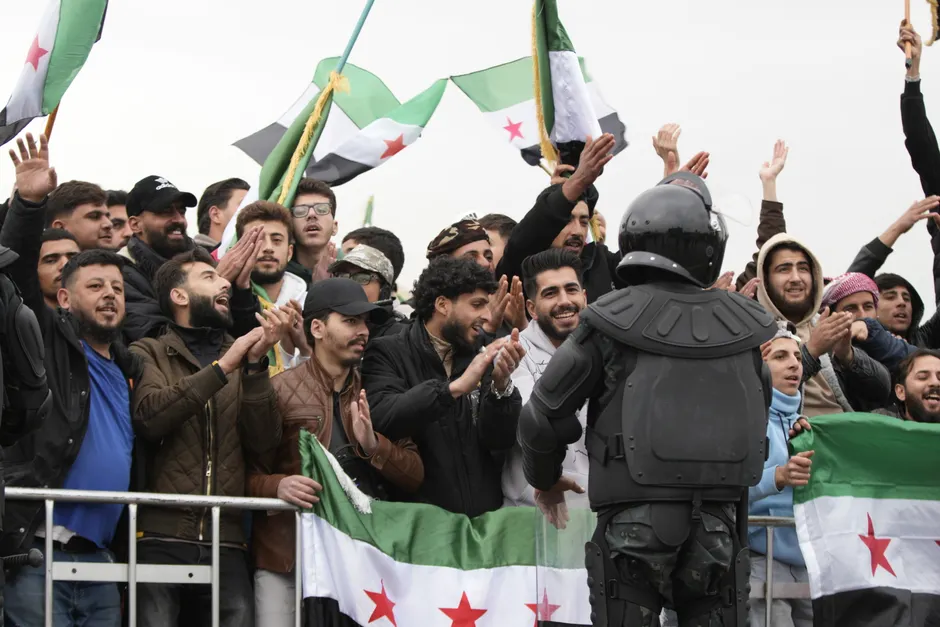
On August 25, 2026, the Kurdish-led Syrian Democratic Forces (SDF) announced their dissolution. Their fighters are merging into the Syrian national army under the Ministry of Defence, and their internal security branches — collectively known as the Asayish — are folding into the Ministry of Interior. SDF commander Mazloum Abdi, also known as Mazloum Kobani, made the announcement from the People's Palace in Damascus, declaring that an "important page" had been turned in Syria's history and expressing hope for a transition "from the era of weapons to the era of peace" (Long War Journal, Al Jazeera).
The SDF was formed in 2015 and operated out of northeastern Syria, a region home to much of the country's historically marginalised Kurdish population. For more than a decade, the force functioned as the principal organised military actor outside the authority of Damascus, controlling territory, border crossings, and strategic resources. Its dissolution effectively ends that independent existence and allows the Syrian state to begin restoring a single military command and unified control over borders, airports, and strategic resources, according to Navvar Saban, a researcher at the Arab Center for Contemporary Syrian Studies (Al Jazeera).
The path to dissolution was neither voluntary nor sudden. On January 18, 2026, the Syrian government and the SDF agreed to an immediate ceasefire on all fronts, as reported by Syrian state media (Reuters). A ceasefire is a formal agreement to halt fighting. Twelve days later, on January 30, a formal integration deal was signed. The Syrian government, led by Ahmed al-Sharaa, used military pressure to force the SDF into that agreement, according to an analysis published by the Middle East Council on Foreign Affairs (MEC). A Syrian government-led offensive into the northeast in January 2026, combined with improving relations between Damascus and Washington, shifted the balance of power in the negotiations. The SDF had initially held strong reservations about giving up its arms and coming under the command of Syria's Ministry of Defence (Al Jazeera).
The restructuring is detailed. SDF military fighters are being incorporated into the Syrian army under the Defence Ministry. The Asayish — the SDF-affiliated internal security force — along with other local security bodies, are being integrated into the Ministry of Interior. This division tracks the distinction between external defence and internal policing, but the practical mechanics of merging distinct organisational cultures, command hierarchies, and vetting procedures remain unresolved. Saban noted that while the formal merger has been completed, creating a unified military culture and chain of command will take considerably longer (Al Jazeera).
A critical factor behind the SDF's decision was the erosion of its external backing. Rob Geist Pinfold, a security studies lecturer at King's College London, assessed that the SDF's dissolution is part of an ongoing trend of the force losing leverage because the United States signalled the SDF no longer has protected US status. That shift in the American posture, alongside the Syrian government's offensive operations, closed the space the SDF had previously operated within (Al Jazeera).
The international response has been broadly favourable. France's government applauded the announcement in its daily press briefing of August 26, 2026 (France Diplomatie). Saudi Arabia welcomed the integration of SDF forces into Syria's military institutions, with US ambassador Tom Barrack confirming on August 22 that the process of dissolving the SDF and integrating its fighters into Syria's national institutions was underway (Kurdistan 24).
The broader context here matters considerably. Syria's government is led by figures formerly associated with now-disbanded rebel groups, including Hay'at Tahrir al-Sham, whose predecessor, the al-Nusra Front, was once affiliated with al-Qaeda. For Kurdish communities in the northeast, the prospect of coming under the authority of a government with those ideological roots introduces a layer of distrust that no merger agreement can mechanically resolve. Saban observed that many Arab communities may welcome the return of the central Syrian government, while Kurdish communities are likely to be more cautious (Al Jazeera).
This divergence in community reception will shape the integration's trajectory on the ground. Arab-majority areas of the northeast, where the SDF's authority was often viewed as imposed from outside, may accommodate the transition more readily. Kurdish-majority areas, where the SDF was seen as a guarantor of communal security and political autonomy, present a more fragile environment for the state's reassertion of control. The Asayish's absorption into the Interior Ministry, in particular, removes a Kurdish-run security apparatus that many in the northeast regarded as a buffer against arbitrary state power.
The dissolution also raises questions about the durability of the ceasefire framework established in January. The integration deal was extracted under military pressure, and its implementation depends on the Syrian government's willingness and capacity to absorb roughly tens of thousands of fighters from a force that spent years fighting both ISIS and, at various points, Syrian government forces and Turkish-backed factions. The vetting, reassignment, and potential demobilisation of these fighters will test the administrative capacity of Damascus's institutions, which remain shaped by the legacy of the country's civil war and the ideological trajectory of the groups now governing from the capital.