Kurdish-Led SDF Dissolves After Merging With the Syrian Army
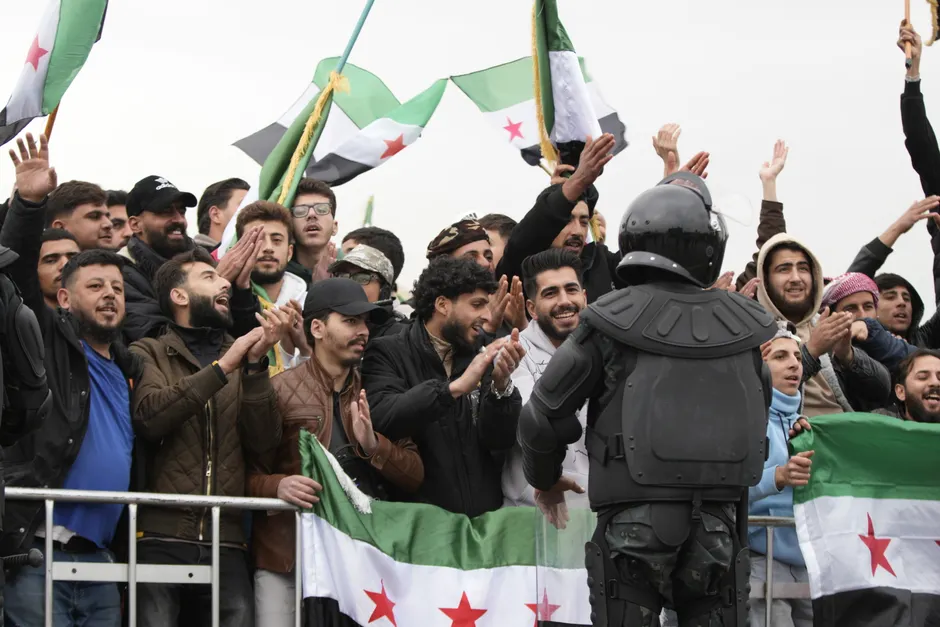
The commander of the Syrian Democratic Forces (SDF), Mazloum Abdi, announced on 25 August 2026 that the Kurdish-led force has dissolved after completing its merger with the Syrian military and will no longer operate independently (Al Jazeera; Asharq Al-Awsat). The announcement, made under an agreement with Damascus, formalizes the integration of the SDF's military and civilian structures into Syrian state authority (Reuters).
The SDF was a U.S.-backed coalition that controlled much of Syria's oil-rich northeast, making it the dominant armed group in the region (Reuters). Its dissolution follows months of negotiations between the SDF and the Syrian government throughout 2025, aimed at bringing Kurdish-run military and civilian bodies under Damascus's authority (Reuters). Damascus had been expecting a formal dissolution announcement by the end of 2026 (ReliefWeb). Abdi's declaration arrived well ahead of that timeline.
Abdi framed the move as a completed integration rather than a future plan. According to Al Jazeera and Asharq Al-Awsat, both reporting on 26 August, the SDF chief stated that the force has already merged with the Syrian army and will no longer function as a separate entity. This distinguishes the announcement from earlier expectations reported by ReliefWeb in mid-August, which had described the dissolution as a forthcoming step rather than an accomplished fact.
The specifics of the merger, including command structures, force composition, and how individual SDF constituent groups will be absorbed, are not yet detailed in available reporting. The SDF is an umbrella force, meaning it brings together multiple armed factions under a shared command. How its various components, particularly the Kurdish People's Protection Units (YPG) and Arab tribal militias, are folded into the Syrian military framework will shape the practical consequences on the ground.
The broader context here is one of territorial consolidation by Damascus. Syria's government has been pressing to reassert authority over areas that slipped from its control during the civil war, and the northeast, with its oil resources and agricultural wealth, has long been a priority. Bringing the SDF under state command effectively folds the largest non-state armed force remaining in Syria into the national military, though the practical extent of that integration is not yet clear.
For the United States, the dissolution complicates a long-standing policy posture. Washington backed the SDF as its primary local partner in the campaign against ISIS (the armed group also known as the Islamic State), and the force's absorption into the Syrian army means that the U.S.-trained and equipped partner is now nominally part of a military structure under a government with which Washington has had an adversarial relationship. How or whether U.S. forces operating in northeast Syria adjust their posture in response is an open operational question.
For Turkey, the development touches a core security concern. Ankara has long viewed the SDF's Kurdish components as an extension of the PKK, a Kurdish militant group that Turkey considers a terrorist organization, and has conducted multiple cross-border military operations against them. The integration of those forces into the Syrian state military could either ease or sharpen Turkish threat perceptions, depending on how much autonomy the Kurdish elements retain within the restructured command.
For Syria's Kurdish population, the dissolution involves a concession on the question of self-administration. The SDF's civilian counterpart, the Autonomous Administration of North and East Syria, had functioned as a de facto governance structure, running local services and political institutions. The agreement to bring civilian bodies under Syrian state authority means that the political autonomy Kurdish authorities exercised in the northeast will be formally subordinated to Damascus.
The timing of the announcement, well before the year-end deadline Damascus had anticipated, suggests that the negotiation track accelerated in its final stages. What is not yet clarified is the implementation timeline on the ground: whether SDF units have already transitioned to Syrian army command or whether the declaration serves as a political signal ahead of operational integration. The gap between a political announcement and a military reorganization on the ground can be significant, and northeast Syria, with its multiple external actors and complex local dynamics, is a terrain where such gaps matter.
The dissolution of the SDF removes one of the last institutional legacies of Syria's fragmented wartime order. Whether the integration holds, whether constituent forces accept the new command structure, and whether external actors recalibrate their involvement in the northeast are questions that will be answered in the weeks and months ahead.