Anthropic's $45 Billion Nscale Deal and the $60 Billion Compute Land Grab

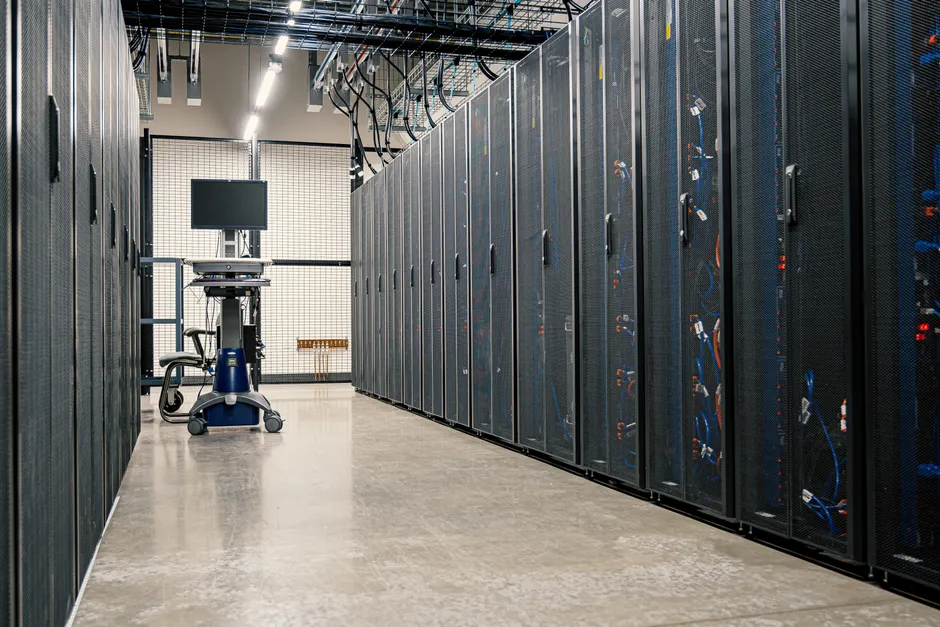
Anthropic has signed a deal to rent roughly $45 billion worth of AI computing power from Nscale, a British AI infrastructure company founded in 2024, with the capacity expected to start powering Anthropic's services in late 2027. First reported by Bloomberg, the six-year agreement covers approximately 460 megawatts of compute capacity at Nscale's flagship data center development in West Virginia. TechCrunch CNBC
Nscale will supply Anthropic with compute using Nvidia's Vera Rubin chips, the next-generation silicon architecture following the current Blackwell line. The West Virginia site is Nscale's flagship facility in the US, complementing its European operations, which include a strategic partnership with Nordkraft for data center operations in Narvik, Norway. Nscale has previously cut deals with companies including Microsoft and has been building out its full-stack AI cloud platform, partly through its acquisition of Anyscale. The company also closed a $900 million revolving credit facility and announced an initial $500,000 gift to advance STEM and skilled-trades education in Mason County, where the West Virginia data center is located. TechCrunch Nscale
The Nscale agreement is the largest in a sustained series of compute-procurement deals Anthropic has executed over the past five months. In April 2026, Anthropic expanded its partnership with Amazon to gain access to an additional 5 gigawatts of compute and separately broadened its relationship with Google and Broadcom to add more power capacity. In May, the company revealed a deal with SpaceX drawing on two SpaceX data centers for $1.25 billion worth of capacity each month. In July, Anthropic signed a $5 billion compute-related deal with AMD. Earlier in August, the company signed a $10 billion, six-year agreement with AI cloud startup Volta, securing capacity from a data center in Norway. TechCrunch
Taken together, these agreements total well over $60 billion in committed compute spending across at least six distinct infrastructure partners, spanning GPU-based and custom-silicon supply chains, hyperscaler capacity (the large-scale cloud platforms operated by Amazon, Google, and Microsoft), and independent AI cloud providers. The aggregate power footprint, when the Amazon 5 GW expansion and the SpaceX monthly draw are included, reaches into the multiple-gigawatt range. For context, a single gigawatt can power roughly 750,000 homes.
The procurement wave tracks closely with Anthropic's product cadence. The company introduced Claude Sonnet 5 on June 30, 2026, followed by Claude Opus 5 on July 24, 2026, both aimed at long-running agents (AI systems that can carry out multi-step tasks with limited supervision) with improvements in coding and professional work. Anthropic also published "The Making of Claude Code" on July 6, 2026, detailing the evolution of Claude Code from an internal CLI tool to a full coding agent. On August 14, the company published details of its Claude text watermarking method, and on August 7 it announced updates to Claude Fable 5's biology safeguards to reduce false positives. The compute being secured now, much of it delivering in late 2027 and beyond, is the substrate for the next generation of these models and the agentic workloads they enable. Anthropic
Nscale's role in this deal is notable on its own. A company founded in 2024 has landed a $45 billion, six-year contract with one of the leading AI labs. That trajectory is enabled by constricted supply: with Nvidia's Vera Rubin chips not yet shipping at scale and hyperscaler capacity spoken for years in advance, independent operators like Nscale that can secure land, power, and chip allocations are positioned to capture demand that the usual cloud providers cannot fully absorb. Nscale's acquisition of Anyscale and its $900 million credit facility are the kinds of moves that make a deal of this magnitude credible from the supply side, even for a two-year-old company.
The geographic spread of Anthropic's compute portfolio also warrants attention. West Virginia, Norway, SpaceX's facilities, Amazon's data centers, and Google's TPU infrastructure form a deliberately diversified footprint across jurisdictions, power grids, and silicon architectures. Anthropic published an energy report titled "Build AI in America" in July 2025, arguing that the US must invest substantially in computing power and electricity to lead in AI globally. The West Virginia deal puts that argument into practice on American soil, while the Norway agreements hedge across European power markets. Anthropic
There is a real gap, though, between signing a deal and getting power. The Nscale capacity does not come online until late 2027, the Volta deal is also a six-year arrangement, and much of the SpaceX and Amazon capacity is presumably ramping on similar timelines. Anthropic is making enormous financial commitments against a future demand curve that it can model but not guarantee. If agentic AI workloads scale as Anthropic's product strategy implies they will, the compute secured in 2026 will be the constraining factor on revenue in 2027 and 2028. If adoption lags, the fixed costs of these long-term leases become a significant liability.
In my view, the pattern here is familiar to anyone who watched the cloud buildout of the 2010s, but the financial stakes are an order of magnitude higher. Amazon, Google, and Microsoft committed tens of billions to data center construction over a decade ago on the thesis that enterprise workloads would migrate to the cloud. They were right, and the infrastructure they built became a durable competitive moat. Anthropic is making a parallel bet that inference demand for frontier models will scale fast enough to absorb gigawatts of capacity. The difference is that cloud infrastructure was general-purpose; AI compute is tied to specific chip architectures and model paradigms that are still evolving rapidly. A Vera Rubin cluster built for today's models may need significant rearchitecting for whatever comes next.
On the other side of the ledger, Anthropic has been expanding its institutional and policy capacity alongside its compute base. The company announced that Mariano-Florentino (Tino) Cuéllar would join as Chief Global Affairs Officer on August 4, 2026, published its position on open-weights models on July 27, expanded its partnership with Cognizant to bring Claude to enterprise clients on the same date, and announced funding for better evaluations of AI's impact on wellbeing on August 25. The compute deals and the policy moves are not unrelated. A company securing this much power and capital intensity needs the regulatory and institutional footing to match. Anthropic
What this enables, if the demand materializes, is straightforward: Anthropic positions itself to operate frontier models and agentic workloads at a scale that few competitors can match, with a compute base diversified enough to avoid single-supplier dependency. Whether the underlying assumptions about inference demand hold is the question that will determine whether $60 billion in committed infrastructure spending was prescient or premature.