Anthropic Locks In $10 Billion Cloud Compute Deal with Startup Volta
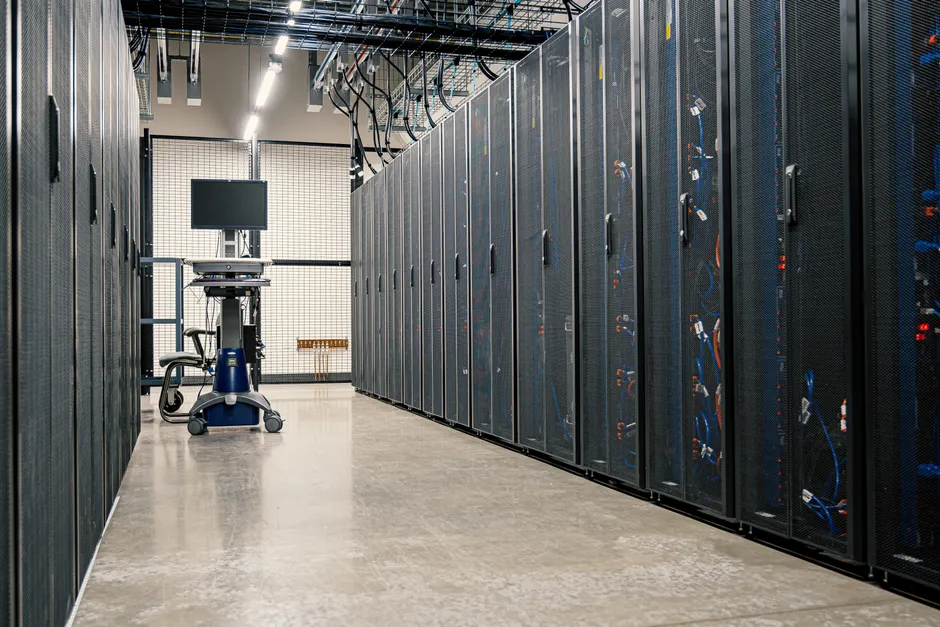
Anthropic has signed a $10 billion, six-year deal with AI cloud startup Volta for cloud compute capacity, according to a Bloomberg report published August 4, 2026, with Reuters independently confirming the contract amount and the counterparty (Bloomberg, Reuters). Volta will supply the infrastructure to Anthropic, the maker of the Claude AI model, through a data center facility in Norway delivering 133 megawatts of capacity (TechCrunch).
The Norway facility will run on Nvidia's Vera Rubin systems, the company's latest AI chip architecture. Volta operates within Nvidia's Cloud Partner program, a group of cloud providers that deploy Nvidia GPUs in their own data centers (TechCrunch). Volta's partner in the deal is Bitdeer, a crypto-mining company that will help develop the data center to provide the compute capacity (TechCrunch).
Volta was founded earlier in 2026. The company raised $300 million in venture funding at a valuation of $2.4 billion (Yahoo Finance). Before the public disclosure, Volta had spoken about a deal with an AI lab but had not named the specific company it was working with (TechCrunch). Bloomberg cited anonymous sources familiar with the deal in its original report; Reuters likewise cited people familiar with the matter (Bloomberg, Reuters).
The Volta agreement follows other recent compute deals announced by Anthropic. The company recently announced new compute deals with SpaceX and Amazon, with Amazon investing an additional $5 billion in Anthropic (TechCrunch).
A few elements here are worth flagging for anyone tracking AI infrastructure economics. A startup founded months ago securing a $10 billion, six-year compute contract is an unusually aggressive bet on both sides of the table. Anthropic is locking in long-term capacity from an unproven provider, and Volta is committing to deliver Vera Rubin-class infrastructure at scale before it has an operating track record. The involvement of Bitdeer, a crypto-mining entity, as the data center development partner fits a broader pattern of crypto-mining operators repurposing or extending power and site assets toward AI compute, where energy density and secured power contracts are the binding constraints.
The choice of Nvidia's Vera Rubin architecture is also notable. Anthropic is committing to a next-generation chip roadmap through a partner that has not yet built out its facility, which means the deal is as much a forward reservation on future GPU supply as it is a present-day infrastructure contract. The 133-megawatt Norway site gives a concrete upper bound on the power envelope: at current efficiency curves for next-generation AI accelerators, that capacity translates into a meaningful but finite ceiling on how much inference and training throughput the facility can sustain, and the six-year term implies Anthropic expects its compute demand to scale into and beyond this capacity for the duration.
In my view, the more instructive detail is how quickly the AI cloud provider landscape is fragmenting. Anthropic already has deep ties to Amazon through investment and compute agreements. Adding SpaceX and now Volta suggests the largest model labs are no longer satisfied relying on a single large cloud provider or even two. They are spreading demand across neocloud startups, established cloud platforms, and nontraditional infrastructure operators alike. The driving factor is straightforward: inference demand and training-scale requirements for frontier models are growing faster than any single provider can provision. Locking in power and silicon years ahead of delivery is becoming the default strategy, not an exception.
What this enables, if Volta and Bitdeer execute on the Norway buildout, is a more diversified compute supply chain for one of the leading AI labs. If they do not, Anthropic has positioned itself with multiple other providers. Either way, the deal signals that access to power, silicon, and data center expertise, not capital, is the gating factor for frontier AI capacity in 2026.


