Ukraine's Drone Campaign Is Forcing Russia to Import the Fuel It Once Produced in Abundance

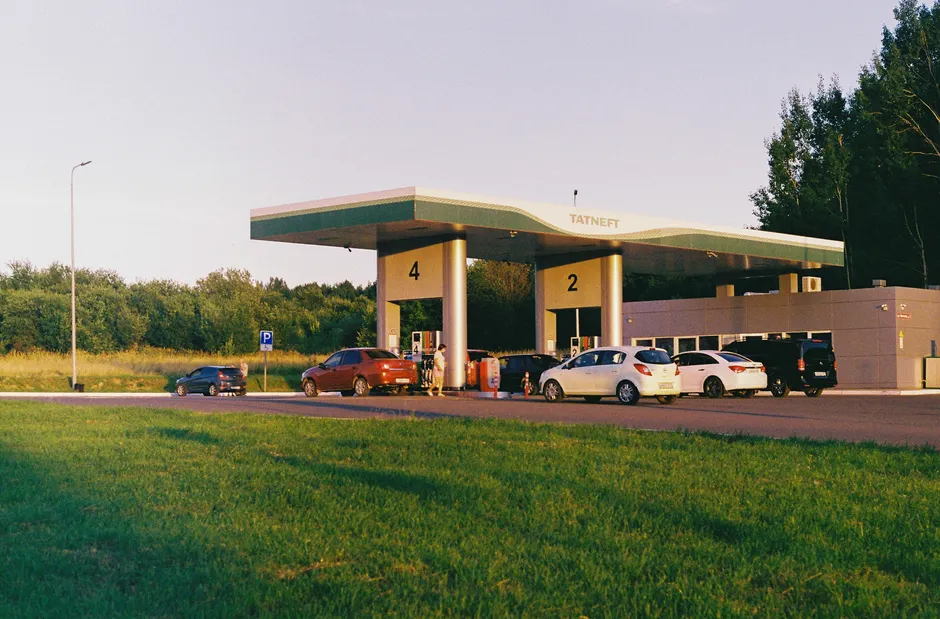
Russia, long one of the world's top oil producers, is now buying vehicle fuel from abroad to make up for damage to its domestic refineries caused by Ukrainian drone strikes. As of August 2026, at least six Russian regions have reinstated or tightened restrictions on gasoline sales at filling stations. Russian refinery output had already dropped by 28% before Ukraine escalated its strike campaign this summer, according to industry analysts cited by The Guardian.
A refinery takes raw crude oil and processes it into usable products like gasoline, diesel, and jet fuel. When those facilities are knocked offline, a country that produces plenty of crude can still run short of the refined fuels its economy runs on. That is exactly the gap Russia is now scrambling to fill.
The supply shortfall has pushed Moscow into arrangements that would have been almost unthinkable for a major oil producer. In August 2026, Russia took its first-ever shipment of gasoline from Turkey: 200,000 barrels sent from the Turkish port of Mersin to the Baltic port of Primorsk aboard the Wendrix, a tanker operating under sanctions. That delivery was the fifth confirmed seaborne fuel import to Russia that summer. Earlier shipments totalling one million barrels had traveled via Egypt from a refinery at Vadinar in India, and LSEG shipping data indicated at least two more Indian gasoline cargoes were expected at Russian ports within two weeks of August 17, 2026, per Reuters.
Russia has also turned to Kazakhstan. In August 2026, Moscow signed a deal with the Kondensat refinery in western Kazakhstan to process Russian crude outside the country, with 70% of the refined fuel to be shipped back to Russia. The crude must move by rail, since the Kondensat facility lacks a connection to Russia's pipeline network. The arrangement builds on earlier talks disclosed in July 2026, when Kazakhstan confirmed negotiations to process Russian crude and Russia requested roughly 50,000 metric tons of AI-92 gasoline to ease domestic shortages, according to Reuters and The Moscow Times. Meanwhile, Russia's fuel imports from Belarus surged by a factor of 141 in June 2026 compared with the same month a year earlier.
The underlying cause is a sustained Ukrainian strike campaign targeting Russia's oil-processing infrastructure. Ukraine carried out 18 attacks on Russian refineries in August 2026, matching July's record. A new wave of strikes completely shut down the Orsk refinery, forcing the plant offline for months and causing fuel problems, as confirmed by Reuters. Ukrainian drones also struck three refineries in the republic of Bashkortostan in early August, according to President Volodymyr Zelenskyy, and hit the Moscow Oil Refinery twice in one week in June, sending flames over the capital. Further strikes targeted refineries and a petrochemicals plant in the Bryansk region, a major refinery in southern Russia that killed at least two people, and refineries near the port of Taganrog on the Azov Sea, which prompted a local emergency declaration on July 10.
The strategic logic is straightforward. Kyiv's refinery campaign aims to bring the cost of the war back to Moscow by degrading the domestic fuel economy that sustains both military logistics and civilian life. Ukraine has also struck Russian energy infrastructure beyond refineries: it announced a drone attack on a Russian tanker in neutral waters off the coast of Libya in December 2025, and Russian strikes damaged Naftogaz production sites in Ukraine's Poltava and Sumy regions in February 2026.
Russian deputy prime minister Alexander Novak, who in July 2026 acknowledged that Russia would begin importing oil products, described the country's energy situation as "constantly changing" in August 2026, noting that some refineries had returned to operation. The partial recovery of processing capacity, however, has not prevented the tightening of rationing or the deepening of import arrangements.
The broader context here is that Russia's domestic fuel crisis is reshaping its relationship with its energy periphery. Russia's plan to halt Kazakhstan's crude exports to Germany via the Druzhba pipeline starting May 1, 2026, reported by Reuters, and its rerouting of Kazakh crude from the Baltic port of Ust-Luga to the Black Sea port of Novorossiysk as of August 2026, per Reuters, suggest Moscow is consolidating export infrastructure and redirecting flows as domestic refining capacity contracts. The parallel surge in India's imports of Russian crude, which rose 62.4% year-on-year in July 2026, points to an asymmetric pattern: Russia's crude export channels remain functional, but its ability to turn that crude into refined products domestically is what Ukraine has systematically degraded.
France's interception of a Russia-linked shadow fleet tanker in June 2026, conducted jointly with Britain, adds a sanctions-enforcement dimension to the energy picture. The Wendrix shipment from Turkey, aboard a sanctioned vessel, shows the overlap between Russia's import needs and the shadow fleet infrastructure that has sustained its export trade throughout the war. The question now is whether Ukraine can sustain the tempo of refinery strikes at the August level, and whether Russia's patchwork of import arrangements from Turkey, India, Belarus, and Kazakhstan can keep pace with the attrition.