OpenAI Brings ChatGPT Ads to India, Its Largest Market Outside the U.S.

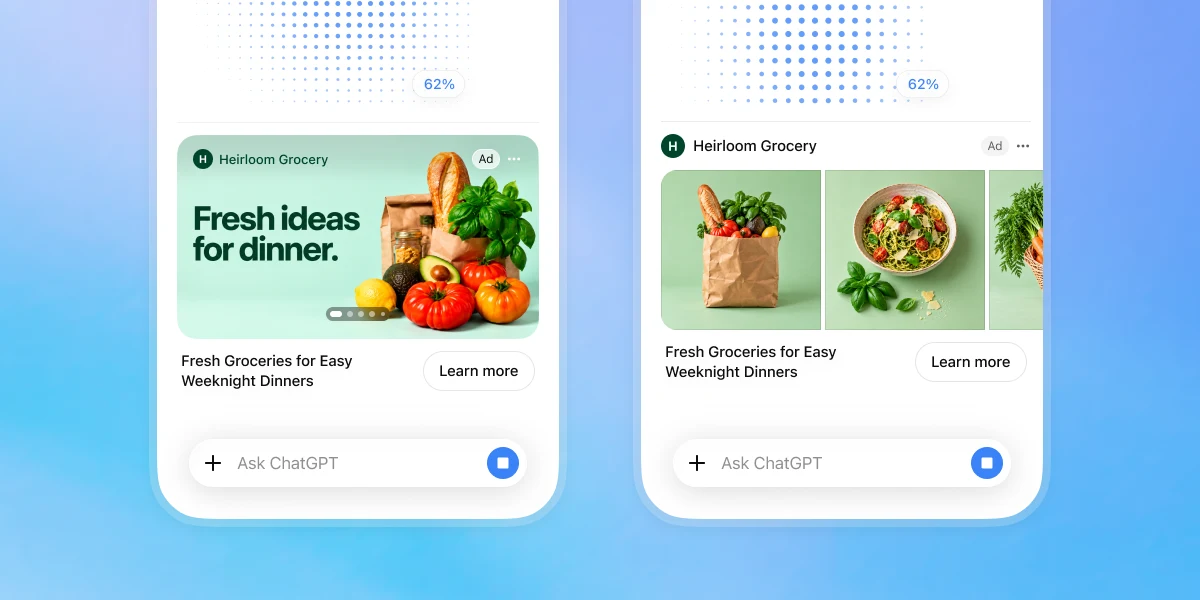
OpenAI announced on August 27, 2026 that it will begin showing ads on ChatGPT's Free and Go subscription tiers in India, extending its advertising program to its biggest market outside the United States. The rollout starts with 50 brands and partnerships with agencies WPP and Omnicom to manage campaigns on the platform.
India is a logical next step for the ad program, which went live for U.S. users in February 2026 and expanded to Europe in August 2026. OpenAI reported more than 100 million weekly active ChatGPT users in India as of February 2026, a scale that makes the country central to the company's revenue strategy beyond subscriptions.
The ad launch targets logged-in adult users on the Free and Go tiers specifically. Plus, Pro, Business, Enterprise, and Education tiers remain ad-free, consistent with the framework OpenAI established when it first outlined its advertising approach in January 2026. The company has said it will always offer a way to avoid ads, including ad-free paid tiers and a free no-ads option with additional usage limits.
In September 2026, OpenAI will launch an ad manager that lets marketers build campaigns with a daily minimum budget of ₹725 (approximately $7.60). That floor is low enough to be accessible to small and mid-size Indian businesses, not just the large brands participating in the initial wave. Dave Dugan, head of global ads solutions at OpenAI, said in a statement that with ChatGPT Ads, businesses can introduce themselves "at high-context moments when decisions begin to take shape" — meaning the point in a conversation when a user is actively describing what they need or want.
The India ad push builds on months of groundwork. OpenAI launched the sub-$5 ChatGPT Go plan in India in August 2025, later expanding it worldwide. The company ran a limited promotion making the Go tier free for a full year in India, and it advertised its products heavily during the Women's Premier League and Indian Premier League cricket tournaments. In June 2026, OpenAI hired Uber's India head to lead its expansion efforts in the country.
The financial context is substantial. According to The Wall Street Journal, OpenAI recorded $6.7 billion in revenue for the second quarter ended June 2026, up from $5.7 billion the previous quarter. The Information reported that OpenAI was aiming to reach 220 million paying subscribers by 2030, with 35 million users paying for Plus and Pro plans as of November 2025. Advertising opens a revenue stream that does not depend on converting free users to paid tiers, which matters acutely in price-sensitive markets like India where subscription ARPU — the average revenue generated per user — is structurally lower than in the U.S. or Europe.
The advertising model also raises the familiar tension between monetization and user trust that every consumer platform has navigated. OpenAI has emphasized clear labeling, answer independence, and privacy protections as foundational principles for ChatGPT ads. Whether ads inside a conversational interface, where users may be seeking medical, legal, or financial guidance, can maintain the trust that drew users to the product in the first place is a question the India rollout will test at unprecedented scale.
The broader context here is that the India launch validates the ad-supported tier as a permanent structural element of ChatGPT's business model rather than an experiment. The progression from U.S. testing in February to Europe in August to India now covers the three largest regional digital ad markets outside China. For marketers, ChatGPT ads offer something genuinely different from search or social advertising: placement within a dialogue where the user has already articulated intent, context, and constraints in natural language. Whether that translates to conversion rates that justify sustained ad spend is the open question that the next several quarters of data will begin to answer.
In this author's view, what stands out is the deliberate sequencing. The agency partnerships, the low budget floor, the ad manager tool, the regional market-by-market rollout all follow a well-worn platform playbook. The difference is the substrate. Ads in a search results page compete with ten blue links. Ads in a chat interface compete with what users experience as a direct, conversational answer. The editorial and product design challenge of making those two things coexist without one degrading the other is non-trivial, and India's 100 million-plus weekly users will be the largest stress test yet.