A Near-Total Lunar Eclipse Darkened 96% of the Moon Over the Americas
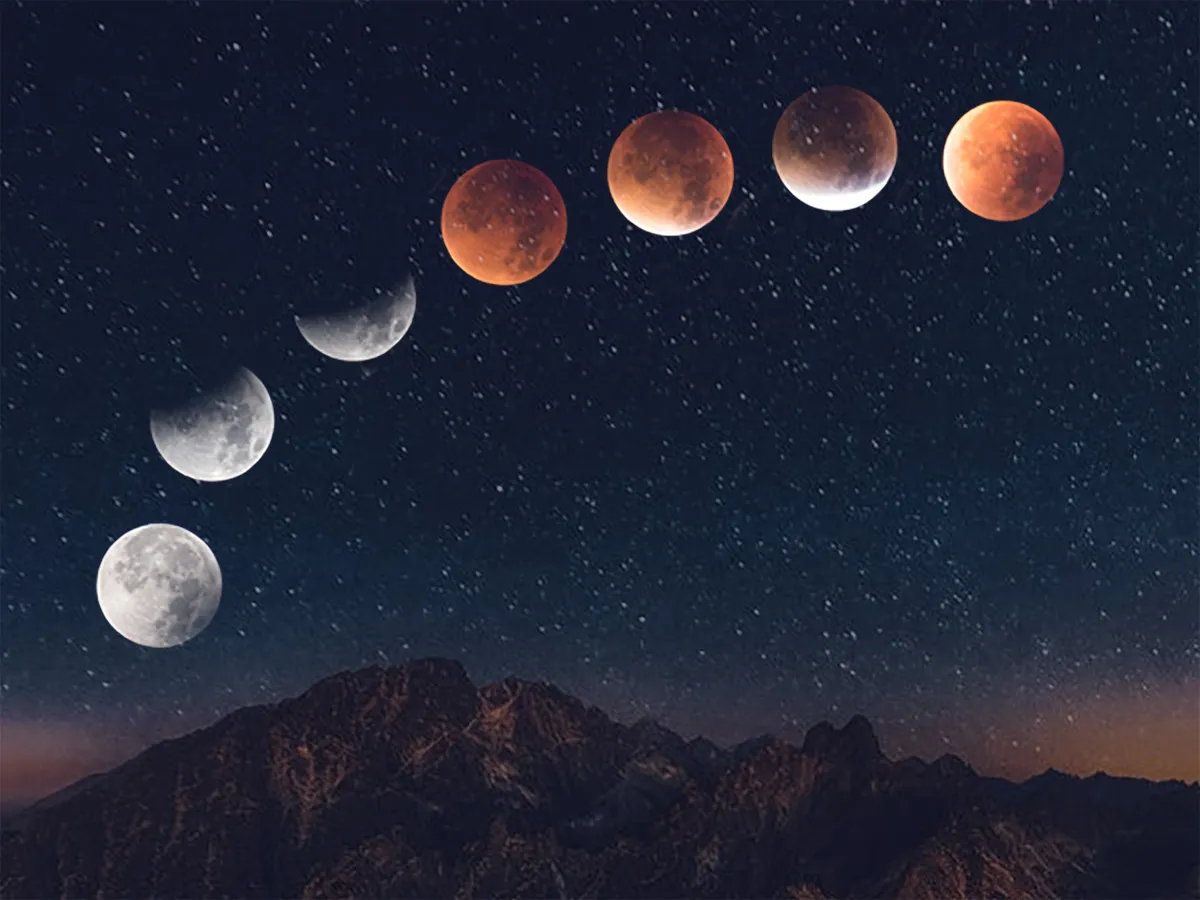
On the night of Thursday, August 27, 2026, a deep partial lunar eclipse swept across the Moon, covering 96% of its surface in Earth's shadow and treating observers across North and South America to a vivid "blood moon" (The Guardian). The eclipse was one of the deepest partial lunar eclipses in recent memory and was also visible from parts of Europe and Africa.
The eclipse began around 9:23 p.m. EST and reached its peak at approximately 10:33 p.m. EST, according to The Guardian. NASA's eclipse catalog lists the partial phase as beginning at 09:50 UT on August 28, which corresponds to the evening of August 27 in Western Hemisphere time zones (NASA). Sky & Telescope reported that the penumbral phase, the lighter outer shadow, first became visible at roughly 2:00 UT (10:00 p.m. EDT) on August 27 (Sky & Telescope). At its peak, the event covered 96.2% of the Moon's disk in Earth's umbral shadow — the darker, central part of the shadow — per TimeandDate calculations (TimeandDate).
The Moon took on its characteristic reddish-orange hue as sunlight bent through Earth's atmosphere, a process that scattered shorter wavelengths of light and let the longer red wavelengths pass through. This is the same effect that produces red sunsets (NASA). Scientists call it Rayleigh scattering, and it is responsible for the "blood moon" label attached to total and near-total lunar eclipses. During a total eclipse, the Moon sits entirely within Earth's umbral shadow. In this case, a sliver of the lunar surface remained in direct sunlight, placing the event just shy of totality.
Lunar eclipses occur when Earth moves directly between the Sun and the Moon, casting its shadow onto the lunar surface. They can only happen during a full moon, and only when the Moon is near one of its orbital nodes — the two points where the Moon's tilted orbit crosses the plane of Earth's orbit around the Sun. The geometry must be precise; most full moons pass above or below Earth's shadow, producing no eclipse. The August 27 event aligned closely enough to produce an exceptionally deep partial, missing totality by only a few percent of the lunar diameter.
NASA's Scientific Visualization Studio had published a detailed visualization of the event on August 21, modeling the Moon's passage through Earth's shadow under the title "August 27-28, 2026 Deep Partial Lunar Eclipse" (NASA SVS). The agency's monthly skywatching guide for August had also flagged the eclipse as a highlight alongside the Perseid meteor shower and bright evening Venus (NASA).
The August 27 lunar eclipse followed a dramatic solar eclipse earlier in the month, when millions across Europe watched the Moon block out the Sun and plunge parts of the continent into daytime darkness (The Guardian). A solar and lunar eclipse paired within the same eclipse season — the roughly 34-day window when the Sun is close enough to a lunar node for eclipses to occur — is expected geometry rather than coincidence. When a solar eclipse occurs at one new moon, a lunar eclipse typically follows at the subsequent full moon, or vice versa.
The broader context here is that a 96% partial lunar eclipse sits in an observational gray zone. It lacks the full drama of a total lunar eclipse, where the entire Moon glows copper-red, but it comes close enough that the shadow-engulfed portion of the disk displayed the characteristic blood-moon coloration clearly visible to the naked eye. The remaining illuminated sliver provided a stark visual contrast that many observers find more photogenic than a uniform total eclipse, since the boundary between shadowed and sunlit terrain is directly visible.
For observers who missed the event, the next opportunities to see lunar eclipses will depend on the saros cycle, the approximately 18-year period over which eclipse geometry recurs. The August 27, 2026 eclipse belonged to Saros 136, a series that has produced some of the deepest and longest lunar eclipses on record. Subsequent members of this saros will continue to yield deep partial and total eclipses, though visibility will shift across different regions of the globe.


