One Nation Taps Banker and Diplomat Mike Newman to Lead Its NSW Push Toward 2027
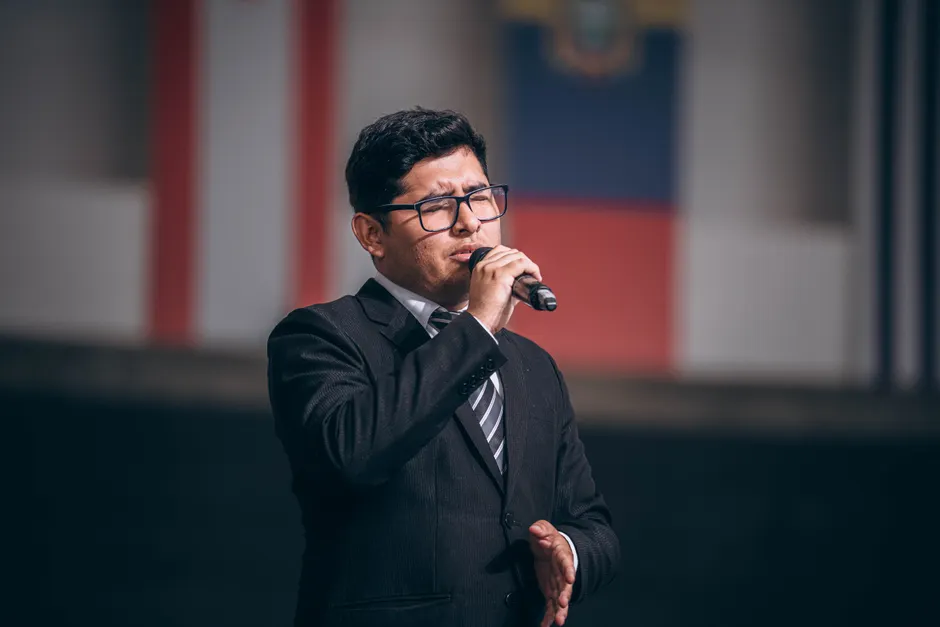
One Nation has named investment banker and former trade diplomat Mike Newman as its NSW leader and first lower house candidate for the March 2027 state election. Party leader Pauline Hanson is scheduled to appear alongside him at a press conference on Friday morning to formally announce his candidacy for the Hunter Valley seat of Cessnock. The Guardian
Newman confirmed his candidacy in an interview with News24. He is the son of former ABC chair Maurice Newman, a figure with a long public profile in Australian conservative circles. The younger Newman's professional background spans 25 years in Japan, including a three-year stint as Investment NSW's senior trade and investment commissioner in Tokyo. He has also worked as a trade bureaucrat across Asia more broadly and as an investment banker.
His selection as NSW leader comes as One Nation assembles its candidate lists for both houses of the NSW parliament. The party has already named former federal candidate Stuart Bonds as its first upper house candidate. Newman becomes the first announced lower house candidate.
The policy platform Newman will carry into the campaign centres on fiscal restraint and public-sector reform. One Nation's NSW agenda includes halving payroll tax (a state tax employers pay on wages), eliminating it entirely in regional areas, freezing the number of public servants, and introducing private-sector-style KPIs into the public service. The payroll tax cuts would apply statewide, with the regional exemption adding a geographic dimension to what is otherwise a broad-based tax-reduction commitment.
Newman will contest Cessnock, a seat held by Labor's Clayton Barr. Labor has retained Cessnock for 38 years. In the 2023 state election, Barr won the two-party preferred vote against One Nation by a margin of 23.4%, after the Nationals disendorsed their own candidate. In Australia's preferential voting system, voters rank candidates by preference; if no candidate wins a majority of first-preference votes, lower-ranked candidates are eliminated and their preferences redistributed until one candidate crosses 50%. Two-party preferred counts tend to consolidate around the major-party candidate, which is the structural difficulty minor parties face in lower house seats.
The broader context here is that One Nation's polling position in NSW has shifted in ways worth paying attention to. A Sydney Morning Herald Resolve poll conducted in July placed One Nation at 25% in NSW, ahead of the Coalition on 23% and behind Labor at 29%. Those numbers, if replicated at an election, would signal a notable realignment in a state where One Nation has historically struggled to convert primary-vote strength into legislative seats. The upper house, elected by proportional representation (where seats are allocated roughly in proportion to each party's share of the vote), remains the more plausible pathway to parliamentary representation. Lower house seats, by contrast, require concentration of support within single electorates that statewide polling cannot capture.
Newman's profile is unusually suited to testing that gap. His combination of financial-sector credentials, deep Japan experience, and a family name connected to one of Australia's most prominent media-and-policy figures gives One Nation a candidate who can speak to economic management and trade literacy in a way the party has not always been able to project. Whether that translates into votes in a working-class Hunter electorate that has voted Labor for nearly four decades is the open question.
The Cessnock contest will also serve as a test of whether One Nation can improve on its 2023 performance, where the party's candidate lost the two-party preferred count by nearly 24 points. The disendorsement of the Nationals candidate in that cycle removed a complicating variable; the dynamics of the 2027 field, including whether the Coalition runs a full slate of candidates, will shape the preference flows that ultimately determine the result.
For Labor, the seat is a safe hold on paper, but the statewide polling warrants attention. A 25% primary vote for One Nation, if distributed unevenly across electorates, could concentrate in resource-region seats like Cessnock and compress Labor's margins. Barr's incumbency and the seat's three-decade-plus Labor history provide a buffer, but the margin in 2023 already reflected One Nation's capacity to assemble a competitive primary vote in the Hunter.
The March 2027 election is still more than six months away. Newman's early selection gives him time to build name recognition and campaign infrastructure in Cessnock, while Hanson's personal involvement in the announcement signals the party's investment in the state.


