Russian Drone Strike on Warehouse Near Kyiv Kills at Least 37, Sparking Domestic Investigation

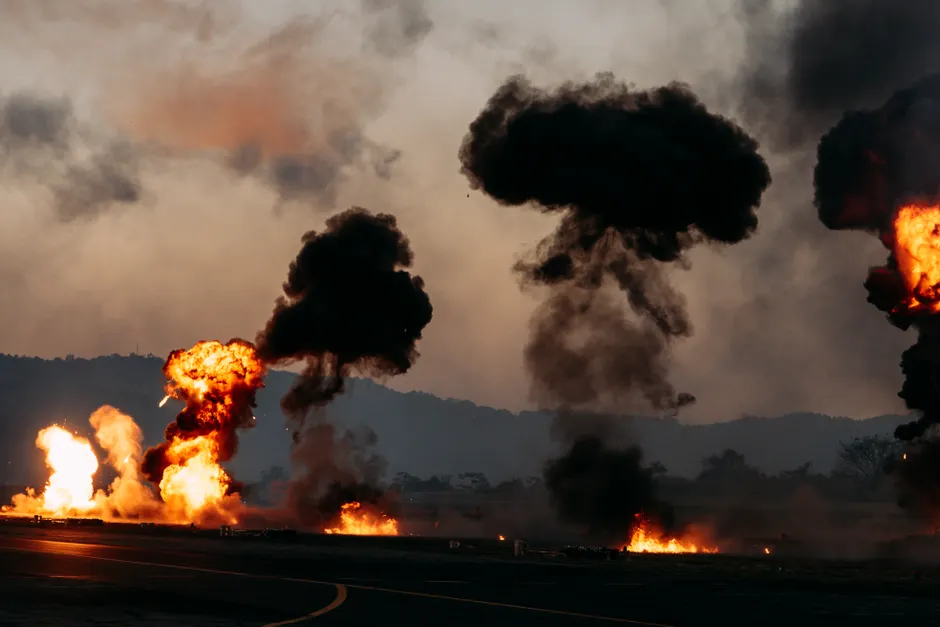
A Russian drone strike on a warehouse in the town of Myla, in the Bucha district of the Kyiv region, killed at least 37 people on August 29, 2026. The strike triggered a massive fire and secondary explosions — blasts caused by combustible material igniting after the initial impact — that damaged surrounding residential areas, including a care home for elderly and disabled residents. Kyiv regional governor Tymur Tkachenko said 42 people, including four children, were injured, and at least 50 residential buildings were damaged. More than 370 people were evacuated from the strike zone, with the operation still ongoing as of President Volodymyr Zelenskyy's latest statement. The Guardian
The casualty count rose through the day. Zelenskyy initially reported 27 killed; the figure later climbed to at least 37. Russia's Ministry of Defence claimed responsibility, stating it had struck a warehouse storing components and launch boosters for long-range drones. The Guardian
The scale of the detonation has prompted two separate criminal investigations in Ukraine. Zelenskyy announced criminal proceedings on charges of official negligence. Separately, Ukrainian prosecutors opened an investigation into the legality of storing explosive materials at the Myla facility, focusing on whether the site's contents were lawfully maintained and whether that storage contributed to the severity of the secondary blasts. The Guardian
Among the dead was Taras Didych, head of the Dmytrivka community, who was killed while rescuing people from the strike zone. The Guardian
Ukrainian Prime Minister Serhii Koretskyi drew a direct parallel to a previous deadly strike on a munitions depot in Vyshneve near Kyiv in July, which killed 22 people. The comparison points to a recurring pattern: Russian strikes hitting facilities that store combustible or explosive material near civilian settlements, with secondary detonations extending the lethal radius well beyond the initial impact point. The Guardian
The August 29 strike did not occur in isolation. Russian attacks across Ukraine's southern Kherson region on the same day killed two people and wounded 27 more, including a child. The Guardian Two days earlier, on August 27, Russia struck Ukrainian ports, industrial sites, and retailers' distribution facilities in an hours-long missile and drone barrage. Reuters On August 21, Russian drones struck a shopping centre in Kryvyi Rih in central Ukraine, killing at least 16 people and wounding more than 130. Reuters
The broader context here is one of escalating tempo. Over roughly ten days, Russian strikes have hit a shopping centre, port infrastructure, distribution logistics, and now a warehouse facility in the Kyiv metropolitan area. The civilian toll has mounted across each incident. The Myla strike, however, carries an additional dimension that the others do not: the opening of criminal proceedings on official negligence and the legality of explosive material storage. This places the incident not only in the framework of Russian targeting of Ukrainian infrastructure but also in a domestic accountability lane, where Ukrainian authorities are examining whether the positioning and storage practices at the struck facility worsened the disaster. The parallel to the Vyshneve munitions depot strike in July is instructive in that regard, as it suggests the question of storage siting near populated areas is not an isolated one.
The divergence between the Russian and Ukrainian accounts also merits attention. Russia's Ministry of Defence framed the Myla warehouse as a legitimate military target, citing the storage of drone components and launch boosters. Ukraine's leadership, while not disputing that the site contained explosive materials, has foregrounded the civilian casualties and the apparent failure to protect nearby residents. The criminal investigation will likely turn on whether the storage of such materials complied with Ukrainian regulatory requirements and whether local officials bore responsibility for ensuring adequate safety perimeters. The inclusion of a care home among the damaged structures will sharpen scrutiny of that question.
With evacuations still underway and the casualty figure still potentially rising, the full scope of the Myla strike remains in flux. The investigations — both into Russian targeting and Ukrainian storage practices — will determine whether this incident becomes a focal point for domestic reform on hazardous material siting or remains another entry in a lengthening catalogue of strikes on civilian-adjacent infrastructure.