Russian Strike on a Weapons Depot in Bucha Kills 37 — and Raises Questions About Ukraine's Own Storage Practices
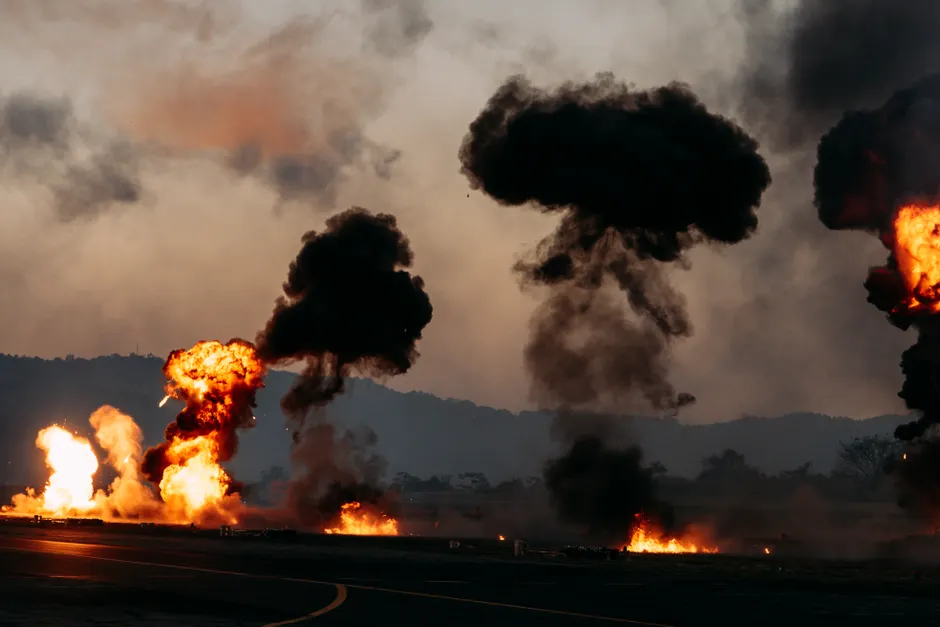
A Russian strike on a military warehouse in Bucha, a suburb west of Kyiv, killed at least 37 people overnight, according to Ukrainian authorities. The warehouse stored weapons for Ukraine's military and sat near a residential area. The hit triggered a major fire and secondary explosions — blasts caused by the stored ammunition itself igniting — which spread destruction well beyond the initial impact point. Nearly 400 people were evacuated from the surrounding zone. BBC News
On the morning of August 29, initial reports placed the death toll at 27. That figure climbed to 37 as rescue and recovery teams continued their work. The strike reportedly involved a Russian drone, according to Al Arabiya English and Euronews, both publishing on August 29. Because the depot was close to housing, secondary detonations from the stored ordnance sent fire and debris into nearby civilian infrastructure, amplifying the human cost. Al Arabiya English Euronews
Ukrainian President Volodymyr Zelensky announced an investigation into what he called the "terrible negligence" of those who stored explosives near where people live. His framing directs scrutiny not only at the Russian attack but at Ukrainian military and logistical decision-making — specifically, why an arms depot was placed in or near a populated residential zone. Bucha carries particular resonance as a site of civilian suffering: the suburb was a focal point of civilian casualties during the early weeks of Russia's full-scale invasion in 2022. BBC News
The logistics of ammunition storage have been a recurring concern throughout the conflict. Depots near residential areas create a dual vulnerability: they are legitimate military targets under international humanitarian law (the rules governing conduct in war), yet their placement among civilians can make any strike far more destructive in proportionality terms — the legal principle that a military advantage must be weighed against expected civilian harm. Here, the depot's contents, once ignited, produced secondary explosions that extended the damage radius well beyond the initial strike, driving both the high casualty count and the need for mass evacuation.
The broader context is the tension between legitimate military targeting and civilian harm in a war where supply lines are often embedded in or near urban areas. Russia has consistently struck Ukrainian military depots, supply chains, and transit hubs throughout the war. Ukraine, in turn, has faced the operational challenge of dispersing and protecting its stockpiles while keeping them close enough to active combat zones to be useful. Bucha sits in Kyiv's western suburbs — outside the immediate front line but within the strategic depth that Russian long-range strikes routinely reach.
Zelensky's decision to publicly order an investigation into domestic negligence, rather than attributing blame solely to the Russian strike, is notable. It signals an acknowledgment that safety protocols around military storage sites may not have been adequately enforced. The central question investigators will face is whether the depot's location near housing stemmed from operational necessity, bureaucratic inertia, or a failure to apply existing safety regulations. The president's own words — "terrible negligence" — suggest the inquiry will carry high-level political backing and could lead to accountability for the military or logistical personnel responsible for the site's placement.
The death toll of 37 places this among the more lethal single strikes on rear-area infrastructure in recent months. The evacuation of nearly 400 people illustrates the scale of disruption that a secondary detonation chain can cause when military ordnance is stored near civilians. How Ukraine's military leadership responds to Zelensky's investigation, and whether it results in revised protocols for where depots are sited, will be a question for defense planners — and for communities living near similar facilities.