Ferry Disaster Off Northern Cyprus: What Happened and Why It's Complicated
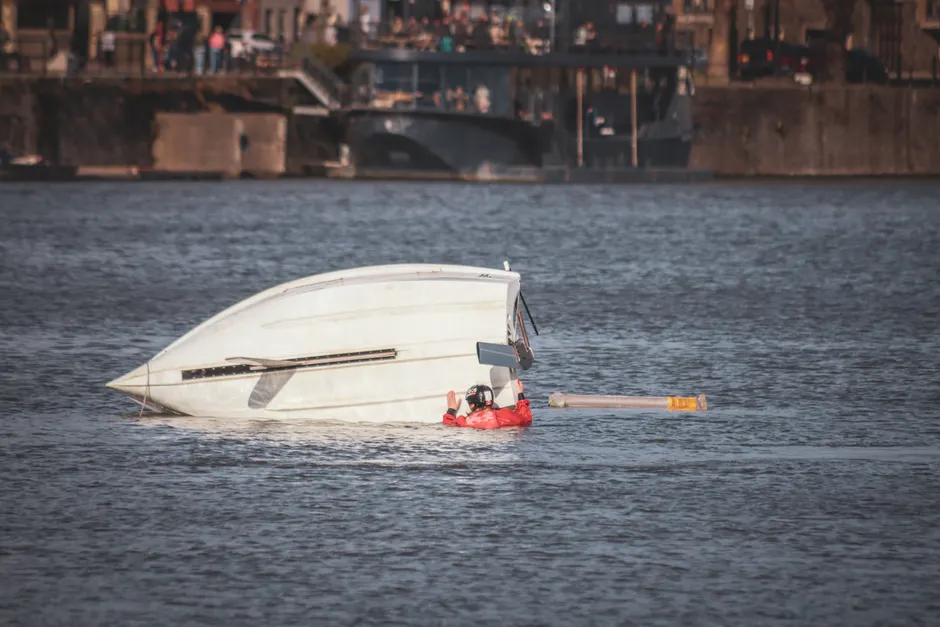
At least seven people died and 23 remained missing after a passenger ferry carrying approximately 267 passengers and crew capsized off the coast of Kyrenia in northern Cyprus on 30 August 2026.
The ferry, operated by Filo Denizcilik, was en route from Kyrenia to the Turkish port of Tasucu when it began taking on water roughly 15 minutes after departure, according to The Guardian. Adverse weather conditions were cited as the cause. The vessel sank off Diana beach, a coastal area near Kyrenia, Kyrenia mayor Murat Senkul confirmed.
Ünal Üstel, prime minister of the self-declared Turkish Republic of Northern Cyprus (TRNC), stated on X that 237 of the 267 people on board had been rescued and seven had died, leaving 23 unaccounted for. Üstel described the ongoing search-and-rescue operation for the missing as the "utmost priority" and said all TRNC state institutions were on the ground conducting operations "with great care" and "uninterruptedly" with all available means mobilized. He expressed condolences to the families of the dead and wished the injured a speedy recovery.
Üstel also announced the establishment of a Crisis Desk (Kriz Masası) to monitor the situation step by step, a coordination body that reflects the administrative machinery the TRNC has activated in response to the disaster.
Rescue operations involved the Coast Guard, the Akgünler Express vessel, and numerous small boats deployed to the scene. The scale of the response fits the severity of the incident: a vessel sinking within minutes of departure in rough seas, with over 260 people on board, demands rapid coordination across multiple maritime rescue assets.
Casualty figures evolved over the course of 30 August as information flowed from Turkish Cypriot authorities to international wire services. Reuters initially reported one death, citing Turkish Cypriot media. Deutsche Welle and RTE both reported at least six fatalities, also citing Turkish media. The Guardian's live coverage later carried the figure of seven dead, attributed to Prime Minister Üstel's statement. The slight variance in passenger counts, between 267 and 270, reflects the difference between Üstel's figure and the 270 cited by mayor Senkul.
The broader context here is twofold. First, the Kyrenia-to-Tasucu route is a heavily trafficked maritime corridor connecting northern Cyprus to the southern Turkish coast. Northern Cyprus is a territory recognized internationally only by Turkey, meaning this route is one of the few direct links between the breakaway state and its sole ally. Passenger ferries on this route serve both commercial and civilian transport needs across a stretch of water that, while normally navigable, is subject to sudden weather shifts characteristic of the eastern Mediterranean in late summer. The fact that the vessel began sinking a mere 15 minutes after departure raises immediate questions about whether prevailing weather conditions at the time of departure should have prompted a delay or cancellation, though no official determination on that question has yet been made public.
Second, the political status of the TRNC adds a layer of complexity to the incident response and its international reporting. Because Northern Cyprus is recognized only by Ankara, coordination on search-and-rescue, casualty identification, and any subsequent investigation will operate primarily through TRNC and Turkish channels. International wire services have consistently attributed their reporting to "Turkish media" or "Turkish Cypriot media," reflecting the fact that direct access to TRNC official sources is mediated through these pathways. The TRNC government's use of X (formerly Twitter) as the primary communication channel for casualty figures and operational updates is itself notable, placing social media at the center of crisis communication for a government with limited formal diplomatic recognition.
The disaster will inevitably raise questions about ferry safety standards, weather-related departure protocols, and vessel seaworthiness on the Kyrenia-Tasucu route. Whether the TRNC authorities or Turkish maritime regulators will launch a formal investigation, and what its scope might be, has not yet been determined. For now, the immediate focus remains on the 23 people still missing in waters off Diana beach, with search operations continuing through the night.


