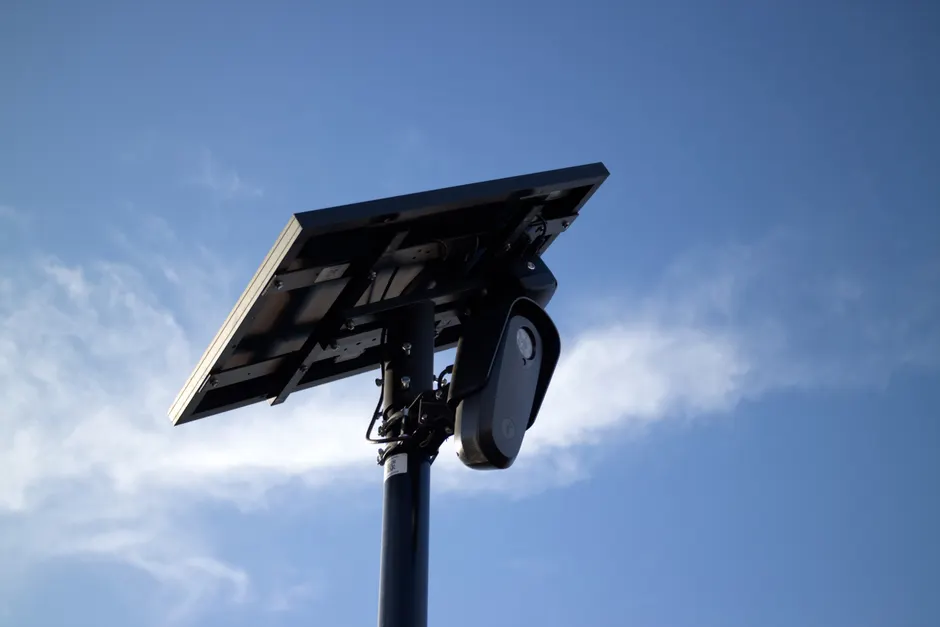
Texas Halts $30 Million in Spending on Flock AI Surveillance Cameras

Texas Governor Greg Abbott ordered state agencies on August 28, 2026, to pause all state spending on Flock AI surveillance cameras, days before a Texas Tribune investigation revealed the state had spent more than $30 million on the devices (Texas Tribune).
The freeze directs state agencies to halt funding for Flock camera systems. Abbott spokesperson Andrew Mahaleris confirmed the governor's action in reporting by The Verge (The Verge).
The Texas Tribune investigation, published August 28, 2026, and authored by Ayden Runnels, detailed how the spending was financed. The primary funding mechanism was a $1 fee added to insurance policies, ostensibly to combat catalytic converter theft. That fee funded the purchase of at least 3,200 Flock cameras across Texas, distributed through at least 95 grants awarded by a state agency to help law enforcement agencies acquire the systems (Texas Tribune).
Flock's automated license plate reader (ALPR) cameras have become widespread across U.S. law enforcement. The system captures vehicle location data, stores it in searchable databases, and shares it across jurisdictions — meaning a camera in one town can feed data to agencies in another. Scrutiny has focused on data-sharing practices that, in some cases, extended access to more than 2,000 organizations from a single suburb's deployment (Wired). Additional concerns include camera placement near playgrounds, Flock employees' access to live video feeds, unsecured feeds, and the company's attempts to avoid transparency (The Verge).
The backlash spans the political spectrum. Texas Republican Representative Keith Self posted on Instagram: "From Flock cameras to kill switches, we will NOT surrender our Fourth Amendment rights to the growing surveillance state." On the other side of the aisle, Abbott's Democratic opponent in the Texas governor's race, Gina Hinojosa, criticized him for having expanded the cameras' use across the state (The Verge).
Law enforcement misuse of Flock systems has produced concrete consequences. Multiple officers have been placed on leave or criminally charged for misusing the platform, including at least six in Texas. The cases involve officers using Flock's vehicle tracking capabilities to stalk individuals (404 Media).
The momentum against Flock extends beyond Texas. Cities across the U.S. have been canceling their Flock contracts in recent months, including multiple municipalities within Texas (The Verge). Online, destruction of Flock cameras has become something of a viral phenomenon, with social media users cheering the vandalism as a form of protest against the surveillance apparatus (The Verge).
The funding mechanism itself is likely to draw sustained attention. A $1 insurance surcharge sold to the public as a catalytic converter theft deterrent became, in practice, a financing pipeline for a mass surveillance deployment that most policyholders were unaware they were underwriting. The gap between the stated purpose and the actual use is a structural issue, not a messaging one. When a fee collected for one specific law enforcement function is redirected into a broad ALPR network with data-sharing agreements reaching thousands of entities, the question of legislative oversight becomes central.
The officer misconduct cases add another dimension. Flock's platform is designed for broad access within subscribing law enforcement agencies, and the stalking incidents suggest that access controls and audit logging may be insufficient to prevent abuse by insiders with legitimate credentials. This is a familiar pattern in surveillance technology deployments: the system works as designed, but the design optimizes for data availability rather than for constraints on misuse.
The broader context here is that Abbott's freeze is notable less for its immediate operational impact than for what it signals about the political viability of ALPR networks. Flock's rapid expansion was propelled by grant programs that lowered the cost barrier for local agencies. When a Republican governor in Texas and a Democratic gubernatorial challenger find themselves on the same side of an issue, and when conservative lawmakers invoke the Fourth Amendment against a surveillance tool deployed by law enforcement, the bipartisan coalition forming against unchecked ALPR deployment has real political weight.
The $30 million figure, the insurance fee mechanism, and the 3,200-camera deployment scale together paint a picture of how surveillance infrastructure can be built quietly through fragmented funding streams that avoid the scrutiny a single large appropriation would attract. Whether other states have similar funding pipelines, and whether those pipelines will face the same scrutiny Texas' now does, is the question that should follow from this reporting. The answer will determine whether Flock's model is a Texas problem or a national one.