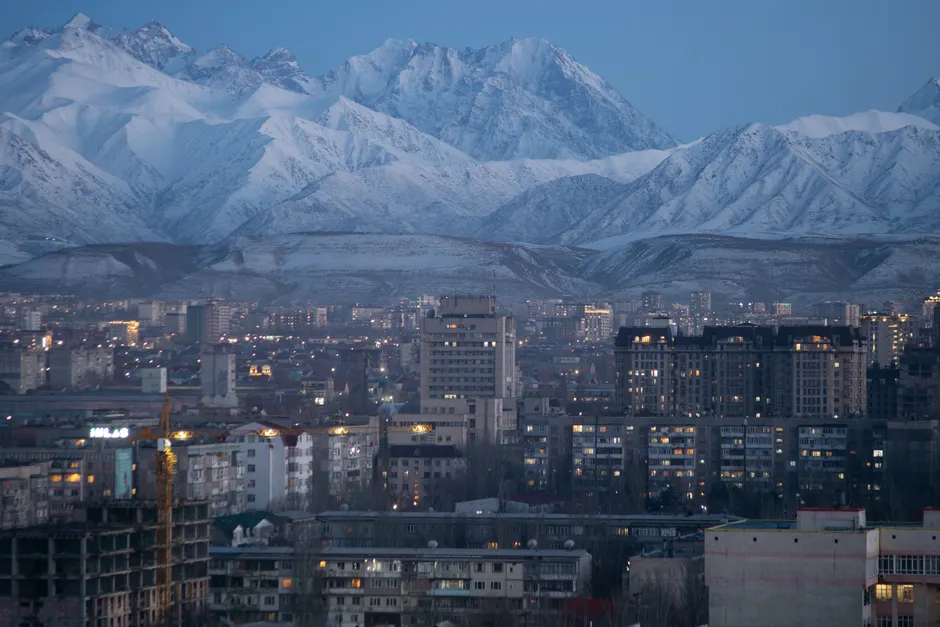
Putin and Xi Meet in Bishkek as the SCO Turns 25: What to Watch

Russian President Vladimir Putin and Chinese President Xi Jinping were set to gather in the Kyrgyz capital of Bishkek on Monday, 31 August 2026, for the annual Shanghai Cooperation Organisation (SCO) summit, a meeting that also marks 25 years since the bloc's founding in 2001 Al Jazeera.
The SCO is a regional intergovernmental organization focused on security, trade, and political cooperation across Eurasia. The Kremlin confirmed Putin's visit to Kyrgyzstan on 28 August, scheduling his stay for 31 August through 1 September Kremlin. China's foreign ministry had announced Xi's attendance on 26 August, noting he would also hold bilateral (one-on-one) talks with Kyrgyz President Sadyr Japarov and make a separate state visit to Egypt Reuters. SCO Secretary-General Nurlan Yermekbayev arrived in Bishkek on 30 August to finalize preparations SCO Secretariat.
The summit brings together a grouping whose 10 permanent members and 15 dialogue-partner states account, by the SCO's own claims, for roughly 40 percent of the world's population and 25 percent of global GDP. Dialogue partners are countries that participate in SCO discussions without full membership. Full members include India and Pakistan, whose leaders were expected to attend alongside Putin and Xi. Iran, which formally joined the SCO in 2023, was to be represented by President Masoud Pezeshkian, who was expected to hold bilateral talks with Putin on the margins Al Jazeera. Turkish President Recep Tayyip Erdogan was also expected to attend, though Turkiye remains a dialogue partner rather than a member.
The SCO's founding declaration states the group is "not an alliance directed against other states." In practice, the platform has functioned as a regular venue for its leading members to voice opposition to Western-led security and economic architectures — the network of institutions, treaties, and trade frameworks largely shaped by the United States and its allies. At last year's SCO gathering, Putin accused Western countries of provoking the Ukraine war, while Xi denounced "acts of intimidation" in an apparent reference to US-Chinese tensions Al Jazeera.
The 2025 summit, hosted by China, saw Xi host 20 leaders including Putin and India's Modi, with Beijing offering aid packages and artificial-intelligence cooperation to SCO initiative members Reuters. That gathering served as a platform for Xi to articulate a vision of a more multipolar global order — a world in which power is distributed among several major centers rather than dominated by a single superpower. It is a theme that the anniversary summit in Bishkek is likely to reinforce.
This year's summit also unfolds against a parallel diplomatic track on the economic front. US Treasury Secretary Scott Bessent said he would use an upcoming G20 conference to encourage member states to re-examine their terms of trade with China, denouncing Beijing's $1.2 trillion global trade surplus as unsustainable. A trade surplus means a country exports significantly more than it imports. Bessent also said he planned a bilateral meeting with People's Bank of China Governor Pan Gongsheng during the G20 proceedings Al Jazeera.
The SCO's institutional calendar for 2026 has been packed. The Council of National Coordinators convened twice in August (17–21 and 24 August), following an initial session in late January. Foreign ministers met in July in Cholpon-Ata, Kyrgyzstan, where the Russian and Iranian foreign ministers held talks on the sidelines. That Council of Foreign Ministers meeting officially set the summit dates for 31 August–1 September in Bishkek SCO Secretariat. Secretary-General Yermekbayev also traveled to Kazan in June for an event marking the 35th anniversary of Russia-ASEAN relations SCO Secretariat.
The broader context here is a sustained effort by Moscow and Beijing to position the SCO as a viable counterweight to Western-led institutions, even as the bloc's internal coherence faces stress tests. The simultaneous presence of Indian and Pakistani leaders at a single table remains diplomatically significant given the two countries' enduring strategic rivalry. Iran's deepening engagement with the SCO, exemplified by Pezeshkian's expected bilateral with Putin, extends a corridor of Russia-Iran coordination that has grown throughout the Ukraine conflict.
Meanwhile, Turkiye's continued attendance as a dialogue partner reflects Ankara's long-standing strategy of maintaining institutional footholds across competing blocs, even as it remains a NATO member. The roster of dialogue partners, which also includes Saudi Arabia and Qatar, points to the SCO's ambition to serve as a convening body for Eurasian and Middle Eastern states seeking alternatives to G7-centric fora.
Bessent's G20 posture adds a competitive economic dimension to the diplomatic calendar. His framing of China's trade surplus as "unsustainable" and his push for G20 members to re-examine trade terms with Beijing run on a track that directly intersects with the SCO's trade and connectivity agenda. Whether the Bishkek summit produces coordinated language on trade imbalances, sanctions regimes, or security arrangements will be a signal of how much the SCO has evolved from a declarative body — one that issues statements but takes little collective action — into one capable of collective policy output.
The anniversary framing matters for institutional signaling. Twenty-five years after the SCO's founding, the gathering in Bishkek is an opportunity for member states to project continuity and cohesion. But the summit's substantive outcomes, particularly any joint statements on trade, security, or institutional reform, will reveal whether the grouping can translate demographic and economic scale into coordinated geopolitical leverage, or whether it remains primarily a forum for bilateral diplomacy on the margins of a multilateral stage.