SCO Leaders Gather in Bishkek for 25th-Anniversary Summit
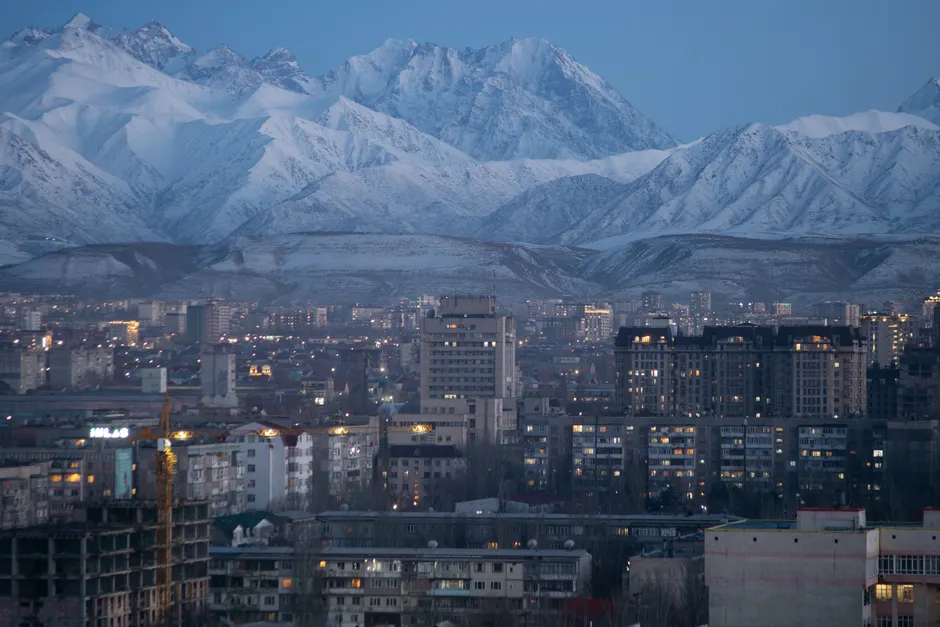
The Shanghai Cooperation Organisation opened its annual summit in Bishkek, Kyrgyzstan, on August 31, 2026, bringing together Chinese President Xi Jinping, Russian President Vladimir Putin, Indian Prime Minister Narendra Modi, and Iranian President Masoud Pezeshkian for a two-day meeting marking the bloc's 25th anniversary. Leaders of Pakistan, Uzbekistan, Belarus, and Kazakhstan are also attending, alongside Turkish President Recep Tayyip Erdogan, UN Secretary-General Antonio Guterres, and ASEAN Secretary-General Kao Kim Hourn, who were expected to participate (Al Jazeera). The summit is held under the motto "Together for Sustainable Peace, Development and Prosperity" (Al Jazeera).
The Council of Foreign Ministers confirmed the August 31 to September 1 schedule in a statement dated July 25, 2026 (SCO Secretariat). Preparatory diplomacy moved in layers throughout the year. The Council of National Coordinators — a working-level body that handles day-to-day cooperation between member states — convened first from January 27 to 30, then again from August 17 to 21 and on August 24 (SCO Secretariat; SCO Secretariat). SCO Secretary-General Nurlan Yermekbayev arrived in Bishkek on August 30 (SCO Secretariat).
The SCO traces its origins to 1996, when China, Russia, Kazakhstan, Kyrgyzstan, and Tajikistan formed the "Shanghai Five" to settle border disputes left over from the Cold War (Al Jazeera). It has since broadened into a security and economic bloc whose membership now spans South and Central Asia, with Iran represented at the head-of-state level by Pezeshkian.
The Bishkek summit follows the 2025 gathering in China's Tianjin region, which adopted the "Tianjin strategy" calling for a multipolar world order — a framework in which global influence is shared among several major power centers rather than dominated by a single one (Al Jazeera). At that summit, Xi Jinping hosted 20 leaders, including Putin and Modi, and announced plans to accelerate the creation of a development bank and establish an international energy body (Reuters; AP). China also offered aid and artificial intelligence cooperation to member states (Reuters).
Multiple bilateral meetings took place on the Tianjin sidelines. Xi held talks with Putin on September 2 and met Modi on August 31 (Chinese Consulate in Willemstad). Putin and Modi also met separately (Reuters). Putin remained in China after the summit to attend the World Humanoid Robot Games (Reuters). The 2025 summit also served as a platform for China to project Global South solidarity (Reuters), and leaders were expected to discuss regional and international security challenges, including ongoing conflicts (Anadolu Agency).
Several dynamics distinguish the Bishkek summit from its predecessor. The 2025 Tianjin summit was a Chinese-hosted affair, allowing Beijing to set the agenda, control the optics, and package its institutional proposals — the development bank and energy body — into a single national showcase. Bishkek shifts the chairmanship to a smaller Central Asian member, which may alter the emphasis toward regional security and border stability, the SCO's founding concerns. Erdogan's expected attendance is notable for Turkey, an SCO dialogue partner that has periodically signaled interest in deeper engagement with the bloc. The UN Secretary-General's presence lends multilateral institutional legitimacy to a gathering that Western governments have sometimes viewed with caution.
The broader context here is that the 25th-anniversary framing gives the Bishkek summit a natural inflection point for assessing how far the SCO has moved from its border-dispute origins toward the broader multipolar architecture envisioned in the Tianjin strategy. The development bank and energy body proposals announced in 2025 remain in the planning stage; the Bishkek agenda will indicate whether they have advanced toward concrete institutional milestones or whether they remain declarative aspirations. For India, the summit continues its careful balancing act: engaging with a China- and Russia-led bloc while managing its own strategic competition with Beijing. For Iran, Pezeshkian's attendance reinforces the SCO's role as a platform for states navigating Western sanctions — economic penalties imposed by Western governments to pressure targeted countries into changing their behavior.
The involvement of Guterres and Kao Kim Hourn also widens the summit's institutional connective tissue beyond the SCO's own membership, linking it to the UN system and to ASEAN, the Association of Southeast Asian Nations. Whether that produces substantive cooperation agreements or remains a diplomatic gesture is one of the questions the summit's final communique — the official statement issued at the end of the meeting — may answer.


