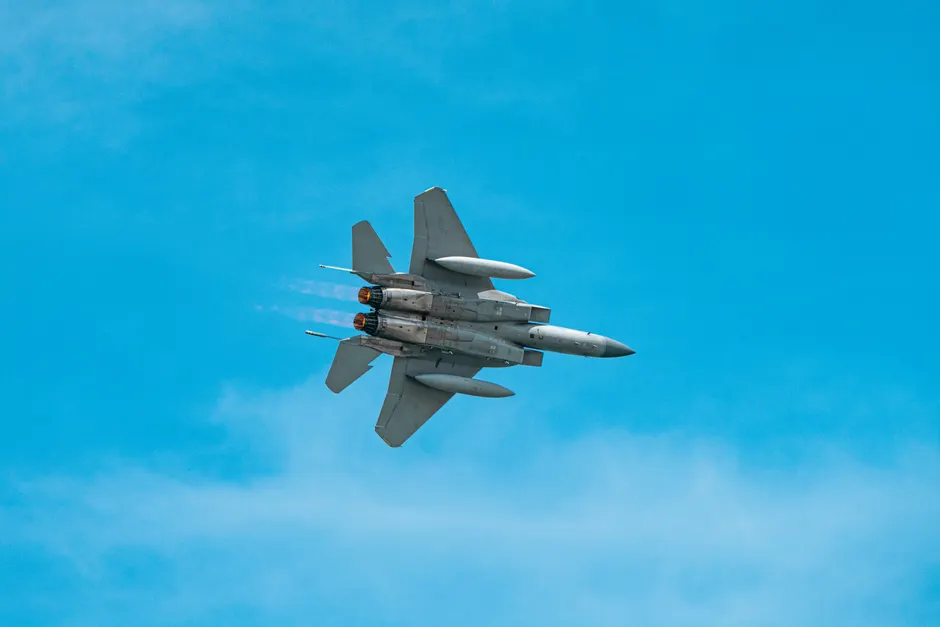
Iran Strikes US Bases in Jordan and UAE After American Raid on Larak Island

Iran said it attacked US military bases in Jordan and the United Arab Emirates on August 31, in retaliation for a US strike on Larak Island in the Strait of Hormuz. The exchange marks the first active fighting between the two sides since late July Al Jazeera.
On the night of August 30, the United States struck two Iranian rocket launchers on Larak Island, according to US Central Command (CENTCOM). A US official told Al Jazeera Arabic that the launchers were preparing to fire missiles carrying naval mines into the Strait of Hormuz. Naval mines are explosive devices placed in water to damage or sink ships. CENTCOM, posting on X, called the IRGC's description of the strike as an "act of aggression" false, and described the operation as "limited, precise action against IRGC minelaying forces posing an imminent threat in the Strait of Hormuz." CENTCOM said Iran had created the threat and that US forces eliminated it to protect civilian mariners, commercial shipping, and the free flow of global commerce Al Jazeera.
The Islamic Revolutionary Guard Corps (IRGC), Iran's elite military force, said the US attacks on Sunday night killed and wounded several Iranian soldiers and civilians. IRGC spokesperson Sardar Mohebi, quoted by Iran's Fars news agency, accused the US of making "a strategic and fatal mistake" for which it will face consequences in both the economic and military arenas. Iran's Ministry of Foreign Affairs condemned the strike as a "direct violation of national sovereignty and territorial integrity" and said it caused civilian and military casualties Al Jazeera.
In response, the IRGC said it conducted a combined missile and drone operation targeting the King Hussein and Al Azraq US military bases in Jordan. Iran said it identified those bases as the launching ground for the Larak Island attack. The IRGC claimed the strikes "destroyed the technical and repair infrastructure, as well as the enemy fighter deployment sites," causing significant damage. Tehran described the operation as "a legitimate exercise of self-defence" under the UN Charter Al Jazeera.
A US official told Al Jazeera Arabic that the United States intercepted Iran's attacks against Jordan and that Tehran had launched medium-range ballistic missiles — weapons that travel through space before hitting a target hundreds or thousands of kilometers away. The official said "the missile attack on US forces in Jordan proves that Iran is no longer the power it once was." Jordan's army said in a statement on Monday that it had intercepted eight missiles. The Iranian military separately released footage purporting to show drones being launched toward aircraft hangars at the US Azraq air base Al Jazeera; Reuters.
Iran's Army said it also carried out retaliatory drone strikes against US troops and helicopters at Al Minhad Air Base in the United Arab Emirates, launching dozens of drones IRNA; The Media Line. A tanker fire occurred amid the US strike on Larak Island and Iran's reprisals against airbases in the Strait of Hormuz The Guardian.
Iranian President Masoud Pezeshkian, in his first comments since the exchange, said Iran was "not looking for war" but would "never sit still in the face of any aggression." Quoted by Fars, Pezeshkian said Iran "will give a decisive response to the aggressors" if attacked, and that instability and unrest in the region are not in the interest of any country Al Jazeera.
US President Donald Trump claimed on Monday, in a post on Truth Social, that Kharg Island is being "blown to smithereens." Iran has not yet commented on that claim Al Jazeera. The previous week, Trump said all mines had been detonated or removed from the Strait of Hormuz and that Iran was told any ship or boat placing new mines would be destroyed Al Jazeera.
The broader context here matters for understanding the stakes. Larak Island sits inside the Strait of Hormuz, a narrow waterway through which roughly a fifth of global oil consumption transits. The US rationale, as articulated by CENTCOM, frames the strike as a narrow force-protection measure against imminent minelaying rather than a broader escalation. Iran's response, spanning two countries and employing both ballistic missiles and drones, suggests a deliberate widening of the operational theater beyond the immediate site of the American strike. Think of it this way: rather than striking back at the ships that fired on Larak Island, Iran targeted the land bases that support US operations across the region.
Pezeshkian's calibrated language, disavowing war while affirming a right to respond, tracks with Tehran's longstanding effort to manage escalation thresholds — keeping tensions high enough to project strength, but below the level of full-scale conflict. The IRGC's more bellicose framing through Mohebi, and Trump's separate claim about Kharg Island, which hosts Iran's largest crude oil export terminal, introduce additional vectors of uncertainty. Whether the Kharg Island claim reflects an actual ongoing operation or rhetorical pressure remains unverified by independent reporting at the time of writing. The tanker fire in the Strait adds a maritime safety dimension that will be watched closely by shipping insurers and navies operating in the area.
Both sides are now navigating the gap between what they say and what they do on the ground. The US presents its actions as defensive and proportionate. Iran frames its retaliation as sovereign self-defence under international law while signaling capacity across multiple domains and geographies. The involvement of Jordan and the UAE as territorial hosts of targeted US facilities raises questions about allied exposure that regional governments will be weighing carefully.