Philips Hue's IFA Lineup Pushes Smart Lighting From Bulbs Into Architectural Fixtures
Philips Hue has launched a new line of architecturally focused smart lights at IFA, now available for purchase at Philips-Hue.com. The headline product is the Liane 360-degree Rope Light, which uses a technology Philips Hue calls OmniGlow to emit diffuse light in every direction through a full 360-degree tube. The Liane Rope Light is priced at $399.99 for the 3-meter model and $549.99 for the 5-meter model. The Verge
The 360-degree emission is the technical differentiator. Conventional LED rope lights direct their output along a narrow axis, which produces a visible hot spot when the rope is mounted against a surface. OmniGlow diffuses light across the entire tube circumference, eliminating that directional bias. The result is a rope light suited for installations where the fixture is fully exposed rather than tucked behind a diffuser panel or recessed into a groove.
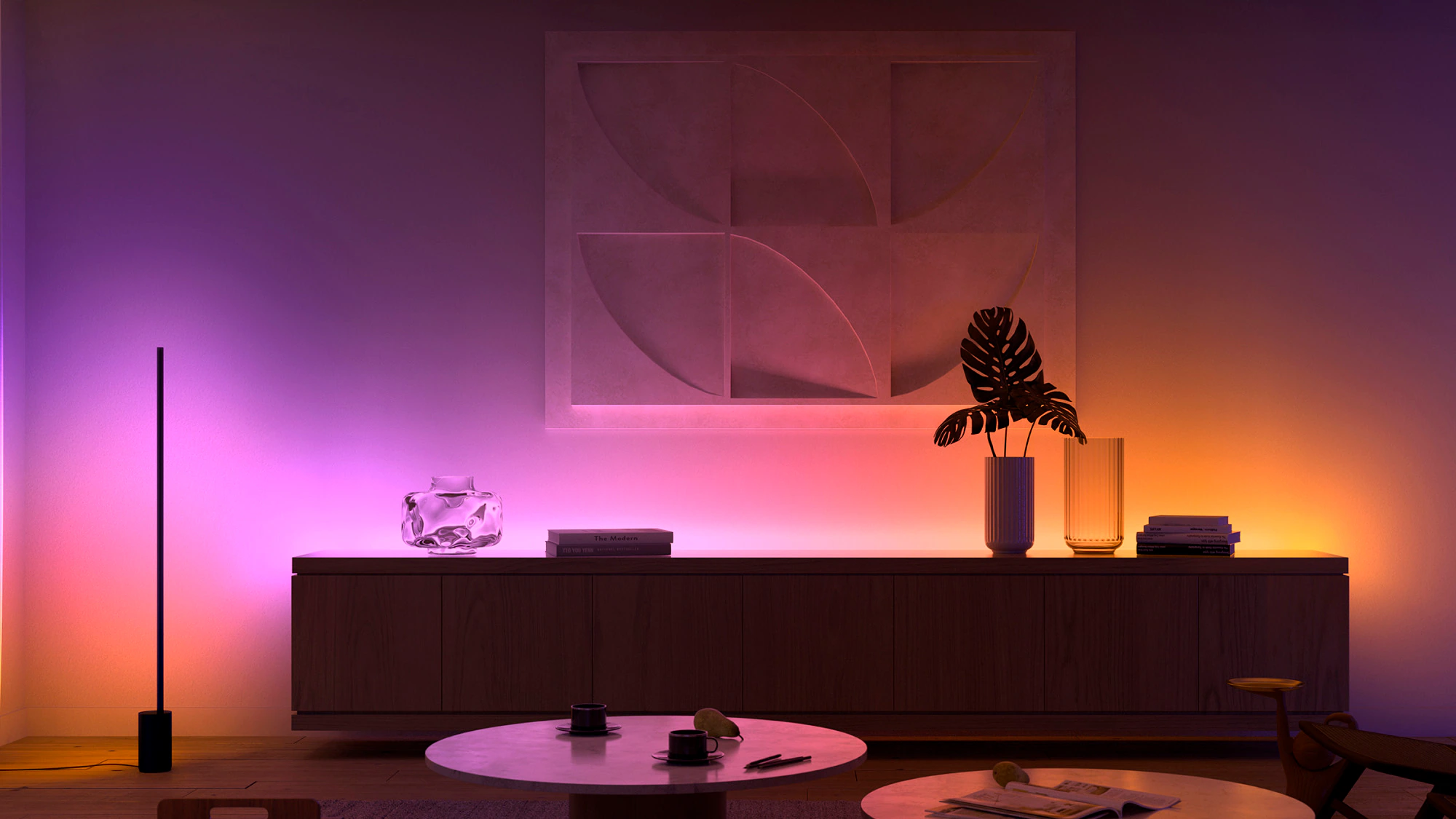
Alongside the Liane, Philips Hue added three new fixtures to its Signe line: the Signe pendant, Signe pendulum, and Signe pole. All three are scheduled to ship from October, with pricing starting at $319.99. The Verge The Signe line has served as Philips Hue's design-forward pillar, aimed at buyers who want smart lighting that reads as a purpose-built fixture rather than a bulb screwed into an existing lamp. The pendant and pendulum additions bring that positioning to ceiling-mounted installations, a category the line had not previously addressed.
The Festavia line also received new entries at IFA, including curtain lights, net lights, and icicle lights for indoor and outdoor use. The Verge Separately, Philips Hue's Festavia permanent string lights are designed to stay installed year-round, mounted along facades or rooflines. Signify That permanent-installation framing is a notable shift for what started as a seasonal product, positioning Festavia as architectural exterior lighting rather than holiday decor.
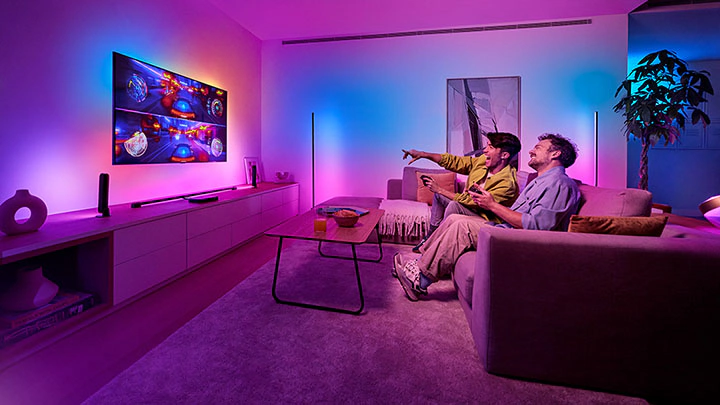
Philips Hue's Play table and floor lamps continue to serve as the entry point into the brand's entertainment ecosystem, synchronizing with films, gaming, and music to produce dynamic wall-washing effects that mirror on-screen action. Philips Hue The Play line sits at the intersection of ambient lighting and media sync, and the broader architectural expansion announced at IFA extends the same design philosophy, wrapping diffuse, multi-directional light into form factors meant to be seen rather than concealed.
What ties these product threads together is a shift in how Philips Hue is positioning itself within the smart home. The brand built its early dominance on replaceable smart bulbs, but the IFA lineup, the Liane, the expanded Signe family, and the permanent Festavia strings all move toward integrated, architecturally permanent fixtures. The pricing reinforces that trajectory. A 5-meter Liane rope at $549.99 is not an impulse purchase; it competes with professional lighting design rather than with a $50 smart bulb multipack.
For integrators and smart-home professionals, the practical implications are straightforward. The Liane's 360-degree diffusion reduces the mounting constraints that limited earlier rope-light deployments. The Signe pendant and pendulum open ceiling-mounted options in a line previously limited to floor and table form factors. The permanent Festavia strings give exterior installations a year-round justification rather than a seasonal one.
The open question is ecosystem cohesion. Philips Hue's Zigbee-based Hue Bridge remains the central hub for these products. Zigbee is a low-power wireless protocol used for smart home devices to communicate with each other through a central hub rather than over Wi-Fi. The company's Matter support, the cross-platform smart home standard designed to let devices from different brands work together, will determine how cleanly these new fixtures integrate into multi-vendor installations. The IFA announcement did not address protocol-level changes, which suggests these are product-line extensions rather than platform shifts.
The broader context here is a smart-lighting market that has matured past the novelty of app-controlled color. Buyers at this price point expect fixtures that hold their own as design objects, not just as controllable light sources. Philips Hue's IFA lineup is a bet that the same brand that convinced consumers to replace perfectly functional bulbs will now convince them to design rooms around its fixtures. The technology to make that case, 360-degree diffuse emission, permanent-rated exteriors, and synchronized entertainment lighting, is present in the product specs. Whether the market follows is a separate question.