Xiaomi's Fold 18 Pro Takes a Different Shape — and a Different Chip
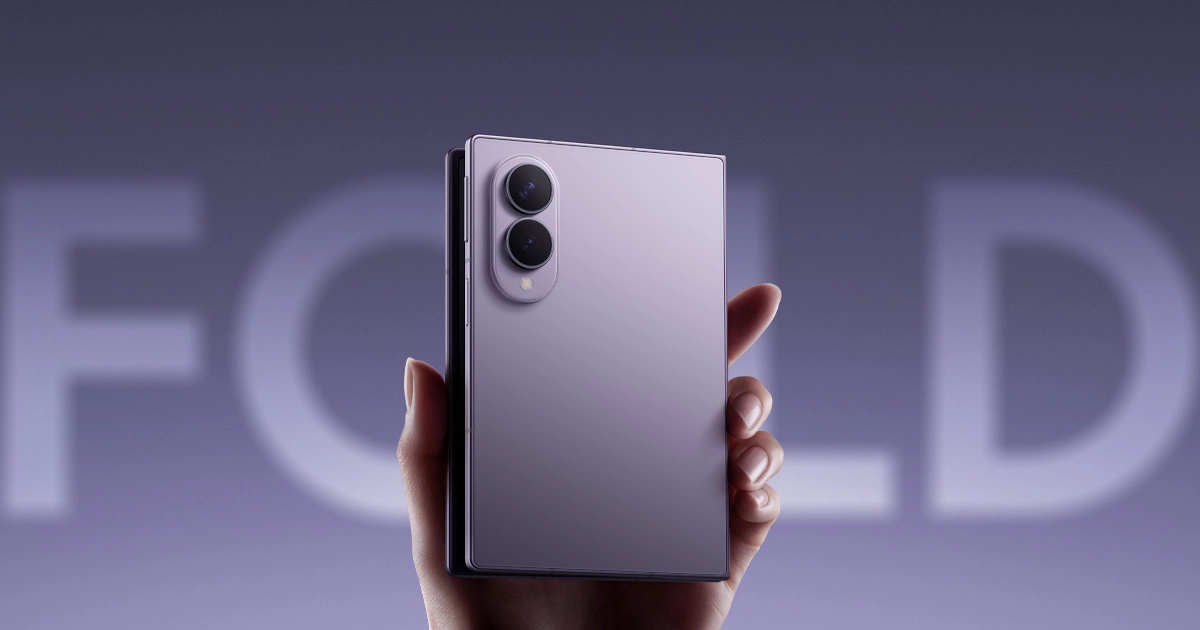
Xiaomi used its IFA 2026 stage to introduce the Fold 18 Pro, a foldable phone with a passport-style form factor that is shorter and wider than the Samsung Galaxy Z Fold 8. Full specifications will be revealed on September 7, 2026, when the device launches in China. Engadget
The design choice is the immediately visible differentiator. Samsung's Galaxy Z Fold 8, which launched earlier this summer, uses a 16:10 cover screen and a 4:3 inner display, yielding a tall, narrow silhouette closer to a conventional smartphone proportion when closed. CNET The Z Fold 8 measures 9.7mm thick when closed and 4.5mm when open, weighing 201 grams, which Samsung cites as the lightest Z Fold device to date. CNET Xiaomi's passport-style approach, by contrast, appears to trade height for width, potentially offering a more square-ish footprint that could change the ergonomics of one-handed use and the aspect ratio available to tablet-mode applications.
Xiaomi has not yet shared definitive screen sizes, camera details, or other specifications for the Fold 18 Pro. Engadget What the company has confirmed is that the device runs on its homemade XRING 03 SoC — a single-chip processor that combines CPU, GPU, NPU (the neural processing unit that handles AI tasks), and other AI chipsets into one package. Xiaomi brands it as its "Flagship AI SoC," and it could potentially replace Snapdragon or MediaTek silicon in Xiaomi's highest-tier hardware. Engadget
For context, the Galaxy Z Fold 8 that Xiaomi is measuring itself against is powered by the Qualcomm Snapdragon 8 Elite processor, paired with 12GB or 16GB of RAM and 256GB, 512GB, or 1TB of storage. Its main display is a 7.6-inch QXGA+ panel running at 120Hz with 403ppi pixel density. The Guardian The Z Fold 8's camera system features a dual 50 MP wide and ultra-wide configuration. Samsung
The Fold 18 Pro's camera unit carries Leica lettering, continuing Xiaomi's co-branded imaging partnership, though specific sensor configurations remain under wraps. Engadget
IFA 2026 also served as the stage for a second major Xiaomi announcement: the company confirmed it will launch its electric vehicles in Europe. Engadget No timeline was given for the European EV rollout beyond the announcement itself.
The broader context worth weighing here is the XRING 03's positioning. A vertically integrated manufacturer — one that designs its own chips, builds its own devices, and controls the software stack — swapping third-party silicon for a self-designed SoC in a flagship foldable is a meaningful signal. Qualcomm and MediaTek have dominated Android flagship silicon for years, and the Snapdragon 8 Elite inside the Z Fold 8 is the current competitive baseline. If the XRING 03 can match or approach that baseline on inference latency (how quickly the chip processes AI requests), thermal performance, and sustained throughput under a foldable's tight thermal constraints, Xiaomi gains control over its silicon roadmap, its AI pipeline, and its bill of materials simultaneously. If it cannot, the device ships with a competitive disadvantage in the tier where buyers are least tolerant of one.
The passport-style form factor is the second variable to watch. Foldable design has been converging slowly toward shared dimensions, with Samsung's Z Fold series iterating on roughly the same aspect ratios since the original Z Fold 3. A shorter, wider inner display changes app compatibility dynamics, particularly for Android tablet apps that have been tuned for Samsung's 4:3 inner screen over multiple product cycles. Whether Xiaomi's aspect ratio proves friendlier to productivity, media consumption, or neither is a question the September 7 launch should begin to answer.
The September 7 reveal in China will provide the full specification sheet, pricing, and likely a clearer picture of how the XRING 03's integrated CPU/GPU/NPU architecture performs under real-world workloads. Until then, the Fold 18 Pro is a credible signal of Xiaomi's ambition to differentiate on both industrial design and silicon, and a reminder that the foldable category is still early enough in its maturation that a fundamentally different form factor can enter the conversation.


