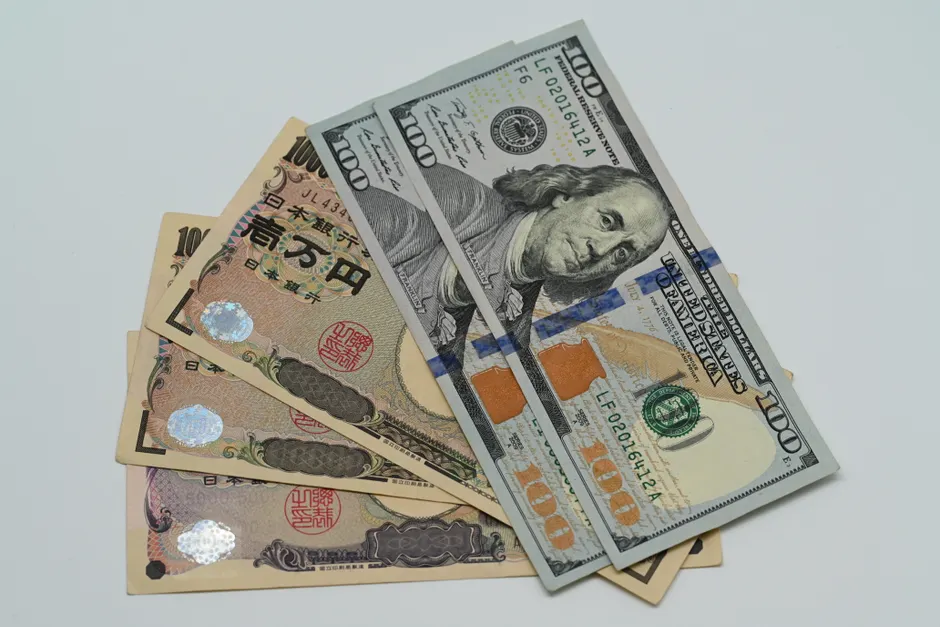
Japan and the U.S. Staged the Largest Yen Intervention in 15 Years — Here's What Happened

Japan and the United States carried out the biggest yen-buying operation in 15 years, according to Goldman Sachs. The effort spanned two separate windows in 2026.
Japan's Ministry of Finance confirmed buying yen on Friday, July 31, 2026 (U.S. Eastern Time), in coordination with the U.S., per an August 3, 2026 statement from Finance Minister KATAYAMA Satsuki. The broader campaign was substantial: the Ministry of Finance reported foreign exchange intervention totaling ¥11,734.9 billion for the period from April through June 2026.
That quarterly figure updates and supersedes an earlier monthly disclosure. The Ministry of Finance had previously reported ¥11,734.9 billion in intervention for the period from April 28 through May 27, 2026, published on May 29, 2026. Because the cumulative totals match, the bulk of quarterly activity was concentrated in that late-April-to-late-May window. The July 31 coordinated action was a separate, subsequent operation.
In practice, intervention means a central bank or finance ministry buys its own currency and sells another — in this case, buying yen and selling dollars. That pushes the yen's price up (or at least slows its fall) and temporarily increases the supply of dollars in short-term funding markets. When the amounts run into the trillions of yen, the effect on currency markets and short-term dollar liquidity can be material, even if the central bank later "sterilizes" the operation — reversing the liquidity impact after the fact to keep domestic monetary conditions unchanged.
Joint intervention has slowed but not stopped yen weakness, according to Schwab director Michelle Gibley. The currency stabilization efforts in 2026 unfolded against a backdrop of equity market volatility. On July 7, 2026, the Dow, S&P 500, and Nasdaq traded with SpaceX slipping below its opening price, as tracked in WSJ live coverage. Roughly a month later, on August 6, 2026, the Dow fell 460 points in a broader equity selloff, per separate WSJ live coverage.
Simultaneously, global bond markets are absorbing record supply. Global corporate bond issuance reached $4.9 trillion so far in 2026, up 14%, according to LSEG data, reported by Reuters on September 1. A portion of that borrowing is driven by capital expenditure on artificial intelligence infrastructure.
Here is where two forces are colliding. On one side, unprecedented corporate bond supply — partially tied to AI spending — is pressing against the demand side of the bond market. On the other, the yen intervention by Japan and the U.S. mechanically alters cross-currency basis swaps (the cost of borrowing one currency while holding another) and repo market dynamics (short-term collateralized lending). When central banks buy yen and sell dollars, they absorb dollar liquidity from those short-term funding markets. The ¥11,734.9 billion across the second quarter represents significant dollar liquidity absorption, even if sterilized after the fact.
The timing deserves attention. The July 31 intervention preceded the August 6 equity selloff by less than a week. Whether the yen operation merely slowed currency depreciation or triggered a broader deleveraging event — investors unwinding borrowed positions en masse — that spilled into U.S. equities is a question for risk managers. Goldman Sachs characterized the operation as the largest in 15 years, placing the scale above interventions seen during the 2011 post-tsunami yen appreciation crisis. That magnitude suggests policymakers faced conditions they deemed systemically threatening.
The record corporate issuance compounds the complexity. When issuance reaches $4.9 trillion, up 14% year-over-year, the question for credit traders is not just the yield premium (or "spread") over benchmark rates, but whether the market can absorb that much new debt. AI-related capital expenditure — the stated driver for a portion of this borrowing — typically involves large-scale infrastructure and semiconductor spending with long depreciation timelines. The debt service on these bonds is highly sensitive to the interest-rate environment. If coordinated yen intervention tightens cross-currency funding costs or alters global rate differentials, the risk profile of that $4.9 trillion in outstanding corporate debt shifts accordingly.
The broader challenge for portfolio managers is distinguishing between transient, currency-driven volatility and deeper structural credit risk. Schwab's assessment that intervention slowed but did not stop yen weakness implies the underlying carry trade — investors borrowing in low-yielding yen to invest in higher-yielding assets elsewhere — remains intact. If the yen continues to depreciate despite the largest coordinated action in 15 years, the market may be testing the resolve of both the Bank of Japan and the U.S. Treasury. A breakdown in that resolve, or a further escalation in scale, would have direct implications for Treasury yields and the dollar index.
These are not isolated data points but a sequence of events shaping global liquidity conditions. The Ministry of Finance's quarterly data confirms the April–June window as the primary intervention period. The July 31 coordinated action with the U.S. extends that timeline. The August 6 equity drop followed. The September 1 bond market selloff report, contextualizing the $4.9 trillion issuance figure, brings the supply-side pressure into focus.