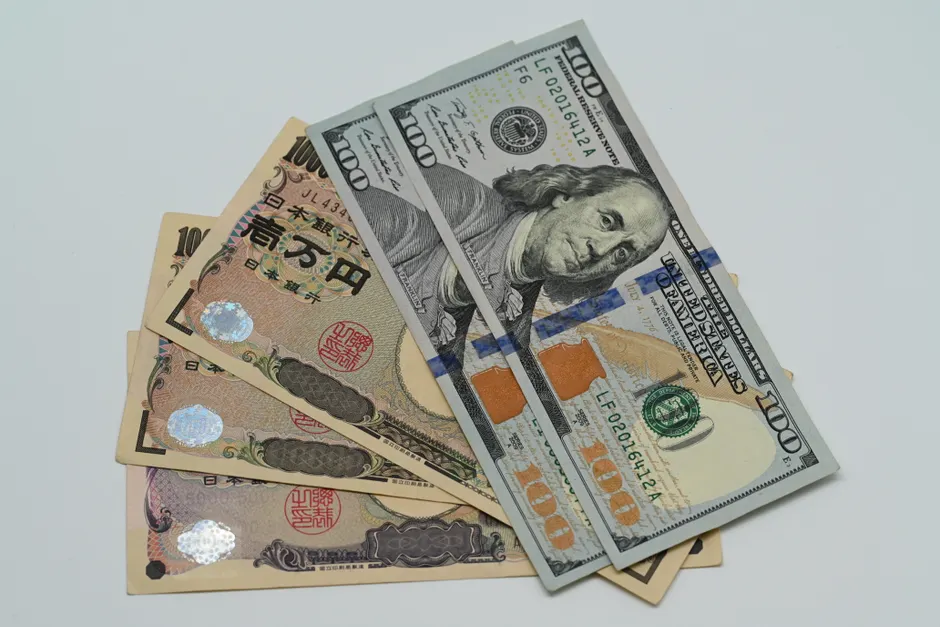
U.S. and Japan Team Up to Buy Yen: A Rare Coordinated Currency Intervention

On August 3, 2026, Japan and the United States confirmed a rare, coordinated yen-buying intervention to halt the yen's slide to 40-year lows against the dollar. Japanese Finance Minister Satsuki Katayama confirmed the joint action with Washington, citing the need to counter "disorderly movements" of the yen (Financial Times).
Two Japanese government officials said Tokyo and Washington took joint action in the currency market, a disclosure first reported by Reuters on August 2 (Reuters). The confirmation from both governments followed, making the intervention public rather than merely signaled through anonymous sourcing.
The intervention is the first coordinated U.S.-Japan currency action since 2011, when authorities moved to weaken the yen following the earthquake in eastern Japan (Yahoo Finance; Reuters). That earlier episode ran in the opposite direction: yen-selling to cap excessive appreciation. The current operation reverses the polarity, with both sides buying yen to support a currency that has been plumbing multi-decade lows.
Japan's finance ministry also announced plans to use the FIMA repo facility for future foreign exchange interventions (CNBC). The FIMA repo facility, run by the Federal Reserve Bank of New York, lets foreign central banks pledge their U.S. Treasury securities as collateral to borrow dollars. Think of it as a pawnshop for government bonds: instead of selling your Treasuries outright and losing the asset, you hand them over temporarily, get cash, and retrieve them later. Incorporating this facility into Japan's toolkit signals a shift in how Tokyo plans to source dollars for market operations, reducing reliance on outright Treasury sales from the Foreign Exchange Fund Special Account. The Ministry of Finance publishes statistics on official reserve assets held by that account and the Bank of Japan, which serve as the funding source for FX intervention (Ministry of Finance).
The Ministry of Finance's homepage lists the implementation status of foreign exchange balance operations for the period June 29 through July 29, 2026 (Ministry of Finance). The ministry publishes monthly statistics on the actual amounts of FX intervention conducted through these operations (Ministry of Finance).
U.S. involvement in the joint action carries a specific historical dimension. U.S. monetary authorities have intervened in yen markets before, purchasing a total of $833 million worth of Japanese yen in a prior operation (U.S. Treasury). That episode echoes June 1998, when U.S. authorities purchased yen in coordination with Japan amid efforts to strengthen the Japanese economy (U.S. Treasury). The Treasury's Exchange Stabilization Fund is the mechanism through which such U.S. FX operations are conducted.
Japan's own intervention history is substantial. Japanese authorities sold yen during the first quarter of 2004, with total sales amounting to approximately $138 billion (U.S. Treasury). That remains the last major unilateral Japanese intervention campaign before the 2022–2024 operations.
The Treasury's January 2026 Foreign Exchange Report assesses international economic and exchange rate policy developments over the four quarters through June 2025 (U.S. Treasury). The report provides the policy framework within which the current coordinated action sits.
Earlier this year, on February 3, 2026, Finance Minister Katayama addressed yen-dollar exchange rate volatility in a post-Cabinet-meeting press conference and referenced remarks by U.S. Treasury Secretary Bessent on foreign exchange intervention (Ministry of Finance). That exchange established a dialogue between the two finance ministries on currency coordination months before the August action.
The broader context here matters for market participants. Unilateral yen-buying by Japan in 2022 and 2024 produced only temporary reversals, with the yen resuming its decline within weeks. The addition of U.S. participation changes the calculus. Coordinated intervention signals that both Treasuries view the yen's level as disorderly rather than merely weak, and it brings the full weight of the Exchange Stabilization Fund to bear alongside Japan's reserves. For currency traders, the question is whether this coordinated operation can sustain a floor where unilateral action could not. The FIMA repo announcement adds a structural dimension: it suggests Tokyo is preparing for a sustained campaign rather than a single shock-and-awe operation, securing a reliable dollar-funding channel that does not deplete reserve assets through outright sales.
What remains unverified is the scale of the August 3 operation. The Ministry of Finance's monthly intervention statistics, which cover the June 29–July 29 reporting window, will not capture this action. The next release covering the relevant period will be the authoritative source for the amounts deployed.