DJI's Osmo 360 II: Replaceable Lenses, Better Low-Light, No US Release
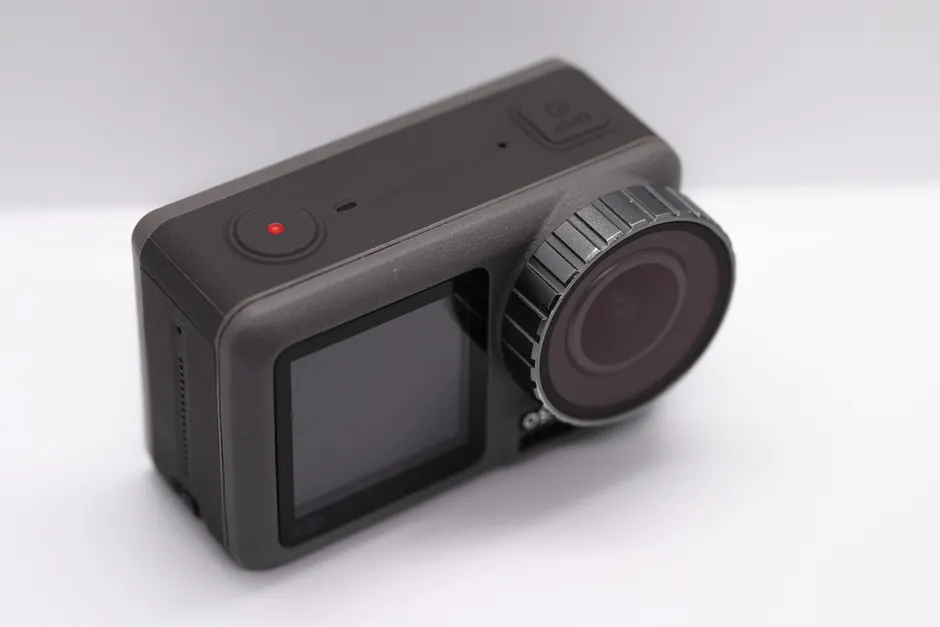
DJI has announced the Osmo 360 II, a successor to its Osmo 360 panoramic action camera. The new model adds replaceable lenses, improved low-light performance, and higher frame rates across 8K and 4K recording modes. It is already available in Asia and will reach Europe later in September. It will not be sold in the US for now. Engadget
The most significant hardware change is the move to replaceable lenses. Each lens pair uses what DJI calls an "ultra-hard" coating to resist scratching, and when a lens does get damaged, replacements cost €39 per pair (about $45). For anyone who has used a 360 camera in rough conditions, where the protruding fisheye lenses are the most exposed and vulnerable part, this solves a real-world durability problem, not just a spec-sheet one.
The sensor itself stays the same: a 1-inch square unit (a relatively large sensor for this camera class, which helps gather more light) that captures 360-degree 8K video. What changes is the processing and capture pipeline around it. Dynamic range, which measures how much detail a camera can retain across bright and dark areas in the same shot, increases from 13.5 to 14.5 stops over the previous model. 8K frame rate goes from 50 fps to 60 fps, and 4K from 100 fps to 120 fps. The camera supports 10-bit D-LogM and HDR capture, and DJI's AI SuperNight 2.0 noise-reduction algorithm handles low-light scenes.
Timelapse resolution jumps substantially, from 8K 30 fps on the original to 16K 30 fps on the II. A Vortex mode for 360-degree barrel-roll effects moves from 6K 120 fps to 8K 120 fps. The 120MP photo mode now supports HDR.
Battery capacity increases from 1,950 mAh to 2,150 mAh. Endurance at 8K 30 fps remains 100 minutes, and the camera charges to 80 percent in 22 minutes. An optional battery extension rod can push time between charges to 180 minutes. The camera carries 105 GB of built-in storage.
On the audio side, the Osmo 360 II has a built-in four-microphone array with wind-noise reduction designed for ambient sound capture. It is compatible with DJI's wireless mic ecosystem, including the Mic 3, Mic 2, Mic Mini 2S, Mic Mini 2, and Mic Mini. Accessory compatibility extends beyond DJI's own mounts to GoPro accessories as well. A one-tap NFC connection pairs the camera with the DJI Mimo app.
For post-production, DJI introduced a DaVinci Resolve plugin that allows direct import of 360 files into that application from the DJI Studio app. This is a meaningful addition for professional workflows. 360 footage has historically required awkward intermediate steps to get into mainstream NLE (non-linear editing) timelines, and a native plugin path removes friction for a tool that a significant share of the target audience already uses.
The camera measures 61 × 36.3 × 81 mm (L × W × H) and weighs 183 g. It is waterproof to 10 m without a dedicated case and to 50 m with the Waterproof Case. DJI
Pricing in Europe starts at €589 for the Standard Combo (£509 in the UK). The Adventure Combo, which includes extra batteries, a charger, and a case, runs €739 (£639 in the UK). Engadget
DJI's official announcement describes the Osmo 360 II as having captured 8K/60 fps panoramic footage of a rocket launch, positioning the camera around an extreme-use-case scenario. DJI Media Center
The Osmo 360 II will also appear at IFA 2026 in Berlin, where DJI plans to showcase it alongside the ROMO 2 and a power ecosystem from September 4-8. The company will host four open workshops on September 5-6, including a drone-focused session at 11:00. PR Newswire
The absence of a US release is worth noting. DJI products have faced escalating regulatory pressure in the United States, and a launch that skips the American market entirely, even on a provisional "for now" basis, limits the addressable audience for a device that competes in a category where Insta360 has built considerable share. Whether the US omission is a temporary logistics decision or a longer-term pattern will become clearer over the coming product cycles.
Looking at the broader package, the Osmo 360 II is an iterative update in the ways that matter most to daily use: a sensor that stays the same but is surrounded by better glass management, better low-light processing, and faster capture at the resolutions people actually ship. The replaceable lens system is the kind of change that sounds minor on a spec sheet but changes the ownership calculus for anyone who has retired a 360 camera early because a single scratch ruined the stitch. Combined with the DaVinci Resolve plugin and GoPro accessory compatibility, DJI is reducing the friction points that have historically kept 360 cameras in a niche rather than the mainstream action-cam bag.


