DJI's ROMO 2 Robot Vacuums Bring Drone Tech — and a Privacy-First Stance — to the Living Room

DJI launched its ROMO 2 robot vacuum lineup at IFA 2026 in Berlin, with two models: the ROMO P2 starting at €1,299 and the ROMO A2 starting at €1,199. The P2 ships with a translucent base station; the A2 comes with a white one. Both are available for order directly from DJI and select European retail partners beginning in September. Engadget
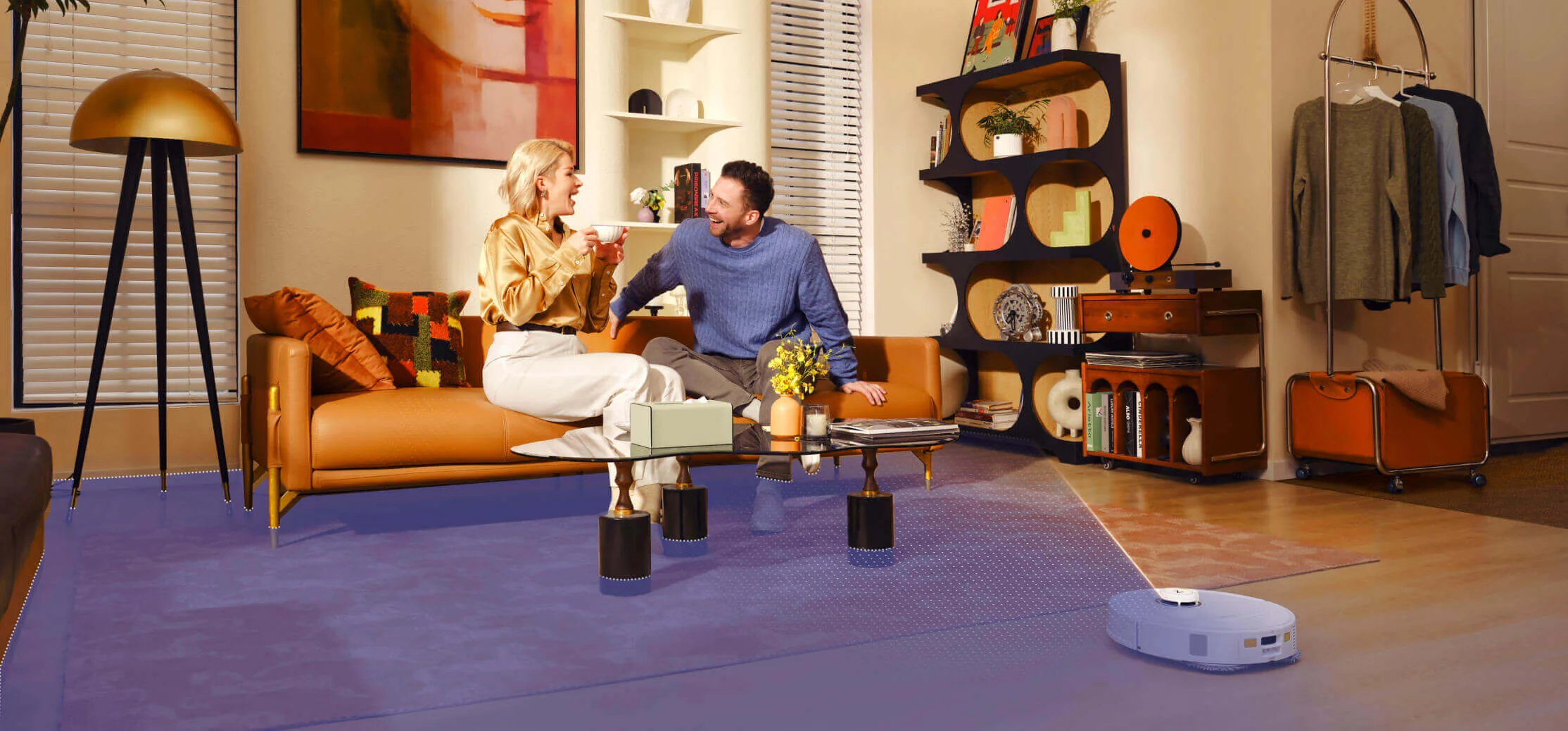
As with the original ROMO, DJI has adapted the sensing technology it developed for its drones into the navigation and obstacle avoidance systems of both ROMO 2 models. This "perception stack" — a combination of cameras, sensors, and software that helps a device understand its surroundings — is claimed to achieve millimeter-level awareness of obstacles on the floor. DJI says it is sensitive enough to navigate around a sleeping cat or a forgotten pacifier without sucking them in. A built-in light illuminates the floor surface to reveal dirt and obstacles in low-light conditions. Engadget
The mopping arm on the ROMO 2 is guided by LiDAR — a laser-based technology that measures distances by bouncing light off surfaces — and can swing 123 degrees, designed to reach under sofas and cabinets where a flat-bodied robot cannot go. Suction reaches up to 36,000 Pa (pascals, a unit of air pressure; for context, most premium robot vacuums top out around 20,000–30,000 Pa), achieved via a pressure plate that creates a seal against the floor. The most mechanically distinctive feature is a set of robot legs that allow the vacuum to step or double-step over ledges as tall as 8.5cm (3.3 inches), addressing a long-standing limitation of robot vacuums that stall at thresholds and transitions between floor types. Engadget
The data privacy posture is where the ROMO 2 diverges most sharply from the consumer-robot baseline. Starting in Q4 2026, the vacuums will support a Local Data Mode that cuts the DJI Home app's internet connection, preventing any photos or videos captured by the vacuum from reaching external servers. Users can also disable the cameras and microphone entirely, and DJI states that any personal data shared with the company can be deleted. Engadget
Local Data Mode is not a new concept within DJI's product ecosystem. The feature originally debuted on DJI drones, where it gave operators a way to fly without transmitting telemetry, imagery, or other sensor data to DJI's cloud infrastructure. Its appearance on a robot vacuum — a device that maps the interior of a home in detail — extends that same control to a different category of sensor-rich consumer hardware. Engadget
The broader context here is that robot vacuums have quietly become some of the most sensor-dense devices in the average household. A modern unit carries cameras, LiDAR, and a microphone, and it builds and stores a floor plan of the home. That is a rich data profile by any measure, and the industry's handling of it has not always inspired confidence. DJI's decision to bring Local Data Mode to the ROMO 2 line, along with hardware-level camera and microphone disabling, is a notable answer to a concern that has hovered over the category.
The practical effect of these controls depends on implementation details that remain to be tested. A Local Data Mode that cuts the app's internet connection may also degrade cloud-dependent features, and the boundary between what the vacuum stores locally versus what it transmits when the mode is disabled will matter to anyone evaluating the claim. The 36,000 Pa suction figure, the 8.5cm step capability, and the 123-degree mop swing are all manufacturer-stated and await independent verification against real-world floor conditions.
DJI had signaled the IFA 2026 lineup in advance. A press release on DJI's official Media Center, dated April 3, 2026, announced that the company would debut the Osmo 360 II camera, the ROMO 2 robot vacuums, and a Power Ecosystem in Berlin. The ROMO 2 launch is one component of that broader IFA presentation. DJI Media Center
The leg mechanism, if it performs as specified, addresses one of the most persistent pain points in robot vacuum deployment: the threshold problem that has sent units back to their docks or, worse, stranded them mid-run. And the privacy controls, if implemented cleanly, give users a degree of agency over home-mapping data that has been conspicuously absent from the category. Whether the ROMO 2 delivers on both fronts will depend on execution rather than specifications, but the design priorities DJI has chosen to emphasize — physical adaptability and data sovereignty — are the right ones to test.