Dyson Unveils 11 Products in Berlin, Headlined by a $1,199 AI Robot Vacuum and a Flagship Air Purifier
Dyson used a standalone event in Berlin on September 3, 2026 to unveil 11 new and upgraded products across air purifiers, robot vacuums, floor cleaners, and haircare. Rather than officially exhibiting at IFA 2026, the company hosted its own showcase, called "Dyson Unveiled," to reveal the full lineup (Engadget).
The flagship air purifier is the HushJet Big+Quiet Cool Pure+, available in three sizes and priced at $1,099. Dyson calls it the most powerful air purifier it has built, designed to push cleaned air across long distances and serve multiple rooms from a single unit. It uses a three-stage filtration system that captures dust, particles, and gases, and breaks down formaldehyde at the molecular level. A directional nozzle engineered to project air while keeping noise down will roll out across all Dyson air purifiers, heaters, and coolers going forward (Engadget).
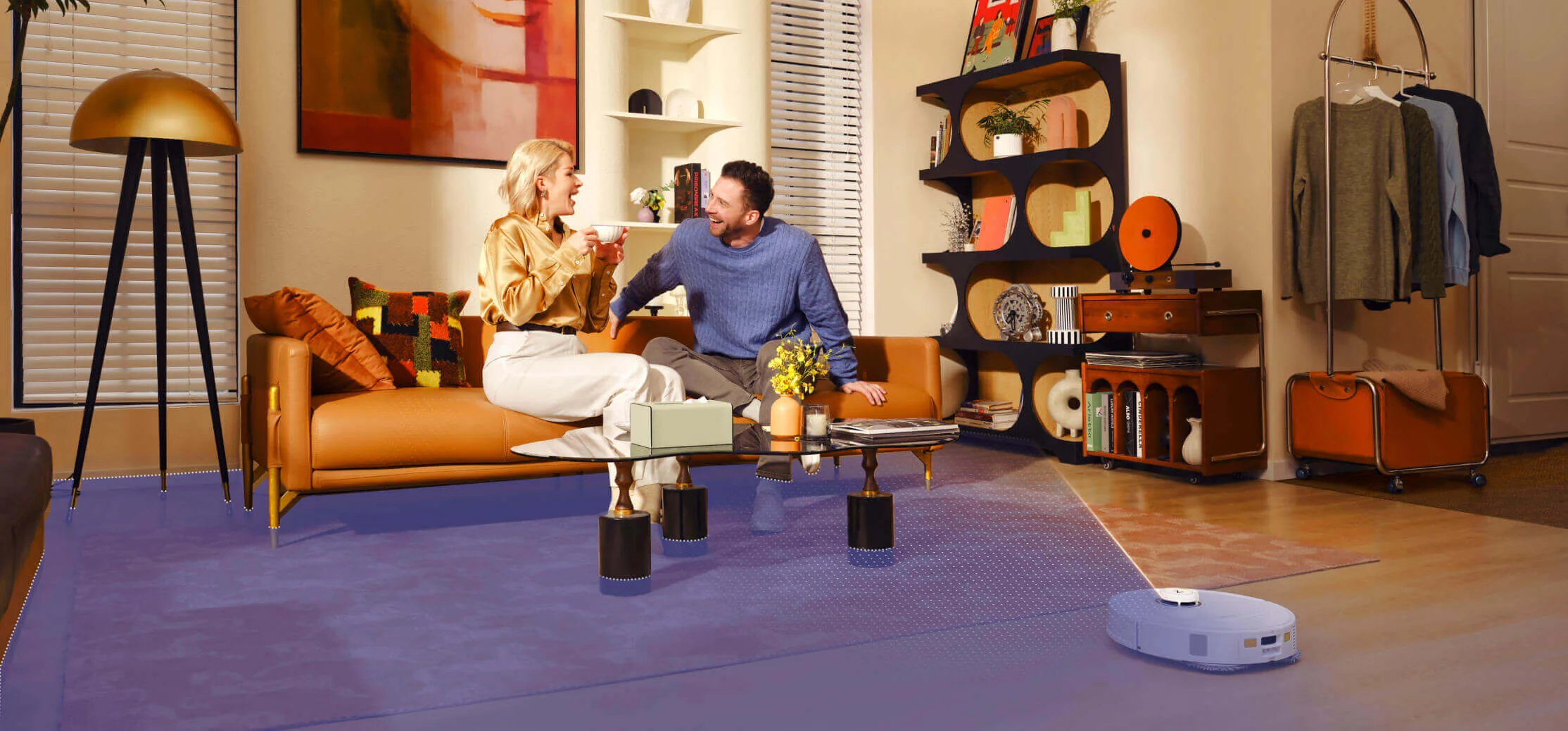
The robot vacuum line gets a new brand name: Nurovi, which Dyson says blends "neural intelligence" and "vision systems." The top model is the R3 Nurovi Spot+Scrub UV, which handles both wet and dry floor cleaning. It uses UV light, green illumination, and AI to detect stains that are invisible to the eye, and can identify nearly 200 types of household substances and objects. Its self-cleaning wet roller uses a 12-point hydration system with water heated to 158°F. The R3 launches September 15 at $1,199 (Engadget).
A second robot vacuum, the R2 Nurovi Wash+Dry, covers both carpet and hard floors. It uses Reuleaux triangle-shaped pads — curved triangular shapes that can reach deeper into corners than round pads — along with a twin-capture system that separates fine and coarse dirt. The R2 uses heated water but does not include the R3's AI stain detection. It goes on sale at $699 as a Costco exclusive (Engadget).
Dyson also announced a new generation of its slimline PencilWash, called the W1 PencilWash. It features an upgraded absorbent roller, a more hygienic waste system, and a self-cleaning function built into its dock. The W1 goes on sale in Fall 2026 at $349 (Engadget).
James Dyson personally unveiled the products in Berlin. The event was first announced on August 21 via Dyson's own site, which described it as "an exclusive first look at the next generation of Dyson machines" (Dyson). An earlier showcase in September 2025 had previewed some of the direction, including what Dyson calls the world's slimmest vacuum and the Big+Quiet air purifier range (Dyson). Wired characterized Dyson's 2026 lineup as the company's biggest update ever, pointing to the AI-driven robot vacuum and self-emptying stations for next-generation stick vacuums (Wired).
The Nurovi branding is worth noting. Dyson has historically named its robot vacuums with straightforward alphanumeric designations. Wrapping "neural intelligence" and "vision systems" into the product line name signals that AI-driven object recognition and stain detection are now treated as defining features rather than add-on capabilities. The R3's ability to classify nearly 200 household substances puts it in the same competitive frame as high-end models from Roborock and Ecovacs, both of which have invested heavily in AI scene recognition over the past two product cycles.
The pricing structure tells its own story. At $1,199, the R3 Nurovi sits at the upper end of the robot vacuum market. The R2 at $699, restricted to Costco, gives Dyson a mid-tier entry that drops the AI features while keeping heated-water mopping. The $349 W1 PencilWash targets the manual floor-care segment, offering self-cleaning at a price that competes directly with cordless wet-dry options from Tineco and Bissell.
The broader engineering story is the HushJet's directional nozzle migrating across the entire air purifier, heater, and cooler line. If the nozzle design delivers on its noise-reduction promise at scale, it becomes a platform-level decision rather than a single-product feature. A consumer buying a $400 Dyson heater would eventually benefit from acoustic engineering developed for a $1,099 purifier. That kind of vertical technology transfer — applying R&D from a flagship product down to cheaper ones — has historically been how Dyson spreads development costs across its product range.
What has not yet been tested is whether the R3's UV and AI stain detection genuinely improves cleaning results in real homes, or whether it joins the long list of robot vacuum features that look impressive in controlled demos and underperform on mixed flooring with pet hair and cereal. The September 15 launch will give reviewers their first independent look.