Motorola's First Wear OS Smartwatch: The Moto Watch Ultra Arrives at $349.99
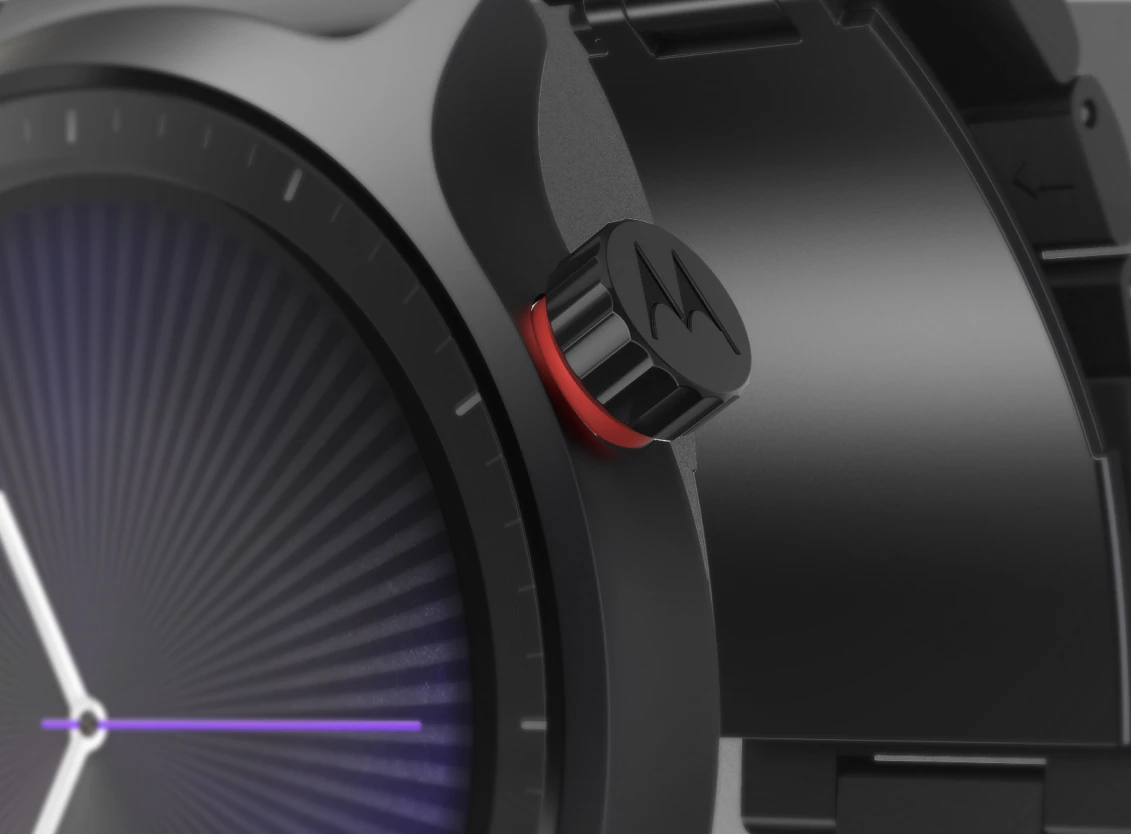
Motorola has announced the Moto Watch Ultra, its first smartwatch to run Google's Wear OS platform. The device launches September 10th at $349.99 and moves away from the custom, low-power operating system that ran Motorola's earlier wearables The Verge.
The Ultra is built around Qualcomm's Snapdragon W5 Plus Gen 1, a chipset designed specifically for smartwatches and already used in recent Wear OS devices from other manufacturers. Motorola claims 50 hours of battery life with the always-on display switched off. That figure is a fraction of what the earlier Moto Watch achieved on its proprietary operating system, which delivered 13 days of battery life but lacked access to third-party apps, automatic activity tracking, and the broader functionality that Wear OS provides The Verge; Engadget.
The hardware is positioned to compete in the premium Wear OS segment. The watch features a 46mm stainless steel case in black or silver, measuring 12mm thick and weighing 51g. The 1.5-inch OLED display is covered by Gorilla Glass 3. Durability credentials include an IP68 rating (protection against dust and prolonged water immersion) and 5ATM water resistance (safe for swimming). Each unit ships with two 22mm straps, one silicone and one leather The Verge.
Health and fitness tracking is provided through a partnership with Polar, covering heart rate, sleep, stress, blood oxygen (SpO2), and recovery metrics. The Ultra includes an AI running coach, LTE connectivity for use without a phone nearby, and dual-band GPS, which uses two satellite frequency bands for more accurate location tracking. The dual-band GPS is notable because Motorola's other current wearable, the Moto Watch (2026), also offers it, but that device starts at $149.99 and runs limited, low-power software rather than Wear OS The Verge; Engadget.
On the software side, the Ultra supports NFC payments through Google Wallet and integrates both Google's Gemini AI assistant and Motorola's own Qira AI assistant. Having two assistant experiences on a single wearable raises questions about how Motorola intends to divide their responsibilities, though the company has not detailed that separation in its announcement materials The Verge.
The Ultra arrives within a broader Motorola watch portfolio that spans multiple price tiers. The Moto Watch (2026), reviewed by Engadget at 6.5 out of 10, offers Bluetooth 5.3+ LE, a built-in speaker and microphone, 4GB of eMMC media storage, and the dual-band GPS mentioned above, but its custom operating system lacks automatic activity tracking and the app support that Wear OS unlocks Engadget. Motorola also sells the Moto Watch Fit in two variants and the original Moto Watch with continuous heart rate and SpO2 monitoring, positioning itself across entry-level and mid-range segments Motorola; Motorola.
The trade-off Motorola is asking buyers to accept is straightforward. The Moto Watch (2026) delivers exceptional battery life and a low price but runs software that Engadget characterized as limited. The Ultra sacrifices roughly 90 percent of that battery endurance to gain Wear OS, LTE, and a full app ecosystem, while doubling the price. Whether 50 hours of always-on-display-off endurance is sufficient for a Wear OS device at this price point is the central question the market will answer starting September 10th.
The broader context here is that Wear OS hardware has consolidated around a recognizable template: Snapdragon W5 Plus Gen 1, dual-band GPS, a stainless steel or titanium case, and Polar-derived or equivalent fitness analytics. Motorola has checked every box on that list. The differentiator, if there is one, will come down to Qira's integration depth, the quality of Polar's coaching algorithms on the platform, and whether the $349.99 price point undercuts comparable Wear OS alternatives by enough to matter. Motorola also offers its Moto Care extended warranty plan across its device lineup, which may factor into total cost of ownership for buyers weighing protection plans Motorola.
The announcement is timed to IFA, the major consumer electronics trade show held annually in Berlin, where wearable launches are routine in early September. Motorola's smartphone partnership with FIFA provides a marketing channel the company can leverage, though the watch itself carries no explicit FIFA branding Motorola.
For developers, the key fact is simpler: another hardware vendor is shipping a Wear OS device with current-generation silicon and LTE. The install base grows. For consumers, the question is whether Motorola's brand recognition and sub-$350 pricing can pull buyers away from the Samsung and Google Pixel Watch options that have dominated the Wear OS landscape. September 10th will be the first real indicator.