Lenovo's IdeaPad Vibe Takes Aim at the MacBook Neo with Three Processor Options and Swappable Keycaps
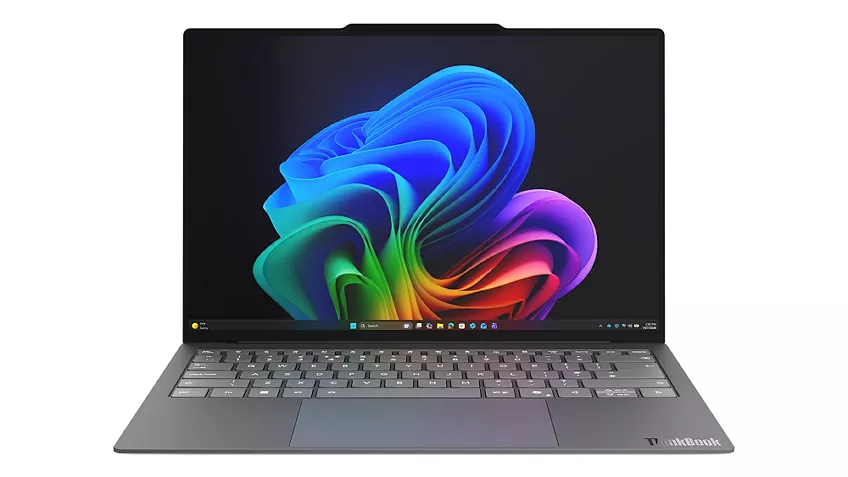
Lenovo has announced the IdeaPad Vibe, a productivity laptop series positioned to compete with Apple's MacBook Neo. The Vibe offers more color options, user-upgradeable memory on at least one model, and a choice of three processor platforms launching in staggered windows. The announcement came September 3, 2026, at Lenovo's Innovation World '26 event in Berlin, bundled into a press release that also covered a new IdeaCentre All-in-One AI PC (The Verge; Lenovo).
The IdeaPad Vibe arrives in 14- and 15-inch variants and evolves the IdeaPad Slim 3x chassis into an all-metal body, though some colors retain plastic elements. Lenovo has dropped the barrel-plug charger in favor of USB-C charging. The port selection includes two USB-C and two USB-A ports (all 5Gbps), HDMI 1.4, a 3.5mm audio jack, and a microSD card reader (The Verge).
The platform strategy is where the Vibe diverges from a single-processor competitor. AMD Ryzen AI 400-series models are due in October, with up to 32GB of user-upgradeable dual-channel RAM. Qualcomm Snapdragon X variants follow in November, capped at 24GB. Intel versions, likely based on the Wildcat Lake architecture, are slated for a later, unspecified date. Lenovo has not disclosed base-model RAM for any configuration. Storage goes up to 1TB via user-accessible dual SSD slots (The Verge).
Both screen sizes ship with IPS LCD panels as standard. The gray and blue colorways can be upgraded to a touchscreen OLED. The keyboard is backlit across the lineup, a feature the MacBook Neo lacks (The Verge).
The most visible differentiator from Apple's offering is color and customization. The Vibe comes in seven finishes: dreamy violet, spicy gold, zen green, chill blue, radiant coral, moody blue, and lowkey gray. The MacBook Neo ships in four colors. Beyond the chassis color, customers can custom-order keycaps in any of the seven shades at purchase, and separate keycap sets will be sold separately for mix-and-match swapping (The Verge).
Apple launched the MacBook Neo in early March 2026, priced from $499 for students. The Neo runs Apple's mobile A18 Pro SoC and was noted by Reuters as the most repairable laptop Apple has shipped in over a decade (Reuters; PCMag). Lenovo is targeting a similar starting price for the Vibe, though exact figures have not been confirmed beyond the stated parity with the Neo (The Verge).
The three-processor approach is the strategically interesting element here. By offering AMD, Qualcomm, and eventually Intel silicon within a single product family at a similar price band, Lenovo is hedging across the ongoing ARM-versus-x86 contest in the Windows laptop space. The Snapdragon X variant gives Lenovo a shot at matching the MacBook Neo's power-efficiency story, since both draw on ARM-class architectures, while the Ryzen AI 400-series and Wildcat Lake options preserve x86 software compatibility for buyers who need it. The user-upgradeable RAM on the AMD model and dual-slot SSD storage across the line are features Apple's sealed chassis does not offer at this tier.
The trade-off is complexity. Three platforms mean three sets of driver stacks, three validation paths, and varying memory ceilings that customers will need to navigate. The Snapdragon X cap at 24GB versus 32GB on the AMD model reflects the soldered-LPDDR constraints typical of current Snapdragon X designs, while the AMD model's user-upgradeable dual-channel SO-DIMM slots are increasingly rare in thin-and-light chassis at this price. Lenovo has not disclosed whether the Intel variant will match the AMD model's memory configurability.
The color and keycap customization strategy is a clear attempt to claim the personalization angle that Apple's more restrained palette leaves open. Whether seven colors and swappable keycaps move units at scale is a separate question from whether they generate retail-floor and social-media visibility. The backlit keyboard inclusion, presented as a point of differentiation against the Neo, is the kind of spec comparison that matters in the $500 laptop band where every feature counts.
Lenovo describes the Vibe and the accompanying IdeaCentre All-in-One as combining "thoughtful design with more intelligent, connected experiences across devices," framing both products under its personal AI computing push (Lenovo). The Ryzen AI 400-series and Snapdragon X platforms both carry dedicated NPUs, aligning with that positioning, though Lenovo has not published NPU TOPS figures for the Vibe lineup.
For buyers evaluating the Vibe against the MacBook Neo, the differentiators are concrete: more colors, swappable keycaps, a backlit keyboard, user-upgradeable memory and storage on at least one processor track, and a choice of three processor platforms. What remains unknown is base RAM, exact pricing beyond the stated parity target, battery life figures, and whether the Intel variant will ship with the same configurability as its AMD counterpart. Those details will likely surface closer to the October launch window.