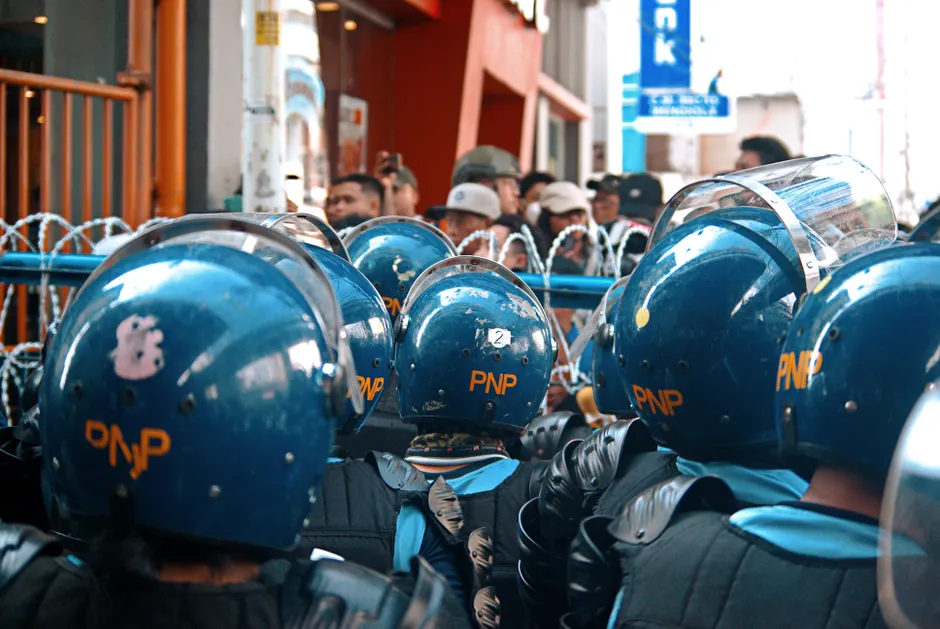
Masked Protesters Block Dover Port, Drawing Cross-Party Condemnation and Scrutiny of Police Response

Hundreds of masked, black-clad protesters blocked the A20 approach to the Port of Dover on Saturday 5 September 2026, halting traffic into Britain's busiest ferry port and drawing condemnation from across the political spectrum, including Business Secretary Jonathan Reynolds and Reform UK's Robert Jenrick (Associated Press, via Japan News; Express; Yahoo News).
Social media footage showed demonstrators wearing balaclavas and linking arms across the road, chanting "stop the boats" and "England till I die" (The Guardian). A livestreamer at the scene estimated he was marching with hundreds of people (The Guardian). The Associated Press described the turnout as hundreds; an earlier SCMP report put the figure at dozens (AP, via Japan News; SCMP).
Kent police attended and engaged with the protest, which the Port of Dover classified as a "public order incident" (The Guardian). National Highways reported that traffic in both directions on the A20 was stopped, producing delays of up to 45 minutes and four miles of congestion (The Guardian). Port of Dover authorities later confirmed access roads were "free flowing" again after the group dispersed (The Guardian). The protesters dispersed by lunchtime. No arrests were made during the incident (The Guardian).
Responsibility for the demonstration appeared to have been claimed by Patriot Platform, an anti-immigration group with far-right links that styles itself as having a "fierce love for our homeland" (The Guardian). Sky News separately reported that an associate of Tommy Robinson appeared to claim credit for the demonstration, a detail now feeding into questions about the adequacy of the policing response (Sky News).
Business Secretary Jonathan Reynolds, interviewed by Jon Sopel on Sky News's Sunday Morning programme, condemned the protesters in pointed terms. He described the demonstration as "dressing up in costumes like this and disrupting people's lives" and said it was "not something we would want or expect to see on the streets of Britain" (The Guardian; Sky News). Reynolds struck a deliberate balance, adding that "peaceful protest is a central part of British life" (Sky News). He declined to comment on the security and policing side but said he thought the police had handled the matter "very well" (The Guardian). A government spokesperson echoed that line, affirming that peaceful protest is fundamental to democracy while condemning the behaviour in Dover and the travel disruption it caused (The Guardian).
The cross-party rebuke extended to Reform UK. Robert Jenrick criticised the anti-illegal migrant protests that blocked the port, standing alongside Reynolds in condemning the disruption (Express; Yahoo News).
The local response was more pointed. Mike Tapp, the Labour MP for Dover and Deal, took to X to argue that the protest was "clearly coordinated" rather than "spontaneous" as described by police, and said he intended to ask why (The Guardian). In a piece for the Mirror, Tapp called for additional officers, including mutual aid from forces such as the Metropolitan Police, to be mobilised quickly if Dover is targeted again (The Guardian).
Sky News reported that the police response is set to come under scrutiny, with the apparent Robinson associate's claim of credit intensifying questions about how the demonstration was policed and whether the decision to make no arrests will invite further demonstrations at the same site (Sky News).
The broader context here is the intersection of three pressures on Dover. The port is a critical freight and passenger chokepoint, making any road blockade there disproportionately disruptive. Anti-immigration sentiment focused on small-boat crossings has galvanised a spectrum of groups, from established far-right organisations to newer formations like Patriot Platform. And the policing calculus at Dover involves balancing the right to peaceful assembly against the economic and logistical cost of severing a major transport artery, a tension that the absence of arrests has now placed under public scrutiny.
Tapp's push for mutual aid pre-positioning reflects a practical concern: if further demonstrations are planned rather than spontaneous, the window for Kent police to marshal resources narrows considerably. His implication that the force mischaracterised the nature of the event raises questions about intelligence-gathering ahead of the blockade. The involvement of figures connected to Robinson, if substantiated, would suggest a degree of organisational continuity with prior far-right mobilisation efforts rather than an isolated or emergent grouping.
How the Home Office and Kent police respond in the coming days, and whether the government moves beyond rhetorical condemnation to operational adjustments at the port, are the questions that will determine whether Dover becomes a recurring flashpoint.