Far-Right Protesters Mobilise in Portsmouth After First Large Small-Boat Arrival

Hundreds of far-right activists converged on Portsmouth on 6 September 2026 after a single dinghy carrying approximately 140 asylum seekers was intercepted south of the Isle of Wight and brought to the Portsmouth coast by two RNLI lifeboats. The arrival triggered a major multi-agency response involving HM Coastguard, a helicopter, an aeroplane, and lifeboats, according to a Maritime and Coastguard Agency spokesperson The Guardian. It was reportedly the first time a boat this large carrying asylum seekers had been brought to Portsmouth, and the first time a large group of anti-migrant protesters attempted to block newly arrived asylum seekers from being processed.
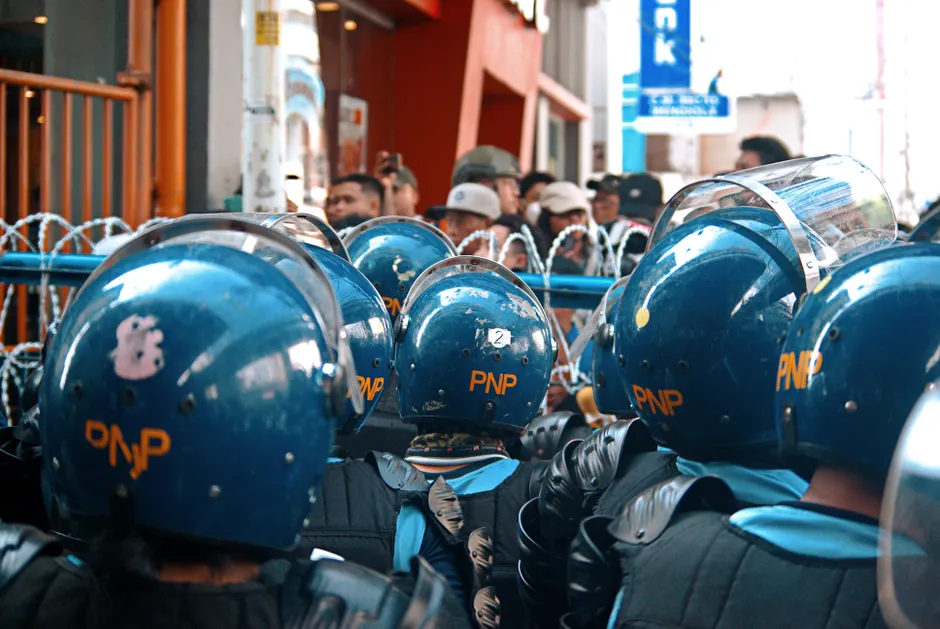
Around 500 protesters took to the streets, according to Sky News Sky News. Many attendees dressed in all black and wore face masks, mirroring the appearance of protesters at a rally that blocked roads in Dover the previous day, 5 September. The Portsmouth protest was the second major anti-migrant demonstration of the weekend. Hampshire police urged people to avoid the area and said a dispersal order — a police power to require people to leave a specified area or face arrest — was in place. Protesters blocked roads for hours and vowed to stay through the night to prevent the new arrivals from being taken to a processing centre. A witness unaffiliated with the protest said two police cars had their windscreens smashed and that the crowd broke through the police cordon at one point. Hundreds of masked men blocked a coach carrying migrants, a scene livestreamed by right-wing influencer Daniel Thomas, also known as Danny Tommo Metro.
Thomas, a former bodyguard of far-right activist Tommy Robinson (real name Stephen Yaxley-Lennon), encouraged viewers in his livestream to travel to Portsmouth and join the protest. He established Patriot Platform, the group that blocked part of the port of Dover on 5 September. Thomas previously launched Operation Overlord, a plan to send far-right activists to France to "stop the boats." French authorities banned him from France after he and supporters filmed themselves slashing abandoned dinghies on a French beach.
The Home Office planned to take the boat's occupants to Manston, a former airfield site outside Ramsgate in Kent where small boat arrivals are routinely processed. Rival pro- and anti-immigration demonstrations also gathered on the Portsmouth seafront, with the anti-immigration event organised by a group called Portsmouth Patriots BBC. Anti-asylum and anti-racist protesters clashed in Guildhall Square. Portsmouth had previously accused anti-asylum protesters of issuing threats and abuse at earlier seafront demonstrations Portsmouth News.
A government spokesperson condemned the protesters' "intimidating and thuggish behaviour."
On the same day, 6 September, 364 asylum seekers arrived in the UK by small boat across all routes, according to ITV News ITV News. As of that date, 28,072 people had crossed the 21-mile Dover Strait so far in 2026. Despite that cumulative figure, small boat crossings in 2026 had reduced by more than 40% compared with the same period the previous year. Since 2018, 94% of people arriving in the UK by small boat have had an asylum claim recorded, according to a government inspection report UK Government. An asylum claim is a formal request for protection under international refugee law, submitted after arrival.
The broader context here matters for several reasons. The Portsmouth events point to a geographic shift in where Channel crossings come ashore. Arrivals have overwhelmingly clustered around the Kent coast and the Dover Strait, where processing infrastructure at Manston and the political flashpoint of Dover have absorbed the operational and protest consequences. A boat of 140 people being intercepted south of the Isle of Wight and brought to Portsmouth extends that logistical footprint, and the protest response followed within hours.
The appearance of a coordinated, cross-channel activist network under Daniel Thomas adds another layer. With branded operations like Patriot Platform and Operation Overlord, and a documented history of direct action both in the UK and France, this signals an escalation from spontaneous local opposition toward mobilised, livestream-driven disruption aimed at physically intercepting the asylum processing pipeline — think of it as activists trying to block a conveyor belt rather than simply objecting to it from the sidelines.
The 40% reduction in arrivals compared with the previous year cuts against the narrative of crisis-level volumes driving the protest mobilisation. Yet the protest energy appears to be intensifying even as crossings decline, suggesting the demonstrations are driven less by raw numbers than by the symbolic and media value of specific high-profile arrivals. Thomas's use of livestreaming to summon supporters in real time mirrors tactics deployed during the August 2024 disorder and raises practical questions for police forces about rapid-response crowd management at ports that were not previously primary arrival sites. The dispersal order and cordon breach in Portsmouth point to the operational strain this places on local forces unaccustomed to being on the front line of Channel migration politics.