The Exploration Company Raises $450 Million Series C to Build Europe's Reusable Space Future

The Exploration Company (TEC) has raised $450 million in a Series C funding round, which it describes as the largest-ever Series C by a European space company. The round, announced September 8 on the company's blog, was co-led by Atomico and the EQT-managed Scaleup Europe Fund alongside Bessemer Venture Partners (TechCrunch).
The Munich-based company operates across Germany, France, Luxembourg, Spain, and Italy. It was founded by Hélène Huby, a French national who spent two decades at Airbus and ArianeGroup before starting TEC.
The funding is intended to lay the groundwork for a reusable European heavy-lift launcher — essentially a large rocket that can fly multiple missions — that would offer an affordable alternative to SpaceX. TEC's most immediate focus, however, is Nyx, a reusable orbital capsule designed to carry cargo to and from space. According to Atomico, 10 Nyx missions are already booked, backed by more than $2 billion in contracts and commitments (TechCrunch).
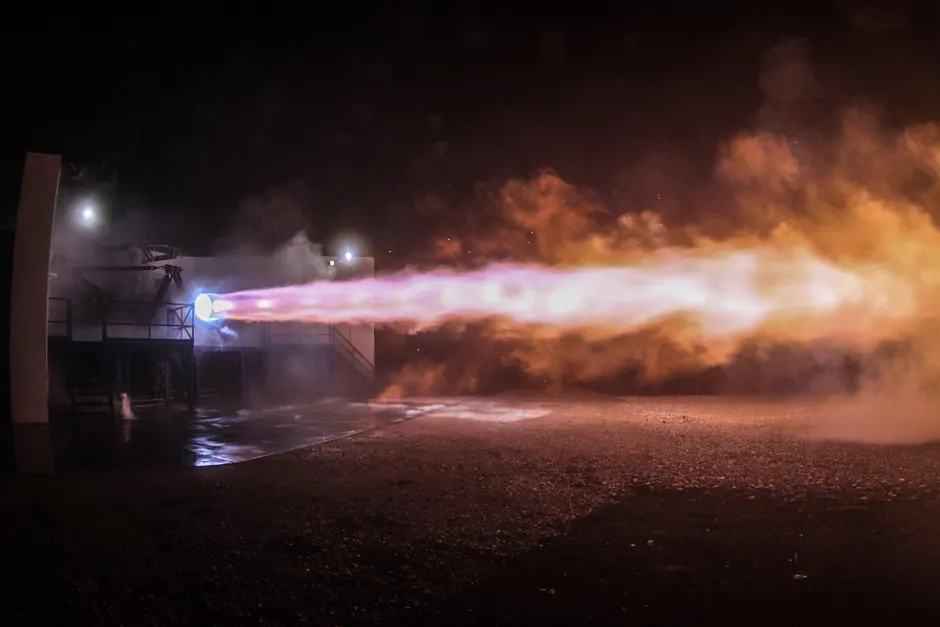
TEC also runs a high-thrust engine program called Storm, which it introduced on its own blog in June 2026 (exploration.space). The Storm engine and the Nyx capsule together form the technical base from which the company intends to expand toward a full heavy-lift launch capability.
Bessemer Venture Partners partner Alex Ferrara will join TEC's board of directors as part of the round.
Prior reporting from late July had indicated TEC was aiming to raise at least $300 million at a $2 billion valuation (Silicon Republic. The final round exceeded that target by 50%, though the company has not disclosed the valuation at which it closed.
The competitive landscape TEC enters is well-capitalized. US-based Stoke Space is currently raising a $1 billion Series E, and SpaceX remains the benchmark for reusable launch against which any new entrant, European or otherwise, will be measured (TechCrunch.
Huby has been candid about the boundaries of what venture capital will support in European space. She said she would love to see Europe add human spaceflight to its roadmap but could not convince venture capitalists to spend $4 billion on a crew capsule and then wait 10 years for a return. That constraint shaped TEC's sequencing: a reusable cargo capsule with booked missions first, a heavy-lift launcher next, and crew capabilities deferred until the economics can justify the capital and timeline.
The broader context here is a European launch gap that has widened as reusable architectures from US providers have driven down the cost per kilogram of sending payload into orbit. Ariane 6, while operational, is an expendable design — meaning the rocket is used once and discarded. No European entity has yet fielded a reusable orbital vehicle at scale. TEC's plan to pair Nyx as a revenue-generating capsule with a longer-horizon launcher program is a bet that Europe's gap can be closed with a venture-backed, product-first approach rather than the consortia and cost-plus contracting that have historically governed the continent's launch sector.
It is worth flagging the scale gap. Stoke Space's $1 billion Series E is more than double TEC's round, and SpaceX's cumulative capitalization is an order of magnitude beyond that again. A $450 million Series C, while a milestone for European space, funds a program that will compete against entrants with materially deeper pockets. Whether the Nyx mission backlog and the Storm engine program can accelerate TEC's path to a flight-ready heavy-lift vehicle on this capital base is the operational question the next 24 to 36 months will answer.
On the demand side, the $2 billion in contracts and commitments suggests the market for a European reusable option is real rather than speculative. Institutional and commercial payload customers in Europe have limited alternatives to US launch providers for rideshare and dedicated missions, and a sovereign-capable reusable platform would address both cost and access constraints.
The Series C closes a round of speculation about TEC's fundraising trajectory that began with the July valuation reporting and confirms the company's intent to compete not just in orbital capsules but in the heavy-lift category where SpaceX currently has no European rival.